
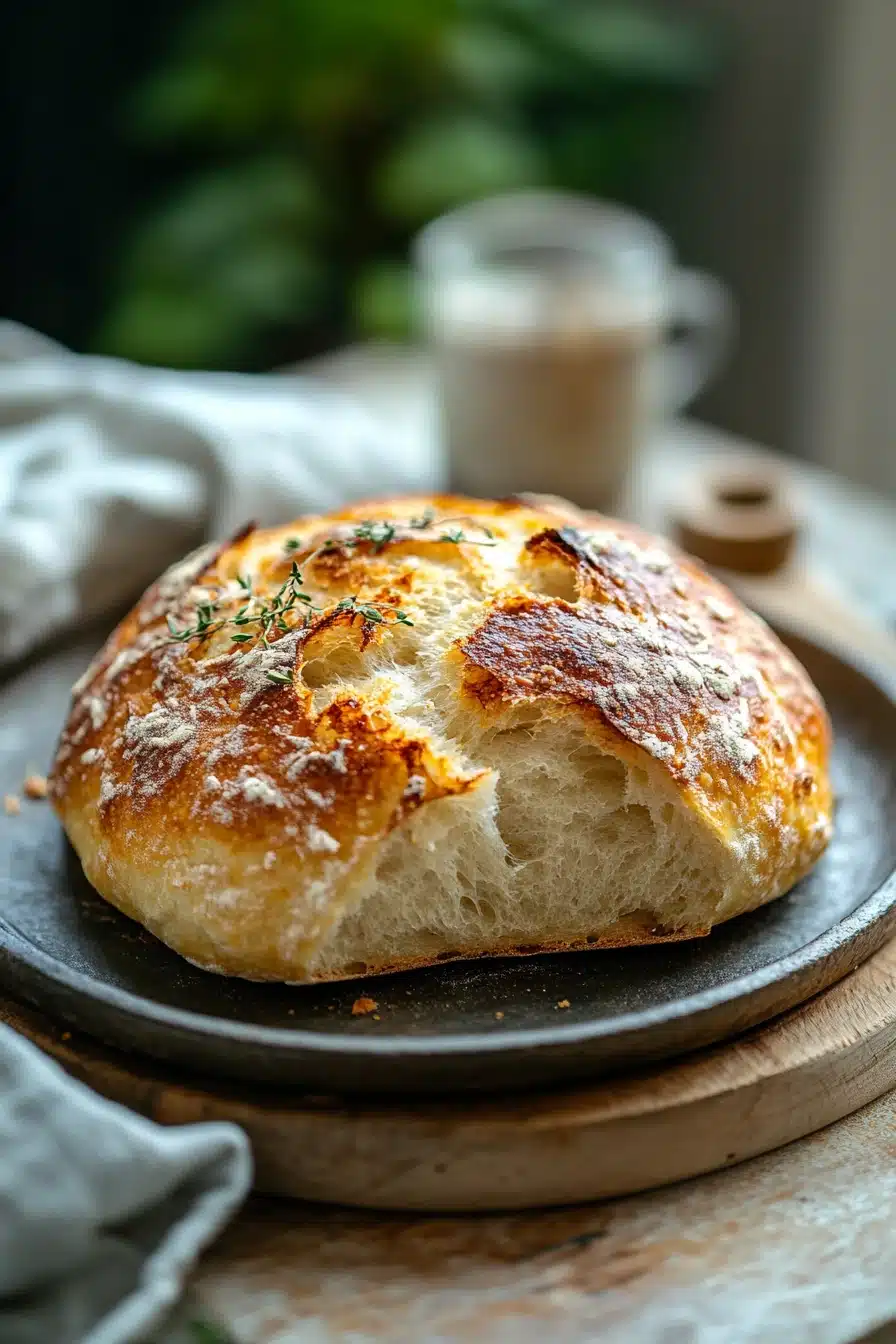
There’s something about bread that feels like a small accomplishment, especially when it’s no-knead and baked on a pizza stone. This method invites a slow, patient rhythm to the kitchen, where the dough just sits quietly, bubbling away while life happens around it. You don’t need to be a pro baker to get that perfect crust or a tender crumb — it’s almost effortless, yet deeply satisfying.
One Saturday morning, I started this bread late the night before, forgetting to set an alarm. When I finally woke, the dough was a bubbly mess, a little stickier than I expected, but beautifully alive. As I slid it onto the glowing pizza stone, the aroma that filled the kitchen made me pause. Just then, my phone buzzed—somewhere between texting and setting the timer, I accidentally dropped a spoon. That little imperfection felt oddly grounding. The crust crisped up in the oven, the kind of crust that crackles when you slice through it. Tearing off a warm piece, I realized how this simple bread quietly transforms ordinary mornings into moments worth savoring.
- It’s incredibly simple, requiring hardly any active effort, which is kind of the point.
- The pizza stone creates a crust that’s crisp without being hard, a nice balance.
- The long rest time means you’re rewarded with flavor depth that’s surprisingly complex.
- It’s forgiving — even if your dough looks a little rough, it will still bake beautifully.
If you’ve never baked bread at home, this is a gentle way to start. And if you’re worried about fancy equipment, don’t be—the pizza stone is a game-changer but not a dealbreaker if you don’t have one.
PrintNo-Knead Bread on Pizza Stone

A simple and rustic no-knead bread recipe baked on a pizza stone for a crisp crust and tender crumb. Perfect for beginners and bread lovers alike.
- Prep Time: 15 minutes
- Cook Time: 45 minutes
- Total Time: 12 hours 0 minutes
- Yield: 8
Ingredients
3 cups all-purpose flour
1/4 teaspoon instant yeast
1 1/4 teaspoons salt
1 1/2 cups warm water (about 75°F)
Instructions
In a large mixing bowl, combine the flour, instant yeast, and salt.
Add the warm water to the dry ingredients and stir with a wooden spoon or spatula until a shaggy dough forms and all flour is incorporated.
Cover the bowl tightly with plastic wrap or a clean kitchen towel and let the dough rest at room temperature for 12 to 18 hours, until the surface is dotted with bubbles and the dough has doubled in size.
Place a pizza stone on the middle rack of your oven and preheat the oven to 450°F (230°C) for at least 30 minutes to ensure the stone is thoroughly heated.
Generously flour a clean work surface and turn the dough out onto it. With floured hands, gently fold the dough over itself once or twice to shape it into a rough ball. Do not knead.
Place the dough seam side down on a large piece of parchment paper and cover it with a kitchen towel. Let it rest for 30 minutes.
Carefully transfer the dough along with the parchment paper onto the preheated pizza stone in the oven.
Bake for 30 minutes with the oven door closed. Then remove the kitchen towel and parchment paper, and bake for an additional 15 minutes until the crust is deep golden brown and crisp.
Remove the bread from the oven and transfer it to a wire rack. Let it cool completely before slicing.
Using a pizza stone might seem intimidating, but once it’s heated, it does most of the work for you—no fancy tools needed. I usually serve this bread with a bit of olive oil and flaky sea salt or alongside a bowl of soup to soak up every last drop. Variations? I haven’t tested all of these, but adding herbs to the dough or sprinkling seeds on top before baking could be nice. Sometimes I fold in bits of cheese or olives, though that makes the crust a little less crisp. It’s fun to experiment while keeping the process simple.
FAQ
Do I have to use a pizza stone? Not necessarily. The stone helps crisp the crust, but a heavy baking sheet can work in a pinch.
Can I speed up the rising time? The slow rise is key for flavor, but if you’re short on time, a warmer spot might help — just watch the dough closely.
What’s the best way to store leftover bread? Keep it in a paper bag or bread box to preserve crustiness for a couple of days. For longer storage, wrap tightly in plastic and freeze.
This no-knead bread is a quiet little ritual that turns the everyday into something worth stopping for. Give it a try—you might find yourself sneaking tastes right out of the oven, just like I did.