
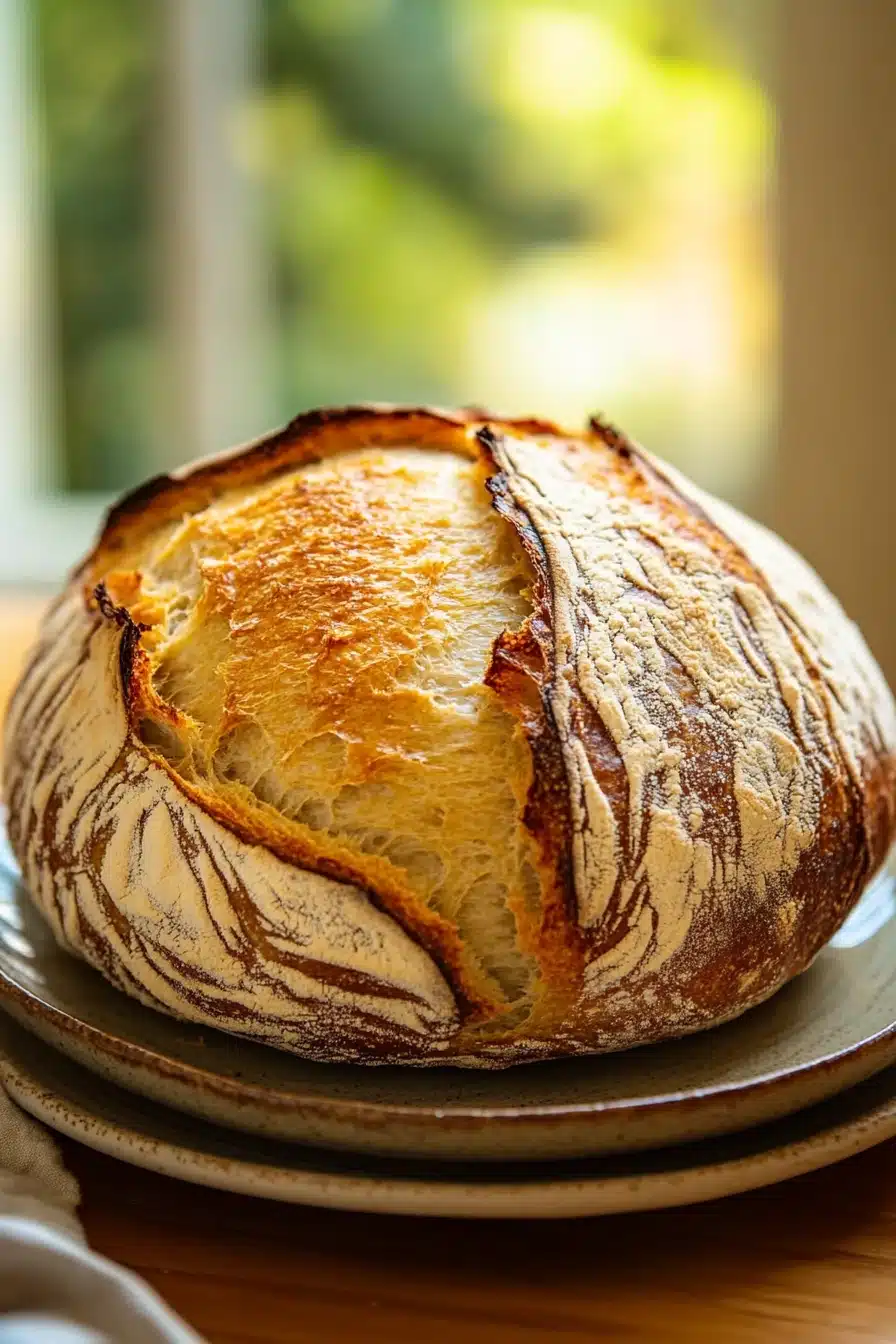
There’s something quietly satisfying about watching dough rise slowly overnight. I remember one weekend when I forgot to set a timer and woke up to that earthy, yeasty aroma filling my kitchen instead. The dough had bubbled up just perfectly, a little uneven in spots, but full of promise. The texture felt sticky and alive under my fingers, and I was already imagining how the crust would crackle as I pulled it out of the oven. It’s a simple process that somehow feels like magic when you taste the bread fresh and warm, especially when paired with just a bit of butter. I wasn’t rushing or stressing, just letting time do its thing, and that made the whole experience feel a little like a quiet victory.
Why You’ll Love It:
- The long fermentation brings out a deep flavor that feels way more complex than the simple ingredients suggest.
- Hands-off preparation means you don’t need to be an expert baker to get bakery-worthy results.
- It’s simple — and that’s kind of the point. No fancy tools or kneading required.
- The crust comes out beautifully crisp, but the crumb stays chewy and soft, perfect for sandwiches or just tearing apart.
- It takes a while to rise, so you’ll need some patience — but that slow pace fits nicely into a relaxed weekend routine.
If you’re nervous about timing or the dough’s texture, don’t be. It might look a bit shaggy or sticky, but that’s just how it’s supposed to be. The magic happens during the long rest, so trust the process even when it feels a little uncertain.
PrintNo-Knead Bread (NYTimes)

This classic No-Knead Bread recipe from The New York Times yields a crusty, artisan-style loaf with minimal effort. The long fermentation develops deep flavor and a chewy crumb without any kneading.
- Prep Time: 15 minutes
- Cook Time: 45 minutes
- Total Time: 16 hours
- Yield: 8
Ingredients
3 cups (375 grams) all-purpose flour
1/4 teaspoon instant yeast
1 1/4 teaspoons salt
1 5/8 cups (375 milliliters) warm water
Instructions
In a large mixing bowl, whisk together the flour, instant yeast, and salt until evenly combined.
Add the warm water to the dry ingredients and stir with a wooden spoon or spatula until a shaggy, sticky dough forms. Make sure all flour is incorporated.
Cover the bowl tightly with plastic wrap or a clean kitchen towel. Let the dough rest at room temperature for 12 to 18 hours, until the surface is dotted with bubbles and the dough has doubled in size.
Generously flour a work surface and scrape the dough onto it. Sprinkle the dough with a little more flour and fold it over on itself once or twice. Shape into a rough ball.
Place a large piece of parchment paper inside a clean bowl or proofing basket and transfer the dough onto the parchment paper. Cover with a kitchen towel and let it rise for 1 to 2 hours, until it has nearly doubled again.
About 30 minutes before baking, place a heavy covered Dutch oven or oven-safe pot with lid in the oven and preheat to 450°F (230°C).
Carefully remove the hot Dutch oven from the oven. Lift the dough using the parchment paper and place it into the pot. Cover with the lid.
Bake covered for 30 minutes. Then remove the lid and bake for an additional 15 minutes, until the bread is deep golden brown and crusty.
Remove the bread from the pot and transfer to a wire rack. Let cool completely before slicing.
Kitchen Notes: You really just need a sturdy Dutch oven or any heavy, oven-safe pot with a lid to get that perfect crust. I usually line the pot with parchment paper to make transferring the dough easier and less messy. When it comes to serving, this bread shines with simple toppings — a drizzle of olive oil, some fresh cheese, or even just a sprinkle of sea salt. If you want to mix things up, I haven’t tested all these, but a handful of herbs folded in during the final shaping or a sprinkle of seeds on top before baking might add an interesting twist. Also, if you’re in a hurry, you can shorten the second rise, but the texture may be a bit less airy.
FAQ:
Can I make this bread without a Dutch oven? Yes, you can bake it on a preheated baking stone or heavy pan, but the crust might not be as crisp.
How long does the dough need to ferment? Usually 12 to 18 hours at room temperature; longer fermentation develops flavor but be careful not to overproof.
Can I add additional ingredients? Sure, but keep them minimal—too much can change the dough’s behavior.
How should I store the bread? Keep it in a paper bag or bread box at room temperature for a few days, or wrap tightly and freeze for longer storage.
Ready to try making your own crusty loaf? Scroll down, save this recipe, then find a quiet moment to let the dough do the work. Your kitchen will thank you.