
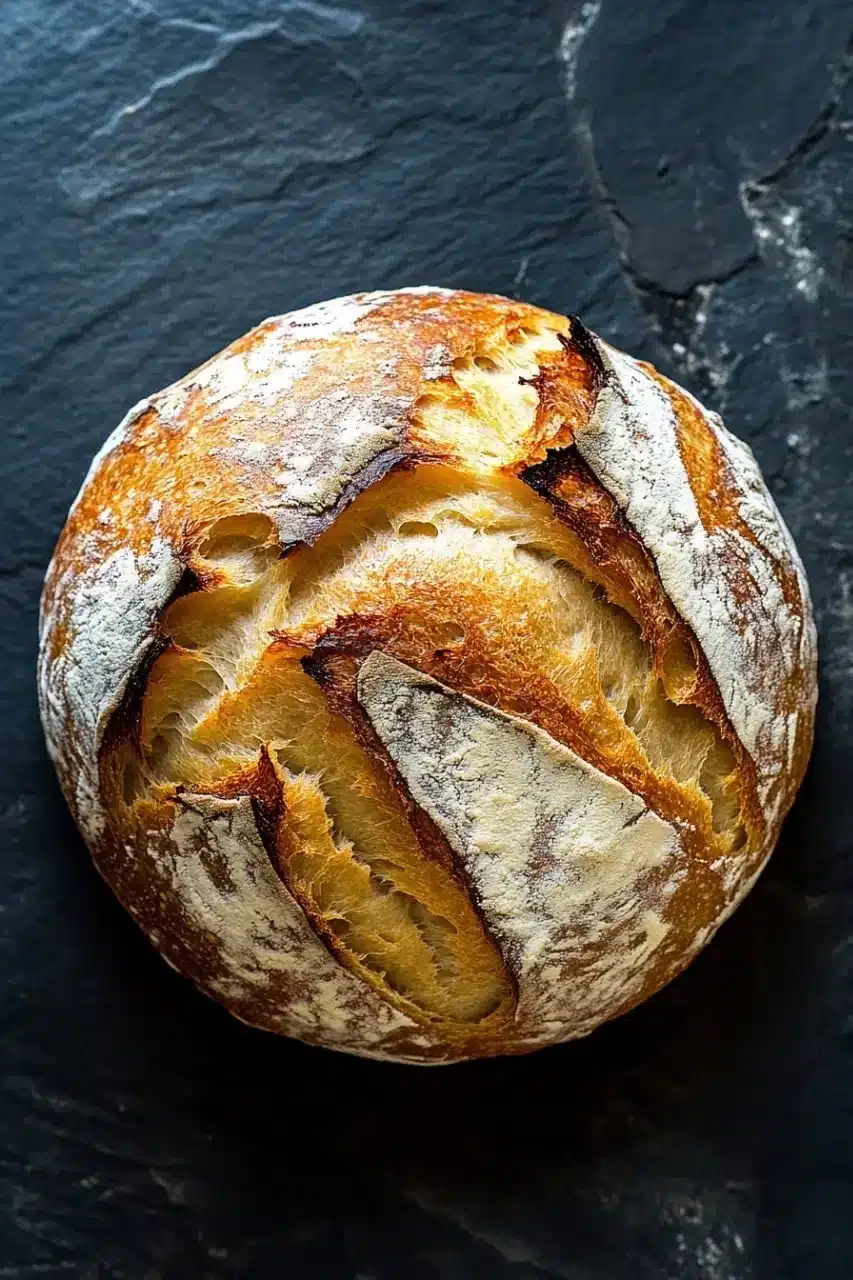
There’s something about the smell of bread baking that turns an ordinary afternoon into a quiet celebration. This Dutch oven bread, made with fast acting yeast, delivers that magic without the long wait. It’s the kind of loaf that invites you to slow down just enough to appreciate the warm, crusty edges and the soft, pillowy crumb inside.
Last weekend, I tried this recipe on a whim, timing it around a messy kitchen counter and a half-forgotten phone call. The dough was shaggy and a little sticky when I mixed it—far from perfect, but full of promise. I left it covered on the counter and watched as bubbles slowly formed, proof that patience really pays off. When it finally baked, I was distracted by the hum of the oven and almost missed the moment to take it out. Thankfully, the crust was golden and crackled as I sliced it. That first bite was a little rough around the edges, exactly like the day itself.
- It’s quick enough to fit into a busy afternoon but still feels like a small project worth your attention.
- The crust turns beautifully crisp thanks to the Dutch oven’s sealed environment, while the inside stays soft and tender.
- It’s simple — and that’s kind of the point. No fancy ingredients, just good bread.
- The recipe doesn’t require kneading, which means less cleanup but slightly less precision in shaping.
If you’re hesitant about baking bread at home, this recipe is forgiving and approachable. It’s not an exact science, and that’s part of the charm—sometimes the loaf isn’t perfectly round or the crust is a bit uneven, but the flavor always shines through.
PrintDutch Oven Bread with Fast Acting Yeast

A quick and easy Dutch oven bread recipe using fast acting yeast that yields a crusty, golden loaf with a soft interior. Perfect for homemade artisan bread in under 2 hours.
- Prep Time: 15 minutes
- Cook Time: 40 minutes
- Total Time: 1 hour 55 minutes
- Yield: 8 slices
Ingredients
3 1/2 cups (420 grams) all-purpose flour, plus extra for dusting
1 1/2 teaspoons salt
1 teaspoon fast acting yeast
1 1/2 cups (360 ml) warm water (about 110°F / 43°C)
Instructions
In a large mixing bowl, combine the all-purpose flour, salt, and fast acting yeast.
Add the warm water to the dry ingredients and stir with a wooden spoon or spatula until a shaggy dough forms.
Cover the bowl tightly with plastic wrap or a clean kitchen towel and let the dough rest at room temperature for 1 hour and 30 minutes. The dough will rise and become bubbly.
After the dough has risen, generously flour a clean work surface and carefully turn the dough out onto it.
With floured hands, gently shape the dough into a round loaf by folding the edges toward the center, then flip it seam side down.
Place a large piece of parchment paper on a baking sheet and transfer the shaped dough onto the parchment paper.
Cover the dough loosely with a kitchen towel and let it rest for 20 minutes while you preheat the oven.
Place a 5 to 6-quart Dutch oven (with lid) in the oven and preheat to 450°F (232°C) for at least 30 minutes.
Carefully remove the hot Dutch oven from the oven. Using the parchment paper, lift the dough and place it into the Dutch oven.
Cover with the lid and bake for 30 minutes.
Remove the lid and bake for an additional 10 minutes to develop a golden, crispy crust.
Remove the bread from the Dutch oven and transfer to a wire rack to cool completely before slicing.
Using a Dutch oven might sound intimidating, but it’s really just a heavy pot that traps steam to create that bakery-style crust. Don’t worry if you don’t have a fancy one; any sturdy, oven-safe pot with a lid will do the trick. I usually serve this bread alongside a simple soup or a generous smear of butter and jam. Sometimes, I add a handful of herbs to the dough, though I haven’t tested how that changes the rise exactly. You could also try swapping some flour for whole wheat, but the texture might get a little denser.
FAQ
Can I use active dry yeast instead of fast acting yeast? Yes, but you’ll need to adjust the rising time as active dry yeast takes longer to proof.
What if my dough feels too sticky to shape? Dust your hands with flour and be gentle—it’s okay if it’s not perfect.
How do I store leftover bread? Keep it in a paper bag at room temperature for a day or two to maintain crustiness, or freeze it if you want to save it longer.
Ready to fill your kitchen with the cozy aroma of homemade bread? Give this Dutch oven bread a try and enjoy the simple satisfaction of baking from scratch.