
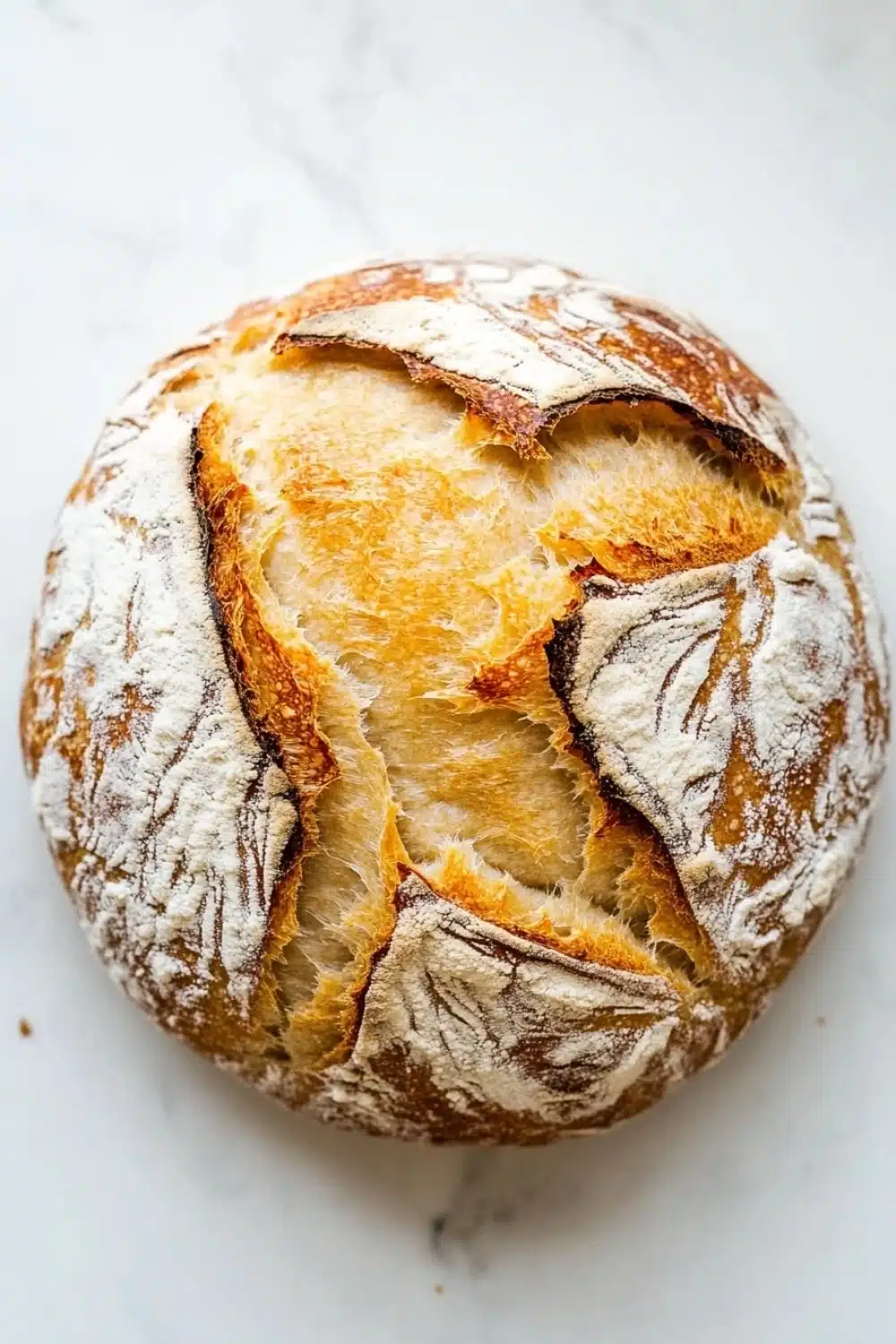
There’s something quietly satisfying about baking bread at home without all the usual fuss. This no knead bread rise yeast recipe is a revelation for anyone who’s ever been intimidated by the thought of kneading dough or worried about complicated steps. It’s the kind of bread that feels like an artisan loaf but comes together with such ease, you almost forget you made it yourself.
Last weekend, I decided to try it while juggling a half-packed suitcase and a phone call I couldn’t quite concentrate on. The dough was sticky and shaggy, far from the neat balls you see in fancy bakeries, but I just stirred it and left it to rise. The smell that developed after a few hours was so comforting — warm, yeasty, and slightly nutty. I remember peeking through the kitchen window, watching the dough bubble and grow as sunlight filtered in. It wasn’t perfect; I almost forgot about the resting dough once or twice, but the final crust and crumb made it worth every bit of the casual neglect.
Why You’ll Love It:
- Hands-off rising means you don’t need to be a dough expert to get great results.
- The crust has a beautiful, rustic crunch that feels like you’re biting into something special, even if you’re just having it with butter at home.
- It takes almost no active time — you mix, wait, and bake — but you’ll want to plan ahead for the rise time.
- Minimal ingredients and effort, but it’s not a fancy, delicate loaf. It’s simple — and that’s kind of the point.
Even if you’re not a baker, you’ll find this recipe approachable. It’s not about perfection; it’s about enjoying the process and the result, even if your dough looks a little rough around the edges.
PrintNo Knead Bread with Yeast
A simple and easy no knead bread recipe that uses yeast to create a crusty, artisan-style loaf with minimal effort. Perfect for beginners and anyone looking for homemade bread without the hassle of kneading.
- Prep Time: 10 minutes
- Cook Time: 45 minutes
- Total Time: 3 hours 55 minutes
- Yield: 8 slices
Ingredients
3 cups (375 grams) all-purpose flour
1/4 teaspoon active dry yeast
1 1/4 teaspoons salt
1 1/2 cups (360 ml) warm water (about 110°F/43°C)
Cornmeal or flour for dusting
Instructions
In a large mixing bowl, combine the flour, active dry yeast, and salt. Stir to mix evenly.
Add the warm water to the dry ingredients and stir with a wooden spoon or spatula until a sticky, shaggy dough forms.
Cover the bowl tightly with plastic wrap or a clean kitchen towel and let the dough rise at room temperature for 3 to 4 hours, or until the surface is dotted with bubbles and the dough has doubled in size.
After the dough has risen, generously flour a clean work surface and your hands. Turn the dough out onto the surface and fold it over on itself once or twice to shape it into a rough ball. Do not knead.
Place a large piece of parchment paper on a kitchen towel and dust it with cornmeal or flour. Transfer the dough seam-side down onto the parchment paper. Cover with another kitchen towel and let it rest for 30 minutes.
About 30 minutes before baking, place a heavy Dutch oven or oven-safe pot with a lid into the oven and preheat to 450°F (230°C).
Carefully remove the hot Dutch oven from the oven. Using the parchment paper, lift the dough and place it into the pot. Cover with the lid and bake for 30 minutes.
After 30 minutes, remove the lid and bake for an additional 15 minutes, or until the bread is golden brown and crusty.
Remove the bread from the oven and transfer it to a wire rack. Let it cool completely before slicing.
Kitchen Notes:
You don’t need any special equipment beyond a heavy oven-safe pot with a lid — no fancy mixers or bread machines. The Dutch oven helps create that steamy environment for a crusty exterior, but if you don’t have one, a deep oven-safe dish covered tightly with foil might work in a pinch. I usually serve this bread warm with olive oil and a sprinkle of flaky sea salt, but it’s equally good just slathered with butter and jam. If you want to experiment, I haven’t tested all of these, but adding herbs like rosemary or thyme to the dough might add a nice twist. Sometimes I dust the top with cornmeal, sometimes just flour — both work fine, just different textures. And if you’re short on time, slicing and freezing the bread means you can toast it later and still get that fresh-baked feeling.
FAQ:
Can I use instant yeast instead of active dry yeast? Yes, you can substitute instant yeast, but you might want to reduce the amount slightly and add it directly to the flour without proofing.
What if my dough doesn’t rise much? Make sure your water is warm but not too hot, ideally around 110°F (43°C). Also, the rising time can vary depending on your kitchen temperature — a cooler room means a longer rise.
How do I know when the bread is done? The crust should be golden and crisp, and the loaf should sound hollow when tapped on the bottom.
Give it a try and watch how a simple mix-and-wait approach can fill your kitchen with the smell of fresh bread — and maybe, just maybe, make you fall a little in love with baking.