
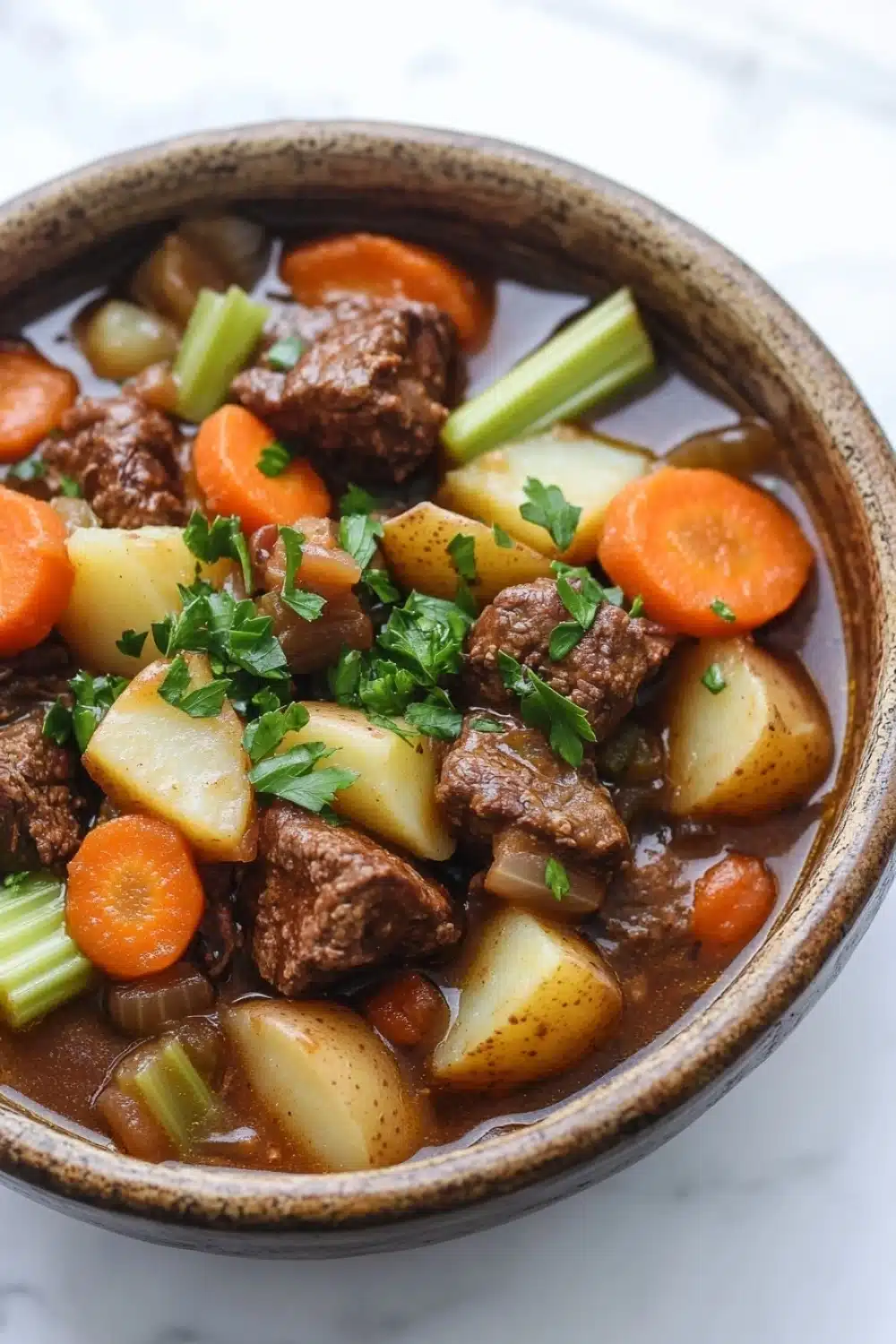
There’s something about the way a thick stew bubbles away on the stove that just grabs hold of you—a cozy, no-nonsense promise of comfort. I remember my first go at beef stew with skillet beef stew meat; the kitchen quickly filled with that rich, almost smoky aroma as the meat browned, locking in juices that’d make any slow-cooker jealous. Browning the beef in batches, without crowding the pan, is the lowdown secret—giving each cube a proper sear that forms those coveted caramelized bits, or ‘fond,’ that make the broth sing. Toss in onions, garlic, and a splash of red wine to scrape up those bits, and you’re already halfway to the good stuff. As the stew simmers, the veggies soak up all that meaty goodness, turning tender and soulful. No fancy fluff here—just straightforward, hearty flavors that hit the spot on a chilly evening. And when the flour slurry thickens that broth? Well, that’s where the magic thickens to a perfect hug in a bowl. Trust me, this isn’t just stew—it’s a slow-cooked win that makes any dinner table feel like home.
If you’re craving a meal that’s both comforting and packed with rich flavors, you might want to check out this Hearty Beef Stew with Skillet Beef Stew Meat for Cozy Dinners. It’s perfect for those cozy nights when you want something warm and satisfying!
Real Life Benefits of Cooking Beef Stew with Skillet Beef Stew Meat
- Meal prep magic: This stew is a one-pot wonder that fills your kitchen with the kind of aromas that make you forget the day’s chaos—perfect for weekday dinners or Sunday batch cooking.
- Budget-friendly beast: Using skillet beef stew meat means you’re working with a cut that’s wallet-conscious but still packs a punch in flavor and tenderness when cooked low and slow.
- Stick-to-your-ribs satisfaction: The hearty mix of beef and root veggies keeps hunger at bay—no mid-afternoon hanger attacks here.
- Leftover game strong: This stew tastes even better the next day, making it prime for leftovers that reheat without turning into sad soup.
- Customizable canvas: Throw in whatever veg you have on hand—turnips, parsnips, or turn those bay leaves into a subtle herbaceous backdrop for your flavor experiment.
Beef Stew with Skillet Beef Stew Meat
A hearty and comforting beef stew made with tender skillet beef stew meat, simmered with vegetables and rich broth for a perfect meal any day.
- Prep Time: 20 minutes
- Cook Time: 1 hour 40 minutes
- Total Time: 2 hours
- Yield: 6
Ingredients
Scale
2 pounds skillet beef stew meat, cut into 1-inch cubes
2 tablespoons vegetable oil
1 large onion, diced
3 cloves garlic, minced
4 cups beef broth
1 cup red wine
3 large carrots, peeled and sliced into 1/2-inch pieces
3 large potatoes, peeled and cut into 1-inch cubes
2 stalks celery, sliced
2 tablespoons tomato paste
1 teaspoon dried thyme
1 teaspoon dried rosemary
2 bay leaves
Salt, to taste
Black pepper, to taste
2 tablespoons all-purpose flour
2 tablespoons cold water
Fresh parsley, chopped (for garnish)
Instructions
Heat the vegetable oil in a large heavy-bottomed pot or Dutch oven over medium-high heat.
Add the skillet beef stew meat in batches, making sure not to overcrowd the pot, and brown on all sides, about 5-7 minutes per batch. Remove browned meat and set aside.
In the same pot, add the diced onion and cook until softened, about 5 minutes.
Add the minced garlic and cook for 1 minute until fragrant.
Stir in the tomato paste and cook for 2 minutes to deepen the flavor.
Pour in the red wine to deglaze the pot, scraping up any browned bits from the bottom. Let it simmer for 3-4 minutes until slightly reduced.
Return the browned beef stew meat to the pot.
Add the beef broth, dried thyme, dried rosemary, bay leaves, salt, and black pepper. Stir to combine.
Bring the stew to a boil, then reduce heat to low, cover, and simmer for 1 hour.
After 1 hour, add the carrots, potatoes, and celery to the pot. Stir well, cover, and continue to simmer for an additional 40 minutes or until the vegetables and beef are tender.
In a small bowl, mix the all-purpose flour with cold water to make a slurry.
Stir the flour slurry into the stew and cook uncovered for 5-10 minutes to thicken the sauce, stirring occasionally.
Remove the bay leaves and adjust seasoning with additional salt and pepper if needed.
Serve hot, garnished with chopped fresh parsley.
Explore more:
Dinner Recipes
Mastering Beef Stew with Skillet Beef Stew Meat
Substitution Secrets
Ever faced the dreaded empty pantry when you’re itching to make a beef stew? I’ve been there—times when the exact skillet beef stew meat isn’t in sight. No worries. Chuck roast is a solid stand-in; it breaks down beautifully during long simmers, turning fork-tender and juicy. If you want to shake things up a bit, lamb shoulder can add a gamey twist, but watch the simmer times carefully—it’s less forgiving. And for those days when red wine is MIA, grape juice with a splash of vinegar can mimic the tang without sending you running to the store. For thickening, if you find yourself sans flour, cornstarch or even mashed potatoes do the trick. Just mix cornstarch with cold water—no lumps allowed—and stir in during the last few minutes. Trust me, these swaps keep your stew in the “home-cooked magic” league even when the pantry’s playing hardball.
The Science
Let’s nerd out for a sec. The magic behind beef stew is all about collagen and connective tissue breaking down into gelatin. That slow simmer? It’s transforming tough cuts that could chew your jaw off into soft, luscious morsels. The flour slurry you add at the end isn’t just a thickener—it helps suspend flavor compounds, giving you that rich, clingy sauce that coats each bite. And that red wine? It’s more than a flavor boost. The acidity helps break down proteins, tenderizing the meat further while adding depth. Side note: don’t rush the browning of the meat—it triggers the Maillard reaction, which is chef-speak for those lip-smacking browned bits that give your stew its backbone of flavor. It’s like building a flavor fortress, brick by brick.
Real-world Fix
Here’s a nugget I learned the hard way: overcrowding the pan when browning the meat is a rookie mistake—and a flavor killer. When you cram too much in, you steam instead of brown, and goodbye, crusty deliciousness. I split my beef into batches for that perfect sear. Also, don’t skip the deglazing step. Scraping those brown bits off the pot with wine is where the stew gets its soul. One time, I got lazy and poured broth right in—big mistake. The stew lacked punch and sparkle. Lastly, if your stew turns out thinner than you’d like, patience is key. Give it a few extra minutes uncovered to reduce, or add your slurry in small increments. Thick but not gluey is the sweet spot. And hey, a sprinkle of fresh parsley at the end isn’t just for looks—it adds a fresh pop that pulls the whole thing together.
Your Burning Questions About Beef Stew, Answered
1. Can I use a different cut of beef instead of skillet beef stew meat?
Absolutely! Chuck roast or brisket cut into cubes work great. Just remember—they might need a bit more simmer time to get that fork-tender feel.
2. Is red wine really necessary in the recipe?
Not mandatory, but it really ups the game by adding depth and a touch of tang. No wine? Swap with extra beef broth or a splash of balsamic vinegar for some punch.
3. How do I make sure the stew meat gets a good sear without steaming?
Don’t crowd the pot. Brown in batches and let the meat chill a bit before tossing in. That golden crust is where all the flavor hides.
4. Can I prep this stew in advance and reheat it later?
For sure. Stew actually tastes better the next day once flavors meld. Just store it airtight in the fridge for up to 4 days or freeze for longer stints.
5. What can I use to thicken the stew if I don’t want to use flour?
Try cornstarch mixed with cold water as a slurry or even mashed potatoes stirred in. Each brings a slightly different texture, but thick and cozy is the goal.