
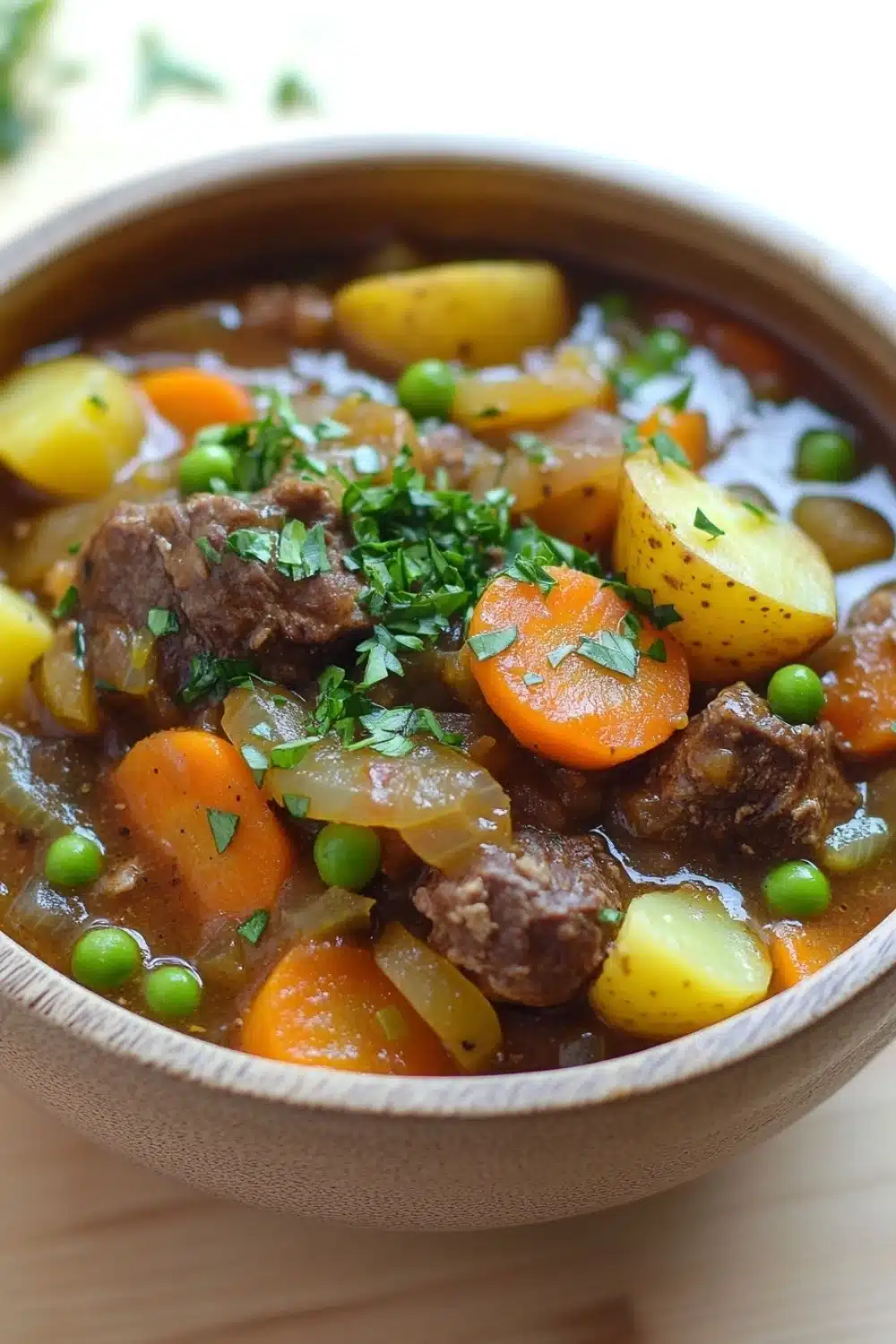
There’s something about the slow tick of the cooker that sets the whole kitchen mood — that low hum promising warmth and comfort. I remember the first time I tried this old-fashion beef stew recipe; the scent of seared beef mingling with garlic and herbs filled the air like a cozy blanket. The beauty here? It’s not just a stew, it’s a slow-brewed hug after a long day. You brown the beef till it’s got that perfect crust — none of that pale, soggy business — then dump it all in the slow cooker with carrots, potatoes, and onions. The secret sauce? A simple blend of beef broth, tomato paste, and herbs that simmers to a rich, unpretentious bath for the meat and veggies. Eight hours later, you’re rewarded with fork-tender beef and veggies soaking up every bit of that savory goodness. It’s the kind of dish that makes you want to kick back, maybe crack open a cold one, and savor every spoonful. No frills, just honest, stick-to-your-ribs eats. Trust me — once this stew’s on your roster, it’ll be a go-to that never gets old.
If you’re a fan of slow cooker old fashioned beef stew, you’ll love switching things up with a skillet version. It’s a quick and flavorful way to enjoy tender beef stew meat without the wait. Check out How to Master Beef Stew Using Skillet Beef Stew Meat for Dinner for all the tips and tricks to make a delicious stove-top beef stew tonight!
Why Slow Cooker Old Fashioned Beef Stew Wins Every Time
- Hands-off cooking means you set it and forget it—no babysitting the stove.
- Beef chuck transforms from tough-as-nails to melt-in-your-mouth tender after those long, slow hours.
- One pot magic: veggies soak up all the meaty goodness, no flavor left behind.
- Leftovers reheat like a charm, tasting even better the next day—perfect for meal prep warriors.
- Simple ingredients, zero fuss—great for weeknights when you’re too beat to cook but still want a real meal.
Slow Cooker Old Fashioned Beef Stew
A hearty and comforting slow cooker beef stew made with tender chunks of beef, potatoes, carrots, and onions simmered in a rich, savory broth. Perfect for a cozy meal any day of the week.
- Prep Time: 20 minutes
- Cook Time: 8 hours
- Total Time: 8 hours 20 minutes
- Yield: 6
Ingredients
Scale
2 pounds beef chuck, cut into 1-inch cubes
1/4 cup all-purpose flour
1 teaspoon salt
1/2 teaspoon black pepper
2 tablespoons olive oil
4 medium carrots, peeled and sliced into 1/2-inch pieces
3 medium russet potatoes, peeled and cut into 1-inch cubes
1 large yellow onion, chopped
3 cloves garlic, minced
3 cups beef broth
1 cup water
2 tablespoons tomato paste
1 teaspoon dried thyme
1 teaspoon dried rosemary
2 bay leaves
1 cup frozen peas, thawed
2 tablespoons fresh parsley, chopped
Instructions
In a large bowl, combine the flour, salt, and black pepper. Toss the beef cubes in the flour mixture until evenly coated.
Heat the olive oil in a large skillet over medium-high heat. Add the beef cubes in batches and brown on all sides, about 3-4 minutes per batch. Transfer browned beef to the slow cooker.
Add the carrots, potatoes, onion, and garlic to the slow cooker.
In a medium bowl, whisk together the beef broth, water, and tomato paste until smooth. Pour the mixture over the beef and vegetables in the slow cooker.
Add the dried thyme, dried rosemary, and bay leaves to the slow cooker. Stir gently to combine.
Cover and cook on low for 8 hours, or until the beef is tender and the vegetables are cooked through.
About 15 minutes before serving, stir in the thawed peas and continue cooking with the lid on.
Remove the bay leaves. Taste and adjust seasoning with salt and pepper if needed.
Sprinkle chopped fresh parsley over the stew before serving.
Explore more:
Dinner Recipes
Slow Cooker Old Fashioned Beef Stew: Substitution Secrets and Science
Substitution Secrets
Let’s talk about playing fast and loose with the ingredients in your beef stew without crashing the flavor train. Sometimes, you’re out of russets or fresh rosemary — what then? For potatoes, Yukon Golds or even red potatoes work fine, lending a buttery texture that russets can’t quite match but won’t throw you off balance. If you don’t have dried rosemary, fresh is a green-light, but use half the amount since fresh herbs punch harder. No fresh parsley? Cilantro can shake things up, though it’s a curveball, so only if you’re feeling adventurous. And for beef broth, a combo of beef bouillon cubes with water can stand in, but be mindful — bouillon is salty and can tip the salt scale quickly.
As for thickening, the recipe calls for flour dusted on the beef, but cornstarch slurry is a slick alternative—just add it toward the end to avoid a gluey mess. The key is gradual additions and constant stirring. I’ve learned the hard way that dumping thickener too early or too much turns your stew into stew-gelatin. Keep it chill and slow.
The Science
Here’s where the magic and method meet meat and starch. That initial flour coating on the beef isn’t just for show—it’s the cornerstone for your stew’s body. When the flour-coated beef hits the hot oil, you’re not just browning; you’re setting up a Maillard reaction. That’s the fancy term for the browned crust that packs flavor and locks moisture inside. Then, as this mixture simmers low and slow, the collagen in beef chuck breaks down into gelatin, which thickens the broth naturally and gives your stew that luxurious mouthfeel without any extra jiggly bits.
Slow cooking at low temps is the unsung hero here. It allows the connective tissue to unravel without overcooking the veggies. The bay leaves and herbs release their oils and flavors steadily, melding into the broth rather than screaming at you with sharpness. Adding peas last minute is smart — they’re delicate and cook quickly, so no mush, just a pop of color and freshness.
Real-world Fix
Now, picture this: a friend calls me at 7 pm, stressed, no dinner ready, and only frozen stew leftovers that went a bit watery after thawing. Here’s the quick fix I swear by—heat the stew on medium-low, and whisk in a spoonful of instant mashed potato flakes or a slurry of cornstarch and cold water. This quick trick brings the broth back from thin city to thick-and-satisfying crossroads. Throw in fresh herbs—if you have them—to brighten the flavor, then let it bubble gently for 5-10 minutes. The potatoes or cornstarch grab onto all that liquid, giving you a stew that’s just like homemade, minus the hours in the kitchen.
In a pinch, if you forgot to brown your beef first, don’t sweat it. Just crank the heat for the first 20 minutes of cooking to jumpstart flavor development. Yes, it’s a cheat, but sometimes you gotta hustle in the kitchen. This stew’s forgiving nature makes it a weeknight warrior, not a diva demanding perfection.
Slow Cooker Old Fashioned Beef Stew FAQs
Can I skip browning the beef and just toss everything in the slow cooker?
You totally can, but trust me—browning the beef first is where the magic happens. It adds a deeper, richer flavor and better texture. Skipping it might save time, but you’ll miss that meaty punch.
My potatoes always get mushy in slow cooker stews. How can I keep them firm?
The trick is cutting your potatoes into larger chunks and adding them right at the start with the beef and veggies. Smaller pieces tend to fall apart during the long cook. Russets hold up pretty well if you don’t overdo it.
Can I swap fresh herbs for dried in this stew?
Absolutely. The recipe calls for dried thyme and rosemary, which infuse slowly during the long cook. If you want to use fresh herbs, add them toward the end to keep their punch without turning bitter.
Is it okay to use frozen vegetables instead of fresh ones?
Frozen peas are in the recipe and work great, but for carrots and potatoes, fresh is best. Frozen veggies can get mushy or lose texture, especially in an 8-hour cook. If you’re in a pinch, add frozen veggies in the last hour or so.
How do I make the stew thicker if it’s too runny?
Easy fix—mix a tablespoon of flour or cornstarch with cold water to make a slurry, then stir it into the stew about 15 minutes before serving. Let it cook uncovered to thicken up nicely without turning into glue.