
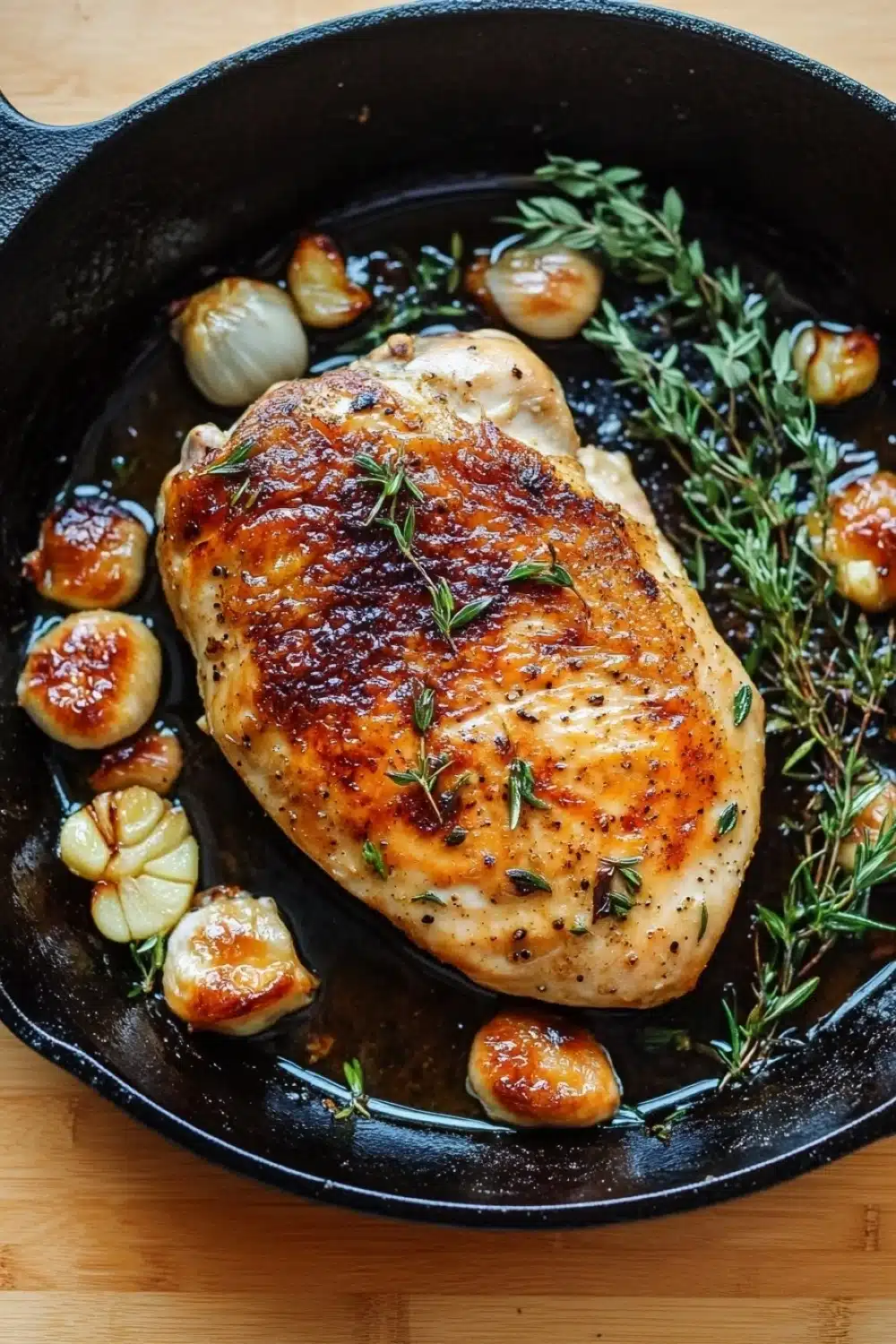
There’s something downright satisfying about firing up a cast iron skillet and letting a chicken breast sing to that perfect sear. The kitchen fills with the earthy aroma of garlic and fresh herbs, and the sound—the satisfying sizzle as the chicken hits the hot pan—signals that you’re onto something good. I remember the first time I nailed this technique; the skinless breast turned out juicy, not the usual dry brick you dread. No fluff, no fuss—just salt, pepper, and garlic powder giving that crisp golden crust. The real magic happens when you add smashed garlic, rosemary, and thyme alongside a generous pat of butter, basting the chicken in that fragrant, bubbling bath. It’s a simple hack that pays off big time. If you let the chicken rest (and here’s where many miss the beat), those juices redistribute, making each bite tender and flavorful. So grab your cast iron, your garlic, and a sprig or two of herbs—this is one skillet gig that won’t let you down.
If you’re looking for a quick and tasty meal, try this one-pan dinner that’s packed with flavor.
Why Pan-Seared Chicken Breast in a Cast Iron Skillet Hits Different
- Juicy as heck: Dry chicken? Not in this house. The cast iron locks in moisture, so each bite stays tender instead of turning into shoe leather.
- Flavor bomb: The garlic, rosemary, and thyme combo isn’t just garnish—it seeps into the meat during basting, creating a punch of herby goodness that’s far from your everyday bland chicken.
- Quick turnaround: In just about 25 minutes flat, you’ve got a protein-packed meal that won’t have you hanging around the kitchen like a lost puppy.
- Simple gear, big results: No fancy gadgets needed—just your trusty cast iron skillet and a few pantry staples. Perfect for those who want to cook like a boss without the noise.
- Leftovers that don’t suck: Chill them in the fridge and they keep their mojo for up to three days, making meal prep a breeze and avoiding that sad leftover vibe.
Pan-Seared Chicken Breast in Cast Iron Skillet
A simple and delicious recipe for perfectly cooked, juicy chicken breasts seared in a cast iron skillet with garlic and herbs.
- Prep Time: 10 minutes
- Cook Time: 15 minutes
- Total Time: 25 minutes
- Yield: 2
Ingredients
2 boneless, skinless chicken breasts, about 6 ounces each
1 teaspoon kosher salt
1/2 teaspoon freshly ground black pepper
1 teaspoon garlic powder
1 tablespoon olive oil
2 cloves garlic, smashed
1 sprig fresh rosemary
1 sprig fresh thyme
1 tablespoon unsalted butter
Instructions
Pat the chicken breasts dry with paper towels to remove excess moisture.
Season both sides of the chicken breasts evenly with kosher salt, black pepper, and garlic powder.
Heat the olive oil in a cast iron skillet over medium-high heat until shimmering but not smoking, about 2 minutes.
Place the chicken breasts in the skillet and cook without moving them for 6 to 7 minutes, until the underside is golden brown and releases easily from the pan.
Flip the chicken breasts over using tongs.
Add the smashed garlic cloves, rosemary, thyme, and butter to the skillet.
Tilt the skillet slightly and spoon the melted butter and herbs over the chicken breasts repeatedly for 5 to 7 minutes, or until the internal temperature reaches 165°F (74°C).
Remove the chicken breasts from the skillet and transfer to a plate. Let rest for 5 minutes before slicing and serving.
Explore more:
Dinner Recipes
Pan-Seared Chicken Breast in Cast Iron Skillet
Substitution Secrets
Sometimes, you’re knee-deep in prep and suddenly realize you’re out of fresh herbs or even butter. Don’t sweat it. For the fresh rosemary and thyme, dried versions can work, but remember—they’re more concentrated. Use about a third of the amount and toss them in earlier so they bloom in the oil. And if butter is MIA or you’re avoiding dairy, swap in ghee or even a splash of extra olive oil. Both bring fat and richness, but ghee adds that nutty, almost caramelized backbone that butter would provide.
On the seasoning front, garlic powder is forgiving. If you don’t have it, a dash of onion powder or even a bit of smoked paprika adds a surprising depth. The key here—keep the core technique intact: drying the chicken thoroughly and getting that sear. Seasonings can dance around, but the sear is the real MVP.
The Science
Here’s the meat of it—why does that cast iron skillet make such a difference? It’s all about heat retention. Cast iron holds and distributes heat evenly, which is critical when searing chicken. You want that Maillard reaction—think browning that creates those rich, savory flavors—to happen fast and intense. Too low a heat and you get rubbery skin and a soggy mess; too high and you risk burning outside while inside stays raw.
Patting the chicken dry isn’t just kitchen fluff—it removes surface moisture that would steam the meat instead of searing it. That shimmering olive oil signals the perfect temperature: hot enough to lock in juices but not so hot it smokes. When you tilt the pan and baste with butter and herbs, you’re essentially flavor-bombing the chicken while simultaneously finishing the cooking process gently with that fat’s heat transfer. It’s a classic pan-basting technique that cooks evenly and infuses every bite.
Real-world Fix
I’ll be honest: I’ve scorched chicken breasts more times than I care to admit. Here’s the fix when you catch yourself in the heat, literally. If the chicken’s browning too fast and showing signs of burning, reduce the heat and add a splash of chicken broth or even water. Cover the skillet briefly to let steam finish the cooking without drying out the meat. This keeps things juicy without sacrificing the sear.
Resting is non-negotiable. I learned this the hard way—cutting into the chicken immediately releases all the juices. Five minutes under a tent of foil gives the proteins a moment to relax and the juices to redistribute. That’s when juicy chicken breasts truly happen. Also, don’t skip the garlic and herbs in the pan; they might seem like extras, but the butter-basted garlic oil is the secret weapon that turns a simple sear into a flavor puncher.
Pan-Seared Chicken Breast FAQs
Can I use bone-in chicken breasts for this recipe?
You can, but bone-in breasts take longer to cook. Keep an eye on the temperature to avoid a dry bird. Adjust your cook time accordingly—think 10-12 minutes per side depending on thickness.
What’s the trick to getting that perfect golden crust?
Patting the chicken dry is your best friend here. Moisture is the enemy of a good sear. Also, don’t fiddle with the chicken once it hits the pan—let it sit and form that crust.
Can I swap fresh herbs for dried ones?
Sure can, but fresh rosemary and thyme really punch up the flavor. If you only have dried, use about a third of the amount and toss them in earlier to let them bloom in the oil.
Is it okay to skip the butter basting step?
You could, but butter basting is where the magic lives—it adds richness and keeps the chicken juicy. Without it, you might lose some flavor depth and moisture.
How do I know when the chicken is perfectly cooked?
Internal temp is king here—aim for 165°F (74°C). If you don’t have a thermometer, slice into the thickest part; the juices should run clear, not pink.