
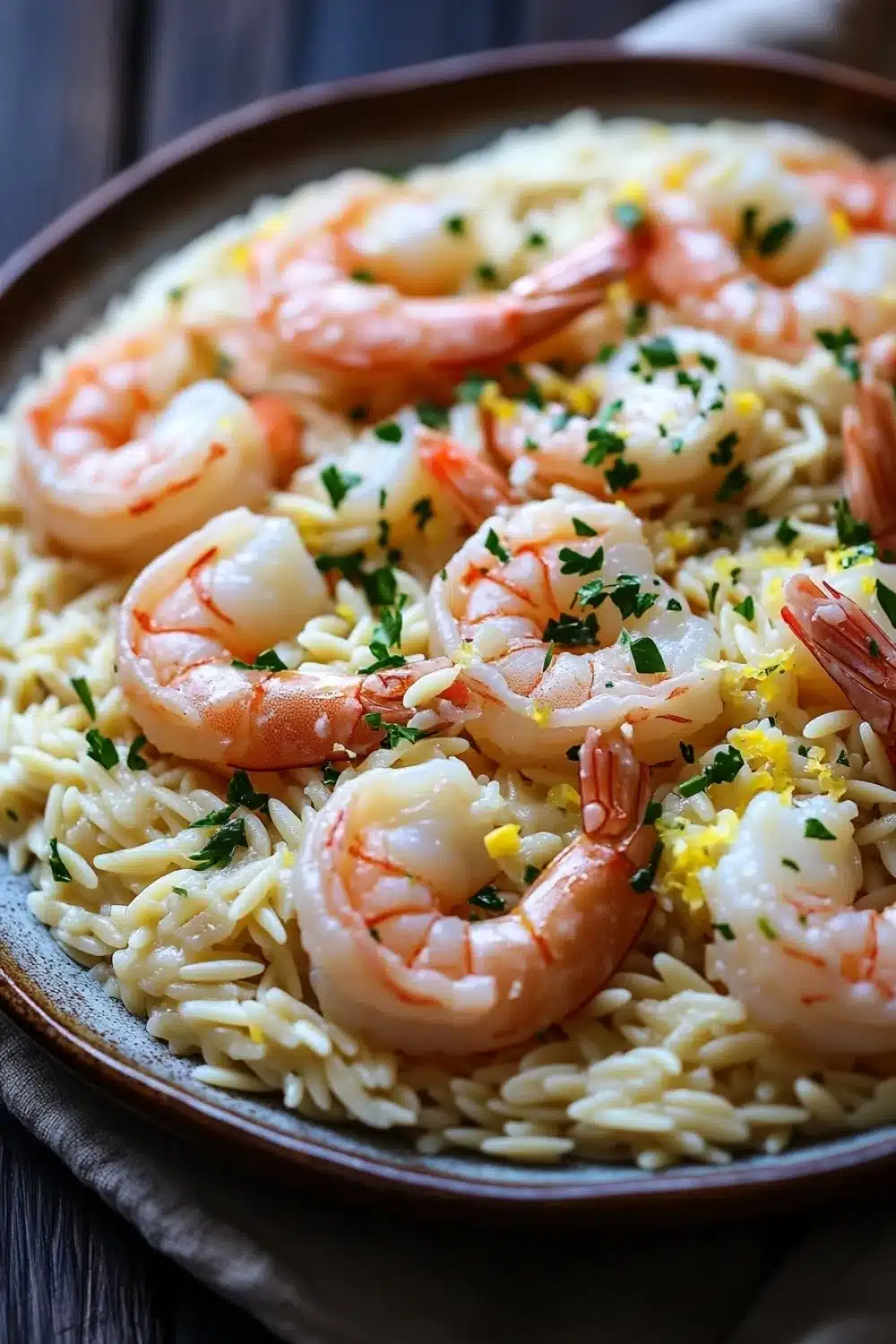
Dinner magic in 30 minutes.
There’s something about the sizzle of shrimp hitting a hot skillet that immediately grabs your attention—like the kitchen just went from zero to rock concert. The air fills with the punchy aroma of garlic and lemon zest mingling, teasing the senses and promising a meal that’s anything but basic. It’s a fast track to flavor town, with orzo pasta soaking up every drop of that garlicky, lemony goodness.
One-pan wonders like this are my go-to when the week spins out and the clock’s against me. No muss, no fuss—just an honest, hands-on dish that gets plated in a flash. The shrimp? Tender with a little snap, kissed by a subtle heat from red pepper flakes. The orzo? Creamy, yet light, with that buttery finish that keeps you coming back for more.
Pull up a chair, because this skillet is about to make your dinner rotation a whole lot cooler.
For another delicious seafood dish, check out our Quick & Zesty Lemon Butter Shrimp Skillet for Busy Weeknights that pairs perfectly with lemon garlic shrimp orzo skillet.
Real Life Wins with Lemon Garlic Shrimp Orzo Skillet
- Weeknight rescue: From fridge to table in just 30 minutes—no juggling multiple pots or pans here.
- One-pan wonder: Cuts down on cleanup time dramatically, perfect for those nights when doing dishes feels like a drag.
- Shrimp that sings: Quick sear locks in flavor and texture, so your shrimp won’t turn into rubbery sad sacks.
- Flavor layered like a pro: Garlic, lemon zest, and a hint of crushed red pepper give a punch without any fuss.
- Flexible feast: Leftovers reheat like a charm, making lunch or a second dinner a total no-brainer.
Lemon Garlic Shrimp Orzo Skillet

A quick and flavorful one-pan meal featuring tender shrimp, zesty lemon, and garlic-infused orzo pasta, perfect for a weeknight dinner.
- Prep Time: 10 minutes
- Cook Time: 20 minutes
- Total Time: 30 minutes
- Yield: 4
Ingredients
1 tablespoon olive oil
1 pound large shrimp, peeled and deveined
1 teaspoon kosher salt, divided
1/2 teaspoon black pepper, divided
4 cloves garlic, minced
1 cup orzo pasta
2 1/2 cups low-sodium chicken broth
1 tablespoon fresh lemon juice
1 teaspoon lemon zest
1/4 teaspoon crushed red pepper flakes
2 tablespoons unsalted butter
2 tablespoons chopped fresh parsley
Instructions
Heat the olive oil in a large skillet over medium-high heat.
Season the shrimp with 1/2 teaspoon salt and 1/4 teaspoon black pepper.
Add the shrimp to the skillet and cook for 2 minutes on each side until pink and opaque. Remove shrimp from the skillet and set aside.
In the same skillet, add the minced garlic and cook for 1 minute until fragrant, stirring constantly to avoid burning.
Add the orzo pasta to the skillet and stir to coat it in the garlic and oil. Toast the orzo for 1-2 minutes, stirring frequently.
Pour in the chicken broth, add the remaining 1/2 teaspoon salt, 1/4 teaspoon black pepper, lemon juice, lemon zest, and crushed red pepper flakes. Stir to combine.
Bring the mixture to a boil, then reduce heat to medium-low and simmer uncovered for 10-12 minutes, stirring occasionally, until the orzo is tender and most of the liquid is absorbed.
Stir in the butter until melted and well combined.
Return the cooked shrimp to the skillet and stir to combine. Cook for an additional 1-2 minutes to heat the shrimp through.
Remove from heat and sprinkle with chopped fresh parsley before serving.
Explore more:
Dinner Recipes
Nailing Lemon Garlic Shrimp Orzo Skillet: Tricks & Fixes
The Sneaky Swap: When Shrimp Takes a Rain Check
Here’s the skinny: if shrimp’s playing hard to get at your local market or your wallet’s feeling the pinch, don’t sweat it. Swap in scallops or even firm white fish like cod—both soak up those lemony, garlicky vibes beautifully. For a plant-based spin, try king oyster mushrooms sliced thick or hearts of palm for that meaty chew. Remember, shrimp cooks fast and flaunts a tender snap; anything you replace it with might need a minute or two more in the pan—adjust accordingly and test for doneness with a quick pinch. The seasoning game stays the same—salt, pepper, and that punch of lemon zest remain your trusty sidekicks.
Why Toasting Orzo Makes All the Difference (No, Really)
Toast the orzo? Sounds like a fuss, but this step is the unsung hero. I’m telling you, that minute or two of coaxing the pasta in olive oil with garlic before the broth hits the pan? Gold. Toasting wakes up the orzo, gives it a nuttier edge, and stops it from turning into a gloopy mess later. You get flakes of flavor—bright, slightly toasted, and way less mushy. Plus, it helps the grain hold its shape better during simmering. Here’s a pro tip: keep stirring like you mean it, so the orzo chars evenly, no one’s getting burnt edges, and that garlicky aroma fills your kitchen. Trust me, this little ritual is a game changer.
Saving the Day: What to Do If Your Orzo Turns to Glue
Gum stuck to your shoe? Annoying. Orzo glue in your skillet? A total bummer. If your orzo is turning into one sticky blob, here’s the lowdown. First, check your liquid ratio (2.5 cups broth to 1 cup orzo is your sweet spot). Too little broth = dry pasta and clumps; too much and the dish gets watery. Second, don’t cover while simmering—keeping it uncovered lets excess moisture escape, keeping your orzo loose. Third, stir occasionally but not constantly—over-stirring breaks down the pasta. But if you’re already knee-deep in glue, quickly toss in a splash of broth or water and stir gently off heat to loosen things up. Also, a squeeze more lemon juice can brighten and cut through that heavy texture. Remember, patience is your sous chef here—let the orzo simmer properly, and you’ll avoid the dreaded glue trap.
Lemon Garlic Shrimp Orzo Skillet FAQs
A: Yes, you can! Just thaw the shrimp completely and pat them dry before cooking to avoid excess moisture in the skillet.
A: Garlic burns fast—like a dime-store horror flick—so keep it moving! Stir constantly over medium heat and pull it off the heat if it starts browning too quickly.
A: Absolutely, though chicken broth adds a richer base. If you go veggie, consider upping the seasoning so it doesn’t fall flat.
A: Toasting the orzo first in the skillet is clutch—it keeps the grains separate and adds a nutty edge. Stir often once the broth hits to avoid clumps.
A: No. Pasta and shrimp get mushy and sad from freezing. Best to save leftovers in the fridge and eat within three days.