
Think poke bowls are just raw fish? Think again.
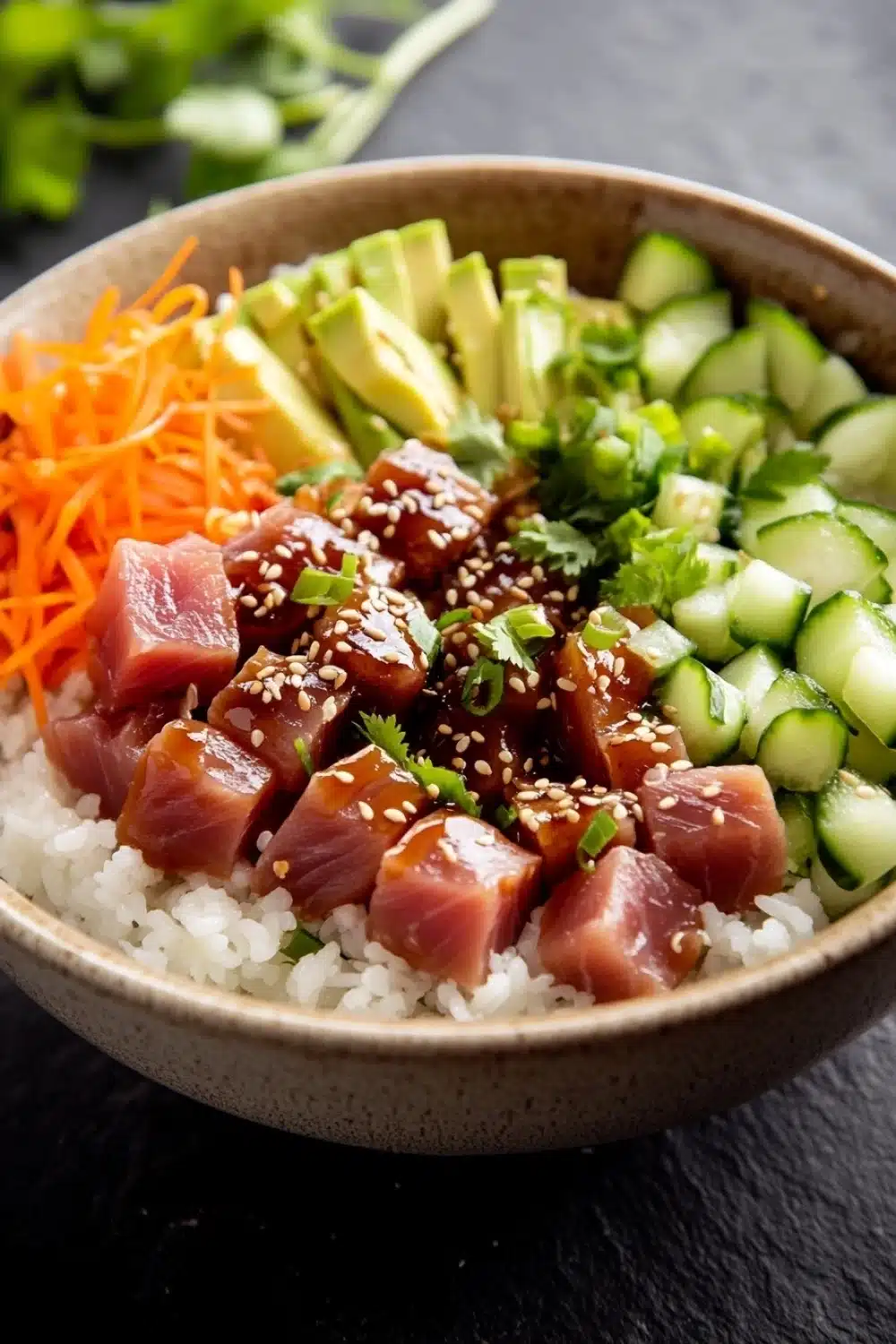
That day in my kitchen, I decided to flip the script—tuna seared to a blush-pink perfection, its edges caramelized with just the right kiss of heat. The aroma of ginger and garlic sizzling alongside sesame oil filled the air, turning my humble space into a bustling izakaya corner. Every sizzle felt like a drumbeat, urging me to dig in.
Rice, seasoned with a sharp kiss of vinegar and sugar, lay beneath the star—warm, fluffy, and inviting. Fresh cucumber, creamy avocado, and shredded carrot joined the party, adding crunch and creaminess in every bite. The soy-ginger dressing wasn’t just a splash of flavor; it was the zing that tied the whole shebang together, a little dance on the tongue that made me forget the typical raw-only mindset.
This is no ordinary poke. It’s like taking your favorite island treat, giving it a toasty hug, and serving it with a wink. Ready to get your hands dirty and taste the unexpected? Let’s dive in.
For a delicious twist, check out our tuna poke bowl cooked recipe that puts a warm spin on a classic dish.
Why This Cooked Tuna Poke Bowl Works Wonders in Real Life
- Saves you from hangry moments with a quick 25-minute total cook time—no more waiting around for dinner.
- Balances fresh and cooked textures perfectly, so every bite hits that satisfying sweet spot—like a flavor drumline.
- Loads of vibrant veggies mean you’re sneaking in nutrients without even trying—cucumber crunch, avocado creaminess, and carrot snaps all in one bowl.
- Seared tuna adds a smoky edge that keeps this from feeling like your average poke—think sushi vibes without the raw fish jitters.
- Simple soy-ginger dressing pulls it all together—no need for fancy sauces or endless ingredients cluttering your fridge.
Cooked Tuna Poke Bowl
A delicious twist on the traditional poke bowl featuring perfectly seared tuna served over a bed of seasoned rice with fresh vegetables and a flavorful soy-ginger dressing.
- Prep Time: 15 minutes
- Cook Time: 10 minutes
- Total Time: 25 minutes
- Yield: 2
Ingredients
1 cup sushi rice
1 1/4 cups water
2 tablespoons rice vinegar
1 tablespoon sugar
1/2 teaspoon salt
12 ounces fresh tuna steak, cut into 1-inch cubes
1 tablespoon vegetable oil
2 tablespoons soy sauce
1 tablespoon sesame oil
1 tablespoon grated fresh ginger
1 clove garlic, minced
1 teaspoon honey
1/2 cup diced cucumber
1/2 cup diced avocado
1/4 cup shredded carrot
2 green onions, thinly sliced
1 tablespoon toasted sesame seeds
1/4 cup chopped fresh cilantro
Instructions
Rinse the sushi rice under cold water until the water runs clear.
Combine the rinsed rice and water in a medium saucepan and bring to a boil over medium-high heat.
Once boiling, reduce heat to low, cover, and simmer for 15 minutes or until the water is absorbed and rice is tender.
Remove from heat and let rice sit, covered, for 10 minutes.
In a small bowl, mix rice vinegar, sugar, and salt until dissolved.
Transfer the cooked rice to a large bowl and gently fold in the vinegar mixture. Set aside to cool slightly.
Heat vegetable oil in a non-stick skillet over medium-high heat.
Add the tuna cubes and sear for about 1-2 minutes per side, until the outside is cooked but the inside remains slightly pink. Remove from heat.
In a separate bowl, whisk together soy sauce, sesame oil, grated ginger, minced garlic, and honey to create the dressing.
Place a serving of seasoned rice in each bowl.
Top the rice with seared tuna, diced cucumber, diced avocado, shredded carrot, and sliced green onions.
Drizzle the soy-ginger dressing evenly over each bowl.
Garnish with toasted sesame seeds and chopped fresh cilantro.
Serve immediately.
Explore more:
Lunch Recipes
Mastering Your Cooked Tuna Poke Bowl
The Art of Rice: More Than Just a Bed
Rice—it’s the unsung hero here. I’ve learned that treating sushi rice right is the cornerstone of any poke bowl. Rinse it until the water runs clear, no shortcuts. This washes away excess starch, preventing that dreaded gummy mess. Then, when cooking, the simmering whispers of water absorption are key—too much or too little water, and you’re toast. After the rice is cooked, folding in a simple mix of rice vinegar, sugar, and salt isn’t just tradition; it’s the acid-sweet tang that wakes up the grains, giving them that sticky, glossy character that clings to your chopsticks and toppings alike.
Flip, Sear, But Don’t Overcook: The Tuna Tango
Searing tuna is a tightrope walk. When I first tried, I overcooked it to a dry, sad steak—total rookie move. The secret is a hot skillet and a quick 1-2 minute sear per side—think flash, not slow dance. Use vegetable oil for a high smoke point; olive oil’s too finicky here. The goal? A beautifully caramelized crust with a pink, tender heart. No sashimi here—this is a cooked spin, so don’t shy away from that heat. Toss the tuna gently; you want to keep those cubes intact, not shredded. And hey, if you want to skip the tuna, thick-cut salmon works just as well, but adjust sear time accordingly. Remember, the tuna’s flavor is subtle—let the soy-ginger dressing do the heavy lifting.
When Your Poke Bowl Goes Sideways: Quick Fixes
Rice too mushy? Spread it on a baking sheet and let it air dry for a bit—no microwave hacks here. Tuna overcooked? Slice thin and toss with a bit more soy or a splash of lime juice to mask dryness. Too salty dressing? Add a splash of water or a teaspoon of honey to balance the punch. Forget to marinate the tuna? No sweat—your dressing is strong enough to bring it home at the bowl-assembly stage. And if your avocado is a brown mess? Toss it with a bit of lemon juice earlier next time—keeps it fresh and bright. These bowls are forgiving if you keep your cool and adapt—poke bowls are the ultimate freestyle meal, after all.
Cooked Tuna Poke Bowl FAQ
- Can I use frozen tuna?
- Yes, you can, but thaw it completely and pat it dry to avoid steaming instead of searing. Frozen tuna can still pack that punch if handled right.
- How do I keep the rice from getting mushy?
- Rinsing the rice until the water runs clear washes away excess starch, preventing clumps. Also, folding in the vinegar mixture gently helps keep each grain distinct. Letting it cool uncovered for a bit is another pro move.
- Is it okay to skip the sesame oil?
- Sure, but the sesame oil adds a toasty depth that balances the soy-ginger dressing. Without it, the bowl might feel a little flat—think of it like missing a key player on the field.
- Can I prep this ahead of time?
- Absolutely, but store tuna, rice, and veggies separately to avoid sogginess. Tuna stays good up to 2 days refrigerated, but for best texture, reheat gently and toss dressing just before serving.
- What’s the best way to sear tuna cubes evenly?
- High heat, quick flips. Don’t crowd the pan — give those cubes breathing room. I learned this the hard way when my tuna turned out steamed and sad. A hot pan and patience are the real MVPs here.