
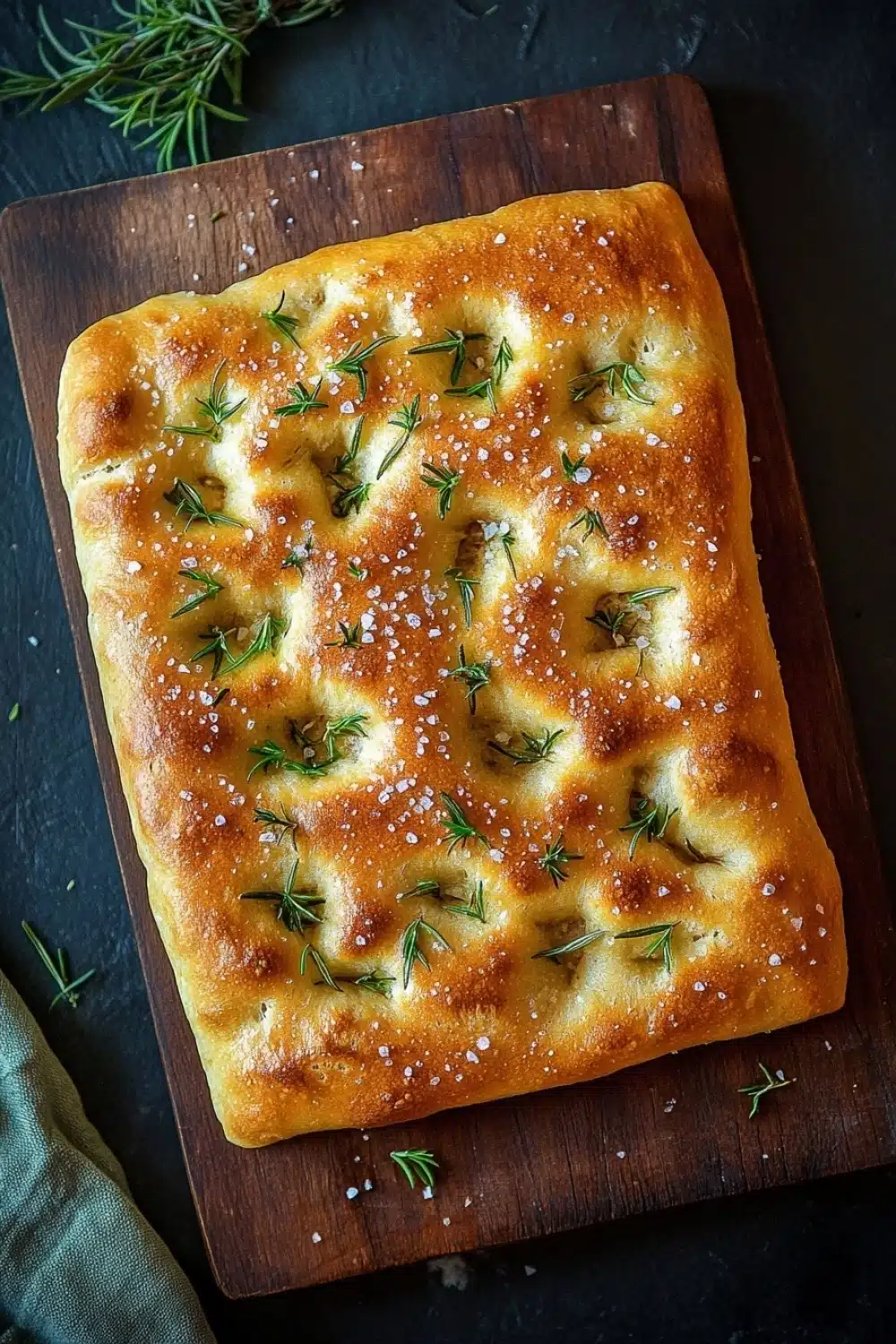
Focaccia magic starts here.
When I first tried making focaccia bread, I was floored by how this seemingly simple dough could transform into a golden, airy canvas bursting with olive oil and fresh rosemary. The kitchen fills with an irresistible aroma that makes waiting for the bake feel like a test of patience. It’s a game of timing—proofing the dough just right and knowing when to punch those dimples for that classic texture, which is more than just a pretty face; it’s what gives focaccia its soul.
This bread isn’t just a sidekick; it’s the main act in many of my meals. Crisp edges with a soft, pillowy center—each bite feels like a cozy handshake from an old friend. The coarse sea salt flakes on top add a punch that wakes up your taste buds, teasing them to crave more. And let’s not overlook the olive oil drizzle—the slick that keeps the crust blissfully moist and adds that slightly fruity note that dances on the tongue.
Whether slathered with tapenade, layered with fresh mozzarella, or just enjoyed straight from the pan, focaccia bread is my go-to for turning any meal into an event. Grab your dough scraper—let’s get our hands a little messy and bake something unforgettable.
If you’re a fan of focaccia bread, you’ll love exploring our Lunch recipe collection for more delicious meal ideas.
Why Classic Focaccia Bread Works Wonders in Real Life
- Hands down, focaccia is the ultimate bread hack for lazy dinner parties—crispy edges with a pillowy inside that pairs with anything from soup to salad.
- Got leftover focaccia? It makes killer sandwiches; just slice thick, slap on some meat and cheese, and you’re golden for lunch on the go.
- Baking this bread fills your kitchen with that yeasty, warm aroma that’s basically a comfort blanket after a long day—no candle needed.
- Perfect for dipping—think olive oil, balsamic vinegar, or even a cheeky tapenade—turning a simple snack into a mini celebration.
- Bonus: This dough’s forgiving. Mess up the shape, skip perfect dimples, or toss in extra rosemary—it still comes out tasting like you’re a pro baker.
Classic Focaccia Bread
This classic focaccia bread is soft, airy, and perfectly golden with a crispy crust. It’s flavored with olive oil and sea salt, making it a delicious accompaniment to any meal or perfect for sandwiches.
- Prep Time: 20 minutes
- Cook Time: 25 minutes
- Total Time: 1 hour 45 minutes
- Yield: 8
Ingredients
4 cups (480 grams) all-purpose flour, plus extra for dusting
1 tablespoon granulated sugar
2 teaspoons active dry yeast
1 1/2 teaspoons fine sea salt
1 2/3 cups (400 ml) warm water (about 110°F/43°C)
1/4 cup (60 ml) extra virgin olive oil, plus extra for drizzling
1 teaspoon coarse sea salt for topping
2 tablespoons fresh rosemary leaves, chopped
Instructions
In a small bowl, combine the warm water, sugar, and active dry yeast. Stir gently and let it sit for 5-10 minutes until the mixture is foamy.
In a large mixing bowl, whisk together the all-purpose flour and fine sea salt.
Make a well in the center of the dry ingredients and pour in the yeast mixture and 1/4 cup olive oil.
Using a wooden spoon or your hands, mix until a sticky dough forms.
Turn the dough onto a lightly floured surface and knead for about 8-10 minutes until smooth and elastic. Add a little flour if the dough is too sticky, but keep it soft.
Lightly oil a large bowl with olive oil and place the dough inside, turning it to coat all sides with oil.
Cover the bowl with a clean kitchen towel or plastic wrap and let the dough rise in a warm place for about 1 hour, or until it has doubled in size.
Preheat your oven to 425°F (220°C).
Lightly oil a 9×13 inch (23×33 cm) baking pan.
Punch down the dough to release air and transfer it to the prepared baking pan. Press the dough out evenly to fill the pan.
Using your fingertips, gently dimple the surface of the dough all over.
Drizzle 2 tablespoons of olive oil evenly over the top of the dough.
Sprinkle the chopped rosemary and coarse sea salt evenly over the surface.
Let the dough rest for 15 minutes to rise slightly again.
Bake in the preheated oven for 20-25 minutes, or until the focaccia is golden brown and cooked through.
Remove from the oven and let cool slightly in the pan before slicing and serving.
Explore more:
Lunch Recipes
Mastering Classic Focaccia Bread: Tricks and Tweaks
The Secret Sauce: Why Olive Oil Isn’t Just for Drizzling
I’ve always said, focaccia is basically a love letter to olive oil. But here’s the kicker—using it isn’t just about slathering it on top for that golden glow. It’s about folding it into the dough and the pan, a double whammy that creates that tender crumb and crispy crust combo. The oil keeps the dough soft during the rise, acting like a shield that locks moisture in and keeps the crumb airy and light. It’s easy to skimp on this step, thinking it’s just for flavor, but nah—olive oil is the MVP that turns a meh loaf into a showstopper.
Pro tip? Don’t just drizzle the oil on—rub some on your hands when pressing those dimples in the dough. It prevents sticking and gives you those pockets of crunch that make you wanna break off another piece. If you try to cut corners here, your focaccia ends up dry or too dense, like chewing on a brick.
Flour Power: Swapping Ingredients Without Losing Soul
So, what if you’re staring at your pantry and realize you’re out of the beloved all-purpose flour? Don’t sweat it. Focaccia’s forgiving, more than some breads I’ve wrestled with. Try swapping half the all-purpose for bread flour to give the dough a little extra chew—think street-level artisan. Bread flour’s higher protein content helps build that gluten network, so your dough can stretch and bounce back, trapping gas for those lovely bubbles.
But here’s the catch: going full-on bread flour can dry out the dough since it sucks up more water. You gotta flex on hydration—bump your water up by a tablespoon or two and keep an eye on the dough’s feel. It should be sticky but manageable, like a good jam session where everyone’s in sync but not stepping on toes.
On the flip side, if you wanna get wild with whole wheat flour, start with 25% substitution. It brings depth and nuttiness but can weigh down your dough, so compensate by adding a splash more olive oil and water. And remember, whole wheat focaccia won’t have the same bounce—it’s a different vibe altogether.
Oops-proofing Your Rise: Tackling Common Focaccia Flops
Nothing kills the vibe faster than dough refusing to rise. I’ve been there—watching my dough sit like a lump of regret, wondering if it’s dead or just shy. First, check your yeast. Freshness is king in this game. Old yeast? Dead on arrival. Always proof it in warm (not hot) water with a pinch of sugar. That magical foam means your yeast is alive and kicking.
Ambient temperature plays its sneaky role. Too cold, and your dough will ghost you—nothing happens. Too hot, and you’ll kill the yeast off. Aim for that sweet spot around 75°F to 80°F (24°C to 27°C). If your kitchen’s a cold warzone, create a makeshift proofing box by placing the bowl inside an off oven with a cup of hot water nearby. Total game-changer.
When punching down and shaping the dough, be gentle. Over-handling can deflate those precious bubbles you fought to grow. Also, don’t rush the second rise after shaping—those 15 minutes make sure your focaccia gets that pillowy lift before hitting the oven. Skip it, and you’ll get a dense, sad slab. Trust me, patience here pays off big time.
Classic Focaccia Bread FAQs
- Can I use instant yeast instead?
- Yes, you can swap active dry yeast for instant yeast. Just mix it straight into the flour—no need to proof. It cuts down the wait time, but keep an eye on the rise since it may puff up faster.
- Why does my focaccia turn out dense?
- Often, dense focaccia means either the dough wasn’t kneaded enough or didn’t rise properly. Kneading develops that gluten web, essential for the airy crumb. Also, the water temp should be warm but not hot—too hot kills the yeast, leaving you with a brick. Don’t rush the rise; patience pays off big time here.
- Can I add toppings other than rosemary?
- Absolutely! Focaccia is basically a blank canvas. Go wild with olives, caramelized onions, cherry tomatoes, or even thinly sliced garlic. Just remember to not overload it, or the dough won’t bake evenly. A little sprinkle goes a long way in the flavor department.
- Is focaccia good for sandwiches?
- Yes. The texture is perfect—soft inside, crispy outside—making it an ace choice for hearty sandwiches. It holds up to all sorts of fillings, from grilled veggies to deli meats, without turning soggy.
- How long can I freeze focaccia?
- You can freeze it for up to one month. Wrap it tight in plastic and foil to keep freezer burn away. When you’re ready to eat, thaw at room temp and warm it in the oven to bring back that fresh-baked vibe.