
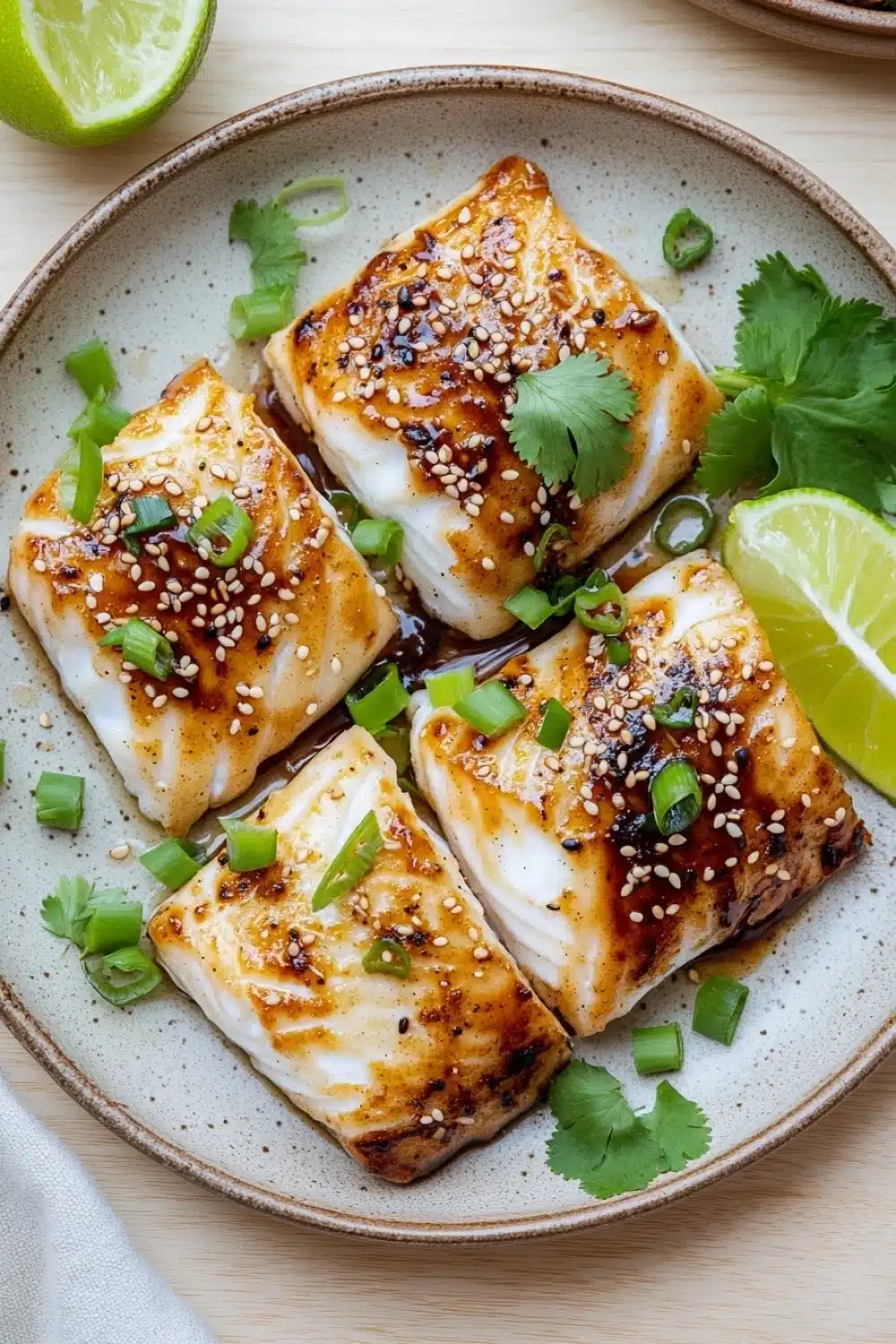
Fresh fish on the brain?
There’s something about cooking white fish Asian-style that snaps me right out of a weekday slump. The minute that soy-ginger sauce hits the hot skillet, the kitchen transforms—aromas swirl and your appetite sharpens like a sushi chef’s best knife. I remember the first time I tossed cod fillets into this flavor-packed mix—it was a game changer, no cap.
The secret’s in the balance: a slick of honey to smooth out tangy rice vinegar, a whisper of crushed red pepper to keep things lively, and that nutty sesame oil tying it all together. If your skillet could talk, it’d spill tales of garlicky bursts and ginger zing dancing on seared fish. This isn’t just dinner; it’s a quick dive into vibrant street-food vibes from the comfort of your stove.
Grab your lime wedge—this dish demands a squeeze.
For a delicious twist, try our Asian White Fish with Ginger Soy Sauce—Quick, Fresh, Flavor-Packed recipe that’s perfect for white fish asian dishes.
Real Life Wins with Asian-Style White Fish
- Quick weeknight hero — ready in just 25 minutes, making it a no-brainer when you’re juggling work, life, and whatever else the day throws at you.
- Light but satisfying — this dish hits that perfect spot when you want something that feels fresh, not like you’re dragging a brick around your stomach.
- Packed with punchy flavors — the soy-ginger sauce isn’t shy; it brings that umami kick with just the right hint of heat from crushed red pepper flakes.
- Easy cleanup mojo — one skillet, no fancy gadgets, just a quick wipe down and you’re done. The kind of simplicity that never goes out of style.
- Flexibility in the mix — swap cod for tilapia or any white fish on hand, or toss in extra cilantro and lime if you’re feeling extra zesty that night.
Asian-Style White Fish
A flavorful and healthy Asian-inspired white fish dish featuring a savory soy-ginger sauce, perfect for a quick weeknight dinner.
- Prep Time: 15 minutes
- Cook Time: 10 minutes
- Total Time: 25 minutes
- Yield: 4
Ingredients
4 white fish fillets (such as cod or tilapia), about 6 ounces each
1 tablespoon vegetable oil
3 cloves garlic, minced
1 tablespoon fresh ginger, grated
3 tablespoons low sodium soy sauce
1 tablespoon rice vinegar
1 tablespoon honey
1 teaspoon sesame oil
1/4 teaspoon crushed red pepper flakes
2 green onions, thinly sliced
1 tablespoon toasted sesame seeds
1/4 cup fresh cilantro leaves, chopped
1 lime, cut into wedges
Instructions
Pat the white fish fillets dry with paper towels and season lightly with salt.
In a small bowl, whisk together the soy sauce, rice vinegar, honey, sesame oil, and crushed red pepper flakes. Set aside.
Heat the vegetable oil in a large non-stick skillet over medium-high heat.
Add the minced garlic and grated ginger to the skillet and sauté for 1 minute until fragrant.
Add the fish fillets to the skillet and cook for 3-4 minutes on one side without moving them, until golden brown.
Carefully flip the fillets and pour the soy sauce mixture over the fish.
Cook for another 3-4 minutes, spooning the sauce over the fillets occasionally, until the fish is opaque and flakes easily with a fork.
Remove the skillet from heat and transfer the fish to serving plates.
Spoon any remaining sauce from the skillet over the fish.
Garnish with sliced green onions, toasted sesame seeds, and chopped cilantro.
Serve immediately with lime wedges on the side for squeezing over the fish.
Explore more:
Dinner Recipes
Mastering Asian-Style White Fish: Tricks, Tweaks & Troubleshooting
The Swap Game: When Cod or Tilapia Bail on You
Ever found yourself staring into the abyss of grocery store fish cases, only to realize your cod or tilapia has ghosted you? Happens to the best of us. The good news? This recipe’s flexible—like a yoga master in fish form. Try halibut for a meatier bite, or snapper if you want something with a bit more snap—pun intended. Even haddock or sea bass can jump into the ring, though they’ll change the texture and flavor landscape slightly. Pro tip: whatever white fish you pick, pat it bone dry — water’s the enemy here. It’s the difference between a slick flop and a crispy, golden crust that whispers “yeah, I nailed this.”
Why We Don’t Just Toss Everything in and Walk Away
Listen—I once tossed my fish, garlic, ginger, and all that sauce into the pan and hit the couch. Rookie move. The magic happens in stages, not chaos. First, garlic and ginger hit the hot oil alone, and suddenly your kitchen smells like the streets of Bangkok (minus the humidity). This quick sauté releases essential oils, layering flavor before the fish even hits the party. Toss the fish in and let it sit—no fiddling! This quiet time lets the Maillard reaction work its black magic, turning the surface into pure gold. Then, when you pour the sauce over the fillets and spoon it around, you’re not just flavoring fish—you’re bathing it in a spicy, tangy glaze that thickens slightly, clinging like a badge of honor. Timing’s everything; rushing this process is like trying to fast-forward a good jam session—just wrong.
Common Pitfalls and How to Sidestep Them
Fish that sticks to the pan? Dead giveaway your skillet isn’t hot enough or you moved the fillets too soon. Patience is the secret weapon here—let that crust develop before flipping. Crushed red pepper flakes feeling too tame or too fierce? Adjust on the fly, but remember—heat builds up as the sauce reduces, so err on the milder side to avoid torching your taste buds. And hey—overcooked fish is the bane of weeknight cooking. If your fillets are flaking like autumn leaves and dry as toast, you’ve gone too far. Fish cooks fast; pull it off the heat the instant it turns opaque and flakes with gentle pressure, not a death grip. Finally, the lime wedge isn’t just for looks—squeeze it last minute for that zesty pop that makes the whole dish sing. Trust me, it’s a game changer.
Asian-Style White Fish FAQs
Yes, but thaw them completely and pat dry before cooking to avoid excess moisture messing with the sear. Nothing kills a good crust faster than soggy fish.
You can substitute with apple cider vinegar or even a mild white wine vinegar. Just keep it light—too much acidity will throw off the balance of the sauce. I once tried lemon juice, but it made the flavor a bit too sharp for my taste buds.
Short answer: no. But it adds a nutty, toasty punch that you really feel in every bite. If you skip it, your sauce will taste a bit flat. Sometimes I sneak in extra sesame seeds to compensate.
Absolutely, bring on the heat! Increase crushed red pepper flakes or toss in fresh chopped chili. Just remember, a little goes a long way—Asian cooking is all about balance, not just firepower.
Gentle is the name of the game. I recommend reheating in a skillet over low heat, covering loosely to keep moisture in. Microwave on low power for short bursts if you’re in a hurry—but watch it closely or you’ll end up with dry flakes.