
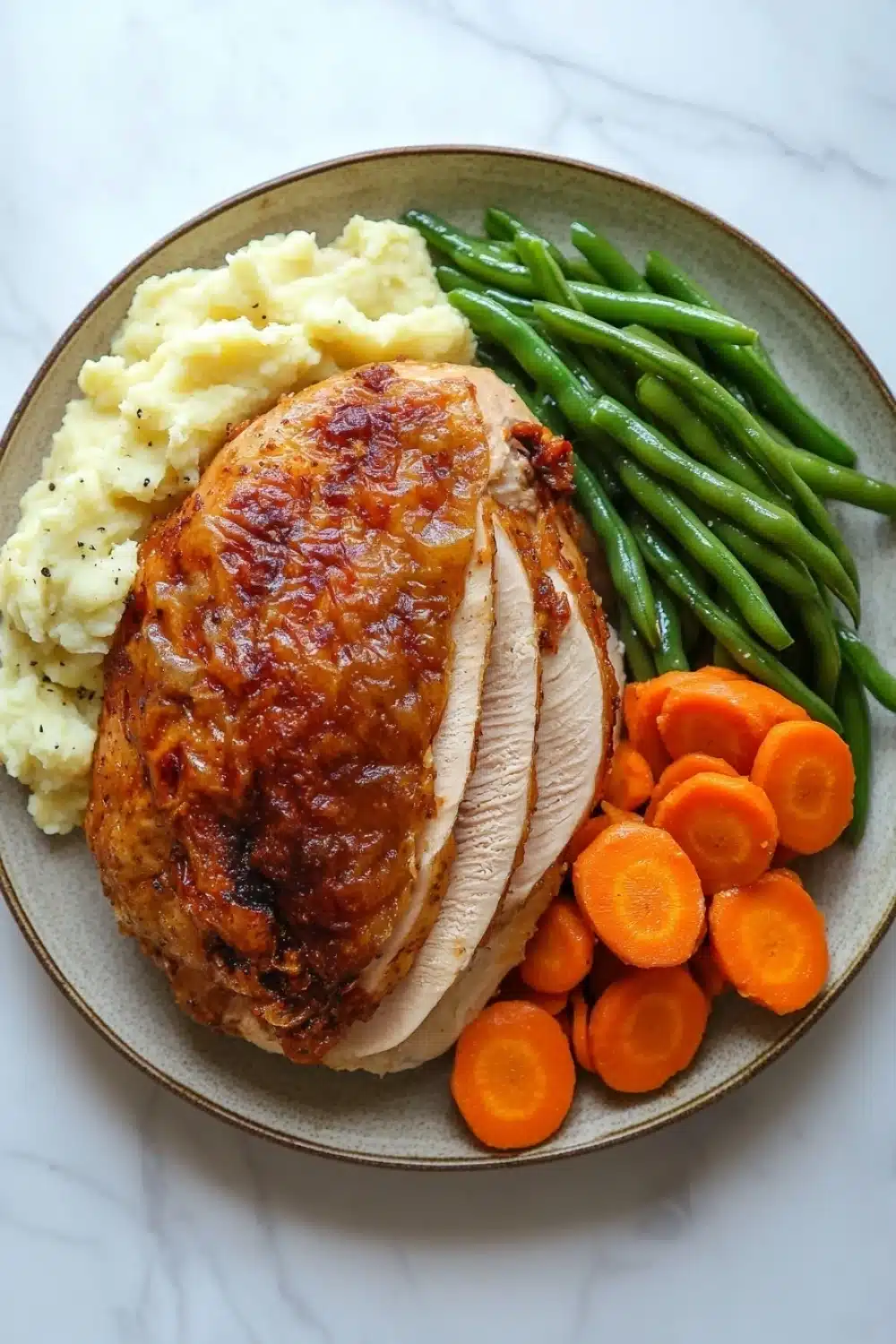
Turkey dinners, anyone?
There’s something about the ritual of roasting a turkey breast that signals comfort and togetherness. The kitchen fills with the aroma of herbs and garlic—thyme and rosemary sneaking in like old friends. I swear, when that skin crisps up just right, you know you’re in for a no-nonsense feast.
Mashed potatoes bubbling on the stove, carrots and green beans glistening under a drizzle of olive oil, and gravy thickening over low heat—each element harmonizes like a well-rehearsed band. It’s not just food; it’s a story told on a plate, the kind that sends you back to your grandma’s table, where seconds weren’t just encouraged—they were mandatory.
So, roll up those sleeves. This isn’t just a meal; it’s your ticket to carving out moments worth savoring.
For more delicious ideas, check out our guide on turkey dinners to keep your family meals hearty and satisfying.
Real Life Benefits of This Classic Turkey Dinner
- Family-friendly and fuss-free: This meal brings everyone to the table with minimal stress—no need to wrestle a whole bird, just the breast.
- Balanced plate: Protein from turkey, starch from mashed potatoes, and vitamins from roasted veggies cover all the bases without complicated prep.
- Perfect for leftovers: Keeps well in the fridge for up to three days, making post-gathering lunches a total breeze.
- Comfort food hack: The creamy mashed potatoes and savory gravy combo hits that cozy spot on cold nights.
- One-pan roasting magic: Turkey and veggies cook together—saving time, dishes, and your sanity during hectic holiday feasts.
Classic Turkey Dinner
A traditional and hearty turkey dinner featuring roasted turkey breast, savory gravy, creamy mashed potatoes, and roasted vegetables. Perfect for family gatherings and special occasions.
- Prep Time: 30 minutes
- Cook Time: 1 hour 30 minutes
- Total Time: 2 hours
- Yield: 6
Ingredients
1 whole turkey breast (about 4 pounds), skin on
2 tablespoons olive oil
1 teaspoon salt
1/2 teaspoon black pepper
1 teaspoon dried thyme
1 teaspoon dried rosemary
4 cloves garlic, minced
1 cup low-sodium chicken broth
3 tablespoons unsalted butter
3 tablespoons all-purpose flour
4 cups whole milk
2 pounds russet potatoes, peeled and cut into chunks
1/2 cup sour cream
1/4 cup whole milk
1 teaspoon salt
1/2 teaspoon black pepper
4 large carrots, peeled and cut into 2-inch pieces
1 pound green beans, trimmed
2 tablespoons olive oil
1/2 teaspoon salt
1/4 teaspoon black pepper
Instructions
Preheat the oven to 375°F (190°C).
Place the turkey breast on a roasting pan. Rub olive oil evenly over the skin.
In a small bowl, combine salt, black pepper, dried thyme, dried rosemary, and minced garlic. Rub this mixture all over the turkey breast.
Roast the turkey breast in the preheated oven for about 1 hour and 15 minutes, or until the internal temperature reaches 165°F (74°C). Baste occasionally with pan juices.
While the turkey is roasting, prepare the vegetables. Toss carrots and green beans with olive oil, salt, and black pepper on a baking sheet.
After the turkey has been roasting for 45 minutes, place the vegetables in the oven alongside the turkey. Roast until tender, about 45 minutes.
Meanwhile, place the peeled and cut potatoes in a large pot and cover with cold water. Bring to a boil and cook until tender, about 15 minutes.
Drain the potatoes and return them to the pot. Add sour cream, whole milk, salt, and black pepper. Mash until smooth and creamy. Keep warm.
To make the gravy, melt butter in a saucepan over medium heat. Whisk in flour and cook for 1-2 minutes until lightly golden.
Gradually whisk in chicken broth and whole milk. Continue whisking until the gravy thickens, about 5-7 minutes. Season with salt and black pepper to taste. Keep warm.
Once the turkey is done, let it rest for 10 minutes before slicing.
Serve sliced turkey breast with mashed potatoes, roasted carrots, roasted green beans, and gravy on the side.
Explore more:
Dinner Recipes
Classic Turkey Dinner
The Secret to That Golden Turkey Skin
Listen, nailing that crackling skin on turkey breast isn’t just luck—it’s a ritual. You gotta start with dry skin. Pat it down like you mean it. Then comes the olive oil rub, which acts like a mini moat protecting the skin from drying out, while helping it crisp up beautifully. Mix your salt, pepper, thyme, rosemary, and garlic—this herby combo is your flavor jackpot. Rub it in well, don’t be shy. Roasting at 375°F instead of cranking the heat lets the skin render slowly, turning golden without burning. Basting? Yeah, it’s old school but worth the extra work — those pan juices keep everything juicy and add subtle layers of flavor. When the thermometer hits 165°F, you pull it out but don’t slice immediately. Resting is the unsung hero here—let those juices redistribute, or you’ll end up with turkey as dry as last week’s toast. I’ve been there, done that, and trust me, it’s a game changer.
Mashed Potatoes: Don’t Overthink, But Don’t Overshoot
Potatoes are the starchy sidekick that can either make or break your plate. Start with russets—they’re the classic workhorse for creamy mash. Boil them covered in cold water; this ensures even cooking. Overcooked spuds turn gluey, and undercooked chunks ruin the smooth vibe. Drain and mash immediately while steamy. Add sour cream and whole milk—not just for moisture but to add that tangy richness that makes the mash more than just a pile of potatoes. Salt and pepper? Don’t wing it. Season like you mean it because bland mash is a cardinal sin in my book. Pro tip: use a hand masher, not a mixer—overworking starchy potatoes can turn your mash into a gummy mess. Keep ’em warm with a lid on; nobody likes cold spuds.
Fixing Common Fails: When Your Gravy’s Too Thin or Too Lumpy
Gravy can be a beast. Too thin? Too thick? Lumps out of left field? Here’s the lowdown—gravy’s foundation is a roux: butter and flour cooked until pale golden. Skimp here and your sauce won’t thicken properly. Whisk that flour butter mix continuously to dodge lumps. When you add broth and milk, pour slowly and keep whisking like your life depends on it—that’s the secret weapon against lumps. If lumps sneak in, strain through a fine sieve or blend quickly with an immersion blender (I call this a “saucy save”). Too thin? Simmer it down to reduce or whisk in a tiny bit more roux slurry (equal parts flour and butter mixed cold). Too thick? Splash in broth or milk till it loosens up. Gravy’s got a temperamental streak, but a little patience and elbow grease will have it smooth and sassy in no time.
Classic Turkey Dinner FAQs
A1: Absolutely! Turkey thighs are juicier and can add a richer flavor. Just adjust cooking time—thighs usually need a bit longer to hit that safe 165°F internal temp.
A2: Nope, not mandatory. Basting helps keep the skin crispy and juicy, but if you’re short on time or hate extra steps, the turkey will still cook fine without it.
A3: The trick is low and slow. Reheat the turkey covered with foil in a 300°F oven to keep it moist. Mashed potatoes and veggies do well in the microwave, but watch the time so they don’t dry out.
A4: Yes, you can! Make it a day in advance, cool, and store in the fridge. Reheat gently on the stovetop, whisking in a splash of broth or milk if it thickens too much. No lumps allowed—smooth is king here.
A5: Yes, peeling gives you that classic smooth, creamy mash—no chunk surprises. But if you’re feeling rustic, you can leave skins on for texture and extra nutrients.