
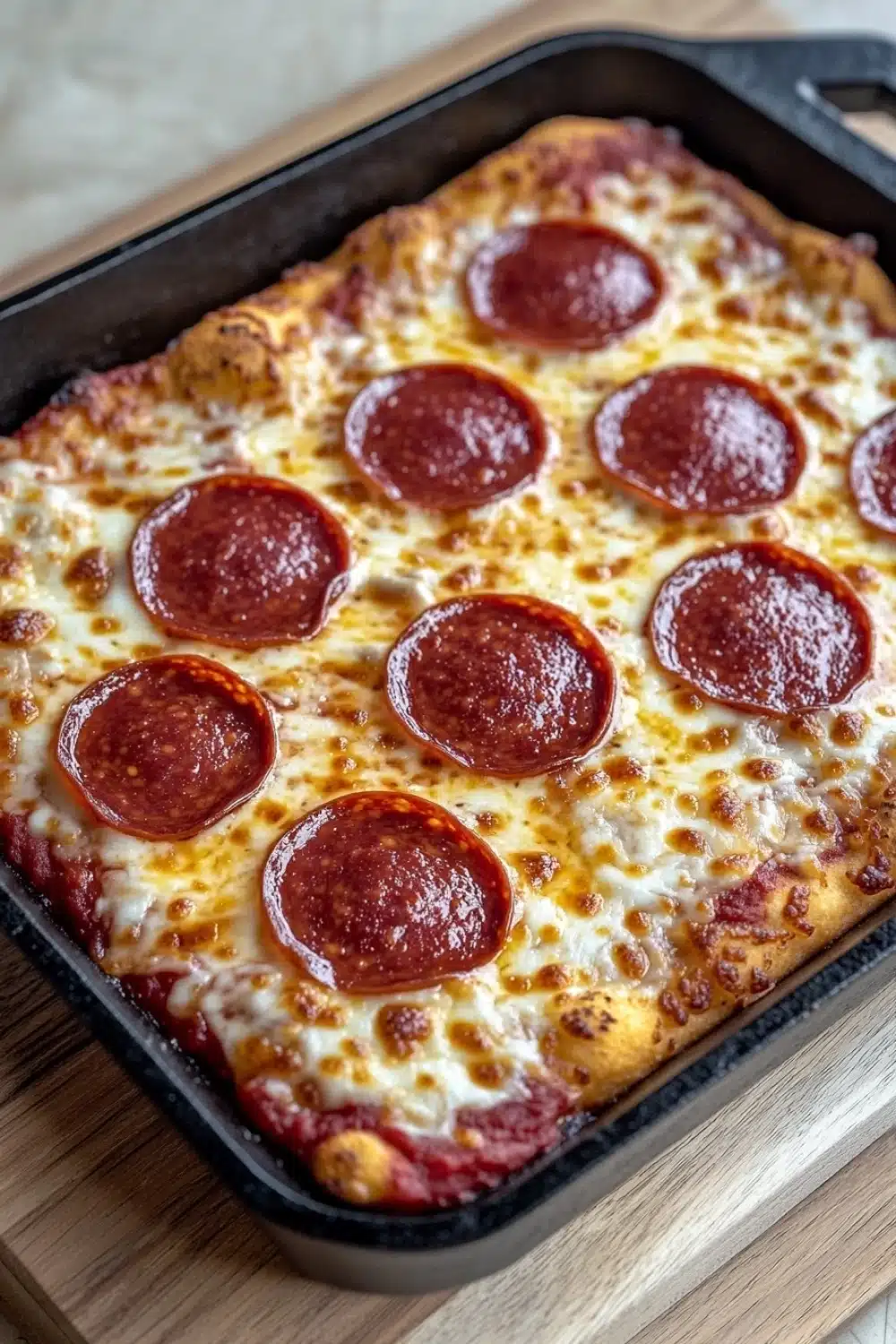
Cast iron magic, folks.
There’s something about pulling a Detroit style pizza from a cast iron skillet that hits different. The crust crisps up with that famous caramelized cheese edge—edges that snap like a champ—and the dough stays airy but chewy underneath. I remember the first time I tried this method: the kitchen smelled like a pizzeria, but the vibe was pure homegrown grind. No fancy stone or oven tricks—just skillet, dough, and a bit of patience.
The whole process feels like a small ritual. First, the yeast wakes up and bubbles like it’s ready to party. Then the dough stretches—sometimes it fights back, and that’s when you give it a breather. It’s a little like taming a wild beast, but oh, the payoff! Pepperoni slides in, cheese cubes nestle into place, and the big oven blast turns it into a golden masterpiece. And the sauce? Not slathered on early, but layered in thick stripes after the first bake—because, frankly, sauce sog is the enemy here.
This isn’t just pizza; it’s a skillet showdown that turns your kitchen into a melting pot of crispy crust and gooey cheese. Ready to get your hands dirty and your taste buds buzzing? Let’s roll up our sleeves.
For a unique twist on your morning meal, check out our Deep Dish Breakfast Pizza with Tortillas: A Morning Game-Changer recipe that’s just as satisfying as Detroit style pizza in cast iron.
Real Life Benefits of Detroit Style Pizza in Cast Iron
- Crust that’s crispy on the edges yet chewy in the middle—the cast iron skillet works magic here, creating that iconic crunch you won’t get from a regular pan.
- The cheese-edge caramelization isn’t just for show; it traps flavor and texture, giving you that addictive, slightly crispy cheesy crust every time.
- Using two kinds of cheese balances melty stretch with rich flavor, so each bite hits differently—no one-note cheese snooze fest.
- Cooking in cast iron means even heat distribution—no more doughy spots or burnt edges. It’s like having a secret weapon in your kitchen arsenal.
- Leftovers? No sweat. Reheating in a skillet brings back crispy goodness, so your pizza slices don’t turn into sad, soggy disks of despair.
Detroit Style Pizza in Cast Iron

A crispy, airy Detroit style pizza baked in a cast iron skillet, featuring a thick, chewy crust topped with a blend of cheeses, savory tomato sauce, and pepperoni.
- Prep Time: 20 minutes
- Cook Time: 25 minutes
- Total Time: 45 minutes
- Yield: 4
Ingredients
2 1/4 teaspoons active dry yeast (1 packet)
1 1/2 cups warm water (110°F)
3 1/4 cups bread flour
1 teaspoon sugar
1 1/2 teaspoons salt
2 tablespoons olive oil, plus 2 tablespoons for the skillet
8 ounces Wisconsin brick cheese, cut into 1/2-inch cubes or shredded
1 cup shredded mozzarella cheese
1/2 cup pizza sauce or crushed tomatoes
20 slices pepperoni
Instructions
In a small bowl, dissolve the active dry yeast in warm water and let it sit for 5 minutes until foamy.
In a large mixing bowl, combine bread flour, sugar, and salt.
Add the yeast mixture and 2 tablespoons of olive oil to the dry ingredients and mix until a sticky dough forms.
Knead the dough on a lightly floured surface for about 7-10 minutes until smooth and elastic.
Place the dough in a lightly oiled bowl, cover with plastic wrap or a damp towel, and let it rise in a warm place for 1 to 1 1/2 hours until doubled in size.
Preheat your oven to 500°F (260°C).
Generously oil a 10-inch cast iron skillet with 2 tablespoons of olive oil, making sure to coat the bottom and sides.
Transfer the risen dough to the skillet and gently stretch it to fit the pan. If it resists, let it rest for 5 minutes and try again.
Distribute the Wisconsin brick cheese cubes evenly over the dough, making sure to cover the edges to create the signature crispy cheese crust.
Sprinkle the shredded mozzarella cheese evenly over the brick cheese layer.
Arrange the pepperoni slices evenly on top of the cheese.
Bake the pizza in the preheated oven for 15 minutes.
Remove the pizza from the oven and spoon the pizza sauce in three thick stripes across the top of the pizza.
Return the pizza to the oven and bake for an additional 8-10 minutes until the crust is golden brown and the cheese is bubbly and slightly browned.
Remove the pizza from the oven and let it cool in the skillet for 5 minutes before slicing and serving.
Explore more:
Dinner Recipes
Mastering Detroit Style Pizza in Cast Iron
The Secret Sauce Behind That Chewy-But-Crispy Crust
Okay, let’s talk dough because that’s where the magic happens—and where most pizza dreams either take flight or crash and burn. Detroit style pizza is all about that thick, airy crust that’s crispy on the edges but still chewy inside. The trick? Bread flour is your best friend here. Its higher gluten content builds the strength needed to trap those glorious gas bubbles during fermentation. That’s what gives you that perfect crumb texture—like biting into a cloud with some serious backbone.
Now, don’t skip the olive oil in the skillet. It’s not just about preventing sticking—it’s the grease that fries the crust edges as it bakes, creating that holy grail of Detroit pizza: the caramelized, crispy cheese crust that’s borderline addictive. Also, patience is key. When the dough resists stretching, let it chill for five minutes to relax the gluten. Trying to force it is a rookie move; let the dough do its thing.
Cheese Layering — Why Brick Cheese Isn’t Just a Fancy Term
Wisconsin brick cheese might sound like a beast, but here’s the lowdown: its high-fat content and mild, buttery flavor are what give Detroit pizza that melt-and-pull factor. Cube it or shred it, but don’t skimp. This cheese forms a gooey moat around the edges that crisps up in the skillet, creating little pockets of crispy, cheesy goodness—what some pros call the “cheese crown.”
On top of that, sprinkle mozzarella for stretch and gooeyness. This double cheese layering is clutch. It balances flavor and texture. If you try to swap with cheap shredded blends, you’ll end up with a sad, oily mess. Trust me; I learned that the hard way when my “budget cheese” experiment turned into a greasy puddle disaster.
When Your Pizza Flops: Quick Fixes and Workarounds
So, you tossed your pizza in the cast iron and…the crust is soggy. What gives? The usual suspect: too much sauce or not enough oil in the pan. Detroit style demands a slick skillet and measured sauce application—remember those three thick stripes of sauce on top, not slathered underneath. This keeps the dough from drowning.
Another common fail is cheese sliding off the edges instead of crisping up. That’s a sign you didn’t cover the dough edges properly with cheese. The cheese crown forms only if the cheese touches the pan sides. No contact, no crown.
Finally, if the dough isn’t rising, check your yeast freshness and water temp. Yeast likes it warm—not scalding—around 110°F. Too hot, and you kill the little guys; too cold, and they’re napping on the job.
Master these points, and you’ll be rocking Detroit style pizza like a boss—crispy edges, airy middle, cheesy crown intact!
Detroit Style Pizza in Cast Iron: FAQs
Can I use regular mozzarella only?
Short answer: Yes, but you’ll miss that classic chewy, crispy edge. Wisconsin brick cheese has fat and moisture content that helps form the iconic caramelized crust. Mozzarella alone tends to get a bit soggy.
How do I get the crust so crispy in a cast iron skillet?
Key move—don’t skimp on the olive oil. Coat the skillet bottom and sides liberally to allow the dough to fry a little as it bakes. Also, preheat your oven to a scorching 500°F. That intense heat and the heavy skillet work in tandem to crisp the edges while keeping the interior airy. Think of it as a mini deep-fry session, but way better for the soul and waistline.
Can I make the dough ahead of time?
Absolutely. I like to let the dough rise overnight in the fridge. It develops a deeper flavor and makes the crust even more robust. Just bring it back to room temp before stretching into your skillet. It’s a perfect time-saver when you want to hit the ground running on pizza night.
Why add the sauce halfway through baking?
This little trick prevents the sauce from burning or drying out, which can happen at 500°F. Spoon it on after the initial bake phase, then pop it back in the oven to finish. It keeps the sauce fresh, bright, and just the right texture—no scorched tomato sauce drama here.
Is cast iron necessary?
Not strictly, but it’s the MVP for this style of pizza. Cast iron offers unmatched heat retention and distribution, which creates that crispy, golden crust Detroit pies are known for. If you don’t have one, a heavy-duty metal pan will do in a pinch, but you’ll lose some of the magic.