
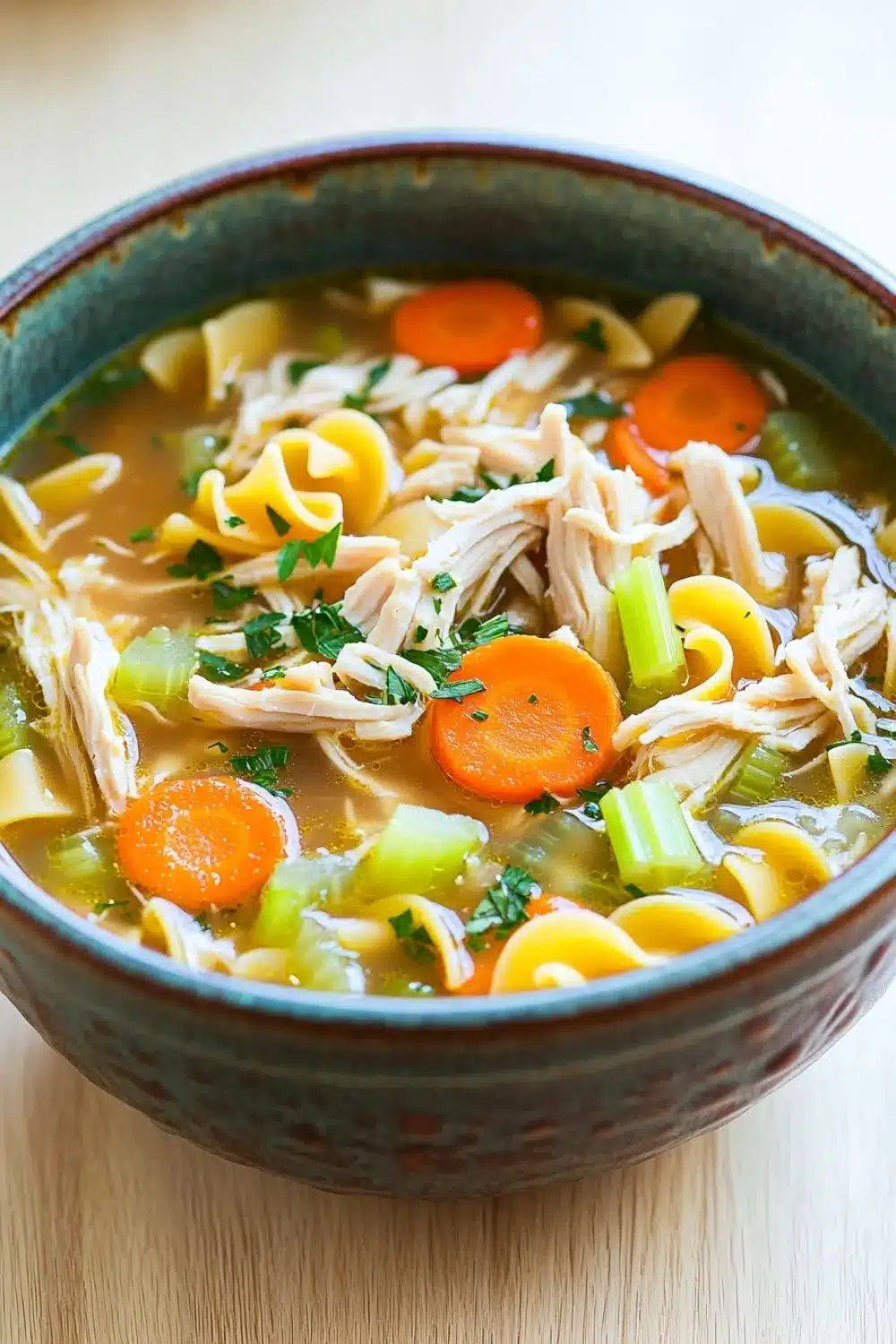
Soup season is here. No questions asked.
When I first whipped up this freezer chicken noodle soup, the kitchen smelled like a Sunday afternoon hug—warm, homey, and wildly inviting. There’s something about the medley of simmering onions, carrots, celery, and garlic that sets the perfect stage for a slow-cooked masterpiece, even if you’re pressed for time.
What really hits the spot? Knowing that this soup can tuck itself away in your freezer, ready to rescue you on hectic days. It’s not just soup—it’s a time-saver dressed as comfort food, waiting to hit your bowl with tender chicken and perfectly tender egg noodles. Nothing fancy, just real-deal, stick-to-your-ribs goodness.
This recipe is my secret weapon against the midweek slump. Grab a ladle, heat it up, and you’re golden. No fuss. No muss.
If you’re looking for another easy and comforting meal, try our Skillet Chicken with Zucchini and Cheesy Rice: One-Pan Wonder after enjoying a warm bowl of freezer chicken noodle soup.
Real Life Benefits of Freezer Chicken Noodle Soup
- Prepped in under an hour—perfect for those nights when you roll in late and hunger hits hard.
- Freeze it and forget it: stash portions in the freezer, so you’re never more than minutes away from comfort food.
- Simple ingredients mean no scavenger hunt at the grocery store; even the pickiest eaters won’t turn their nose up.
- Hearty enough to fill you up, yet light enough to dodge that post-meal slump—great for a quick lunch or dinner.
- Freezer-friendly and flexible: toss in whatever veggies you’ve got on hand to keep things fresh without extra hassle.
Freezer Chicken Noodle Soup
A comforting and hearty chicken noodle soup that can be prepared ahead and frozen for easy meals. This recipe uses simple ingredients and is perfect for busy days when you want a warm, homemade soup ready in minutes.
- Prep Time: 20 minutes
- Cook Time: 30 minutes
- Total Time: 50 minutes
- Yield: 6
Ingredients
2 tablespoons olive oil
1 medium yellow onion, diced
3 medium carrots, peeled and sliced
3 celery stalks, sliced
3 garlic cloves, minced
8 cups low sodium chicken broth
2 teaspoons dried thyme
1 teaspoon dried parsley
1/2 teaspoon black pepper
1 teaspoon salt
2 cups cooked chicken breast, shredded
6 ounces egg noodles, uncooked
Instructions
Heat olive oil in a large pot over medium heat.
Add diced onion, sliced carrots, and sliced celery to the pot. Cook for 5-7 minutes until vegetables are softened.
Add minced garlic and cook for 1 minute until fragrant.
Pour in the chicken broth and stir in dried thyme, dried parsley, black pepper, and salt.
Bring the soup to a boil, then reduce heat and simmer for 15 minutes.
Add shredded cooked chicken and uncooked egg noodles to the pot.
Simmer for an additional 8-10 minutes until noodles are tender.
Remove from heat and let soup cool completely before portioning into freezer-safe containers.
Label containers with date and freeze for up to 3 months.
To reheat, thaw soup overnight in the refrigerator and warm on the stove over medium heat until hot.
Explore more:
Dinner Recipes
Mastering Freezer Chicken Noodle Soup: Tricks You’ll Use Forever
The Subtle Art of Ingredient Swaps—Don’t Fear the Swap-Outs
Here’s the deal: chicken noodle soup is a classic—but that doesn’t mean you can’t shake it up. I’ve swapped out egg noodles for rice noodles when I was in a rush or grabbed whole wheat pasta to add some fiber punch. Celery out? Use fennel stalks for a hint of anise that’ll turn heads. Can’t find fresh chicken breast? Rotisserie chicken works magic, and leftovers from Sunday dinner are the ultimate cheat code. Olive oil is standard, but a dab of butter adds richness that sneaks in like a velvet glove. Those dried herbs? Fresh ones are always a win, but dried thyme and parsley hold their ground when you’re juggling a busy week. In a pinch, Italian seasoning stands in just fine.
Why Simmering Matters More Than You Think
Simmering isn’t just about cooking; it’s the heart of flavor extraction and texture control. When you toss your veggies into the pot, letting them sweat in olive oil allows those natural sugars to caramelize gently, building depth. Then—throw in the broth and herbs and bring it to a boil before dialing the heat down. Boiling hard kills off nuances; simmering lets flavors meld slowly, like a slow jam on a Sunday afternoon. Patience here pays off. The noodles cook right in because they soak up the broth’s goodness, but the timing is crucial—too early and you get mush; too late and they stay stubbornly al dente. This balancing act is where many stumble, but once you nail it, your soup will sing with texture and taste.
Fixing the Noodle Nightmare & Other Common Slip-Ups
Ever opened your freezer stash and found a bowl of noodle mush? Yeah—been there, burnt that bridge. The trick: noodles should never be cooked fully before freezing. This recipe smartly adds uncooked egg noodles at the end, so they simmer just right when reheated, keeping their snap. If you’re prepping ahead and want to freeze the whole shebang, consider freezing the broth and chicken separately from the noodles. When it’s game time, cook fresh noodles and toss them in—game-changer. Another pitfall? Watery soup. Over-thawing can dilute flavors. I always give mine a gentle reheat, simmering uncovered for a few minutes to tighten everything back up. Salt is your friend here—adjust seasoning after reheating to snap flavors back to life. Remember: soup is forgiving, but it’s the little details—the timing, the seasoning—that save the day.
Freezer Chicken Noodle Soup FAQs
Absolutely. Using rotisserie chicken is a total time-saver and adds a nice depth of flavor without any fuss. Just shred it up and toss it in like the recipe says.
Great question. If you add the noodles before freezing, they tend to soak up too much liquid and turn mushy upon reheating. I recommend freezing the soup without noodles and adding fresh noodles when you reheat—cook them right in the pot until al dente.
Technically yes, but after 3 months, the quality dips. Flavors fade, texture changes, and you might end up with more freezer burn than flavor. Best to stick to 3 months for the tastiest experience.
No. Once thawed, refreezing can encourage bacterial growth and ruin texture. Eat your soup within 3-4 days after thawing to play it safe.
For sure! Feel free to throw in some peas, corn, or even spinach toward the end of cooking. Just remember that softer veggies like spinach go in last minute to avoid becoming a sad, wilted mess.