
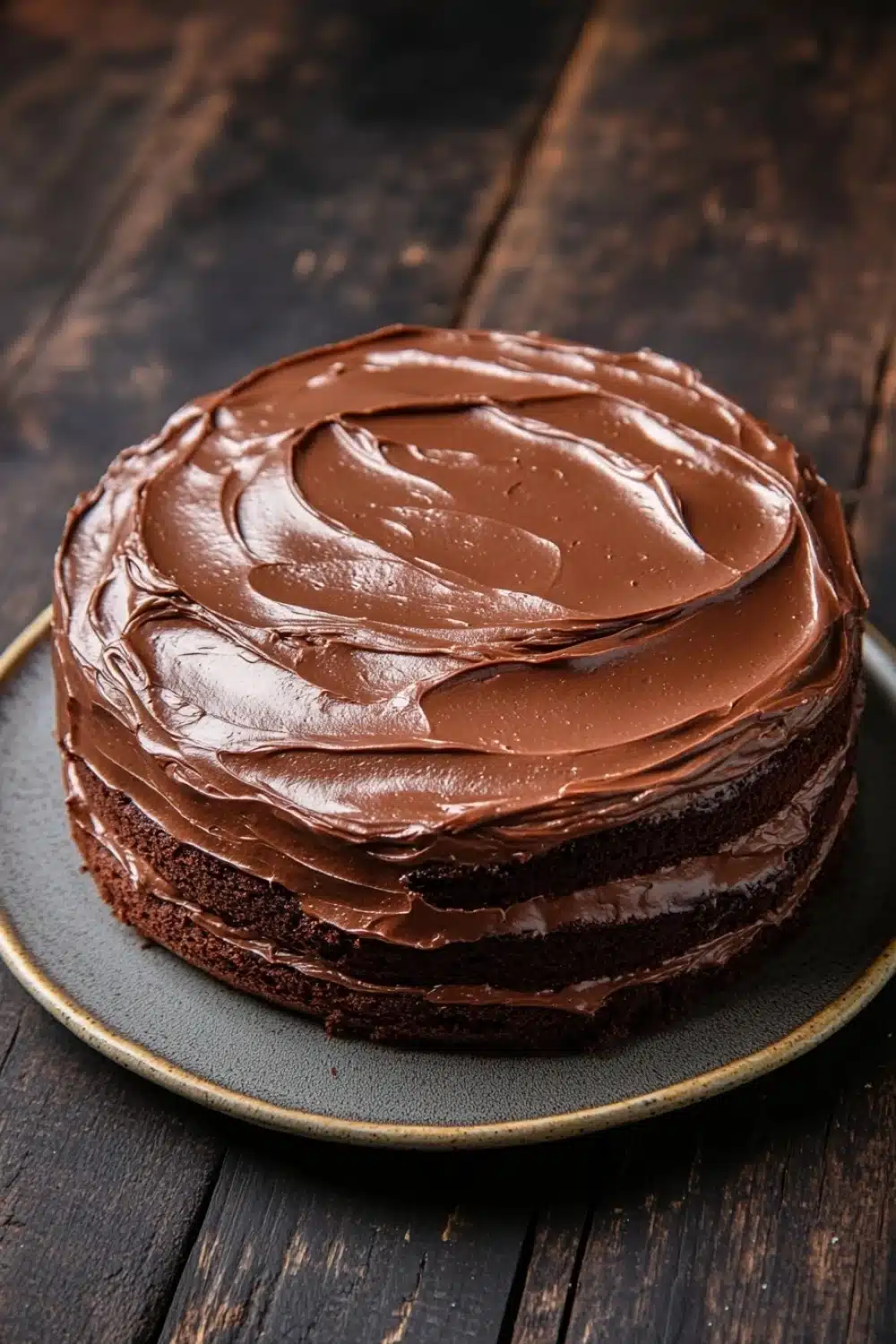
Chocolate cravings, anyone?
In my kitchen, the air thickens with the rich aroma of cocoa and sweet sugar—the unmistakable signal that something indulgent is underway. This chocolate cake isn’t trying to reinvent the wheel; it’s the gold standard, the kind you can whip up without fuss yet still impress your gang.
This recipe is a no-frills, straight-shooter. The batter’s thin—don’t flinch—that’s just how it rolls. The secret weapon? Boiling water, which coaxes out a tender crumb and deep, chocolaty goodness that bites back just right.
Frosting? Smooth and approachable. No wild decorations, just creamy chocolate buttercream that sticks to the cake like old friends at a late-night jam session. It’s comfort food, it’s nostalgia, it’s your go-to when you want to play it safe yet score big on flavor. Grab your mixer—let’s get that classic chocolate cake normal design baked and ready to vanish fast.
For a delicious variation, try our Chocolate Cake Tres Leches: A Rich Twist on a Classic Treat that adds a rich twist to the traditional chocolate cake normal design.
Real-Life Benefits of Making This Classic Chocolate Cake
- Quick turnaround—ready in under an hour, which means you can pull off a homemade showstopper without sweating the clock.
- The moist crumb texture hits every sweet tooth just right; no one will suspect it’s from your humble kitchen.
- Versatility in storage: Keep it chilled or at room temp, so it’s ready whenever a craving or unexpected guest drops by.
- Simple ingredients list—no obscure stuff here—making it easy to whip up even on a weeknight after work.
- That smooth chocolate frosting? It’s thick enough to play with—spread, pipe, or dollop—giving you total creative license without fuss.
Classic Chocolate Cake
A rich and moist classic chocolate cake perfect for any occasion. This recipe features a smooth chocolate frosting and a tender crumb that chocolate lovers will adore.
- Prep Time: 20 minutes
- Cook Time: 35 minutes
- Total Time: 55 minutes
- Yield: 12
Ingredients
1 and 3/4 cups (220 grams) all-purpose flour
3/4 cup (65 grams) unsweetened cocoa powder
2 cups (400 grams) granulated sugar
1 and 1/2 teaspoons baking powder
1 and 1/2 teaspoons baking soda
1 teaspoon salt
2 large eggs, at room temperature
1 cup (240 ml) whole milk, at room temperature
1/2 cup (120 ml) vegetable oil
2 teaspoons pure vanilla extract
1 cup (240 ml) boiling water
For the chocolate frosting:
1 cup (230 grams) unsalted butter, softened
3 and 1/2 cups (440 grams) powdered sugar, sifted
1/2 cup (45 grams) unsweetened cocoa powder
1/2 teaspoon salt
2 teaspoons pure vanilla extract
1/4 cup (60 ml) heavy cream
Instructions
Preheat the oven to 350°F (175°C). Grease and flour two 9-inch round cake pans and set aside.
In a large mixing bowl, sift together the all-purpose flour, cocoa powder, granulated sugar, baking powder, baking soda, and salt.
Add the eggs, whole milk, vegetable oil, and vanilla extract to the dry ingredients. Beat on medium speed with an electric mixer until well combined, about 2 minutes.
Reduce the mixer speed to low and carefully add the boiling water to the batter. Mix until fully incorporated. The batter will be thin; this is normal.
Divide the batter evenly between the prepared cake pans.
Bake for 30 to 35 minutes or until a toothpick inserted into the center comes out clean.
Remove the cakes from the oven and allow them to cool in the pans for 10 minutes. Then, remove from pans and transfer to a wire rack to cool completely.
To make the frosting, beat the softened butter on medium speed until creamy, about 2 minutes.
Gradually add the powdered sugar and cocoa powder, mixing on low speed until combined.
Add salt, vanilla extract, and heavy cream. Beat on high speed for about 3 minutes until the frosting is light and fluffy.
If the frosting is too thick, add a little more heavy cream, one tablespoon at a time. If too thin, add a little more powdered sugar.
Once the cakes are completely cool, place one cake layer on a serving plate. Spread a layer of frosting evenly over the top.
Place the second cake layer on top and apply a thin crumb coat of frosting over the entire cake. Chill for 15 minutes.
Apply the final layer of frosting smoothly over the cake.
Serve immediately or store covered at room temperature for up to 2 days or in the refrigerator for up to 5 days.
Explore more:
Lunch Recipes
Classic Chocolate Cake: Tricks and Fixes for a Showstopper
The Unexpected MVP: Swapping Ingredients Without Losing Soul
Let’s talk flour first. The recipe calls for all-purpose, but if you only have cake flour? No sweat. Cake flour’s lower protein content means a softer crumb—think of it like trading a rugged leather jacket for a cozy hoodie. Just use about 2 tablespoons more cake flour per cup to avoid a gummy mess. Got a plant-based milk lurking in your fridge? Almond, oat, or soy can step in, but ditch the oil and add an extra 2 tablespoons of applesauce or mashed banana to keep that moist factor humming. Oh, and cocoa powder—don’t just grab any dusty tub. Dutch-processed cocoa will deepen those chocolate notes, while natural cocoa gives you a sharper, more acidic tang. The choice is yours; just remember they react differently with your leavening agents.
The Why Behind the Thin Batter (And Why You Shouldn’t Panic)
When you pour boiling water into the batter, your first thought might be: “Did I mess up?” The batter thins out dramatically—like a quick sand pit trying to swallow your confidence. But here’s the skinny: that hot water agitates the cocoa particles, intensifying the chocolate flavor and encouraging a tender crumb. It’s a deliberate move, not a blunder. Without this, your cake risks being dense and lifeless. Pro tip? Mix the boiling water slowly at low speed; this keeps the batter uniform and prevents splatter. I once freaked out mid-bake, thinking I’d ruined the batch—turns out, it was the best chocolate crumb I’d gotten in months. Talk about a “happy accident.”
Rescue Mission: Fixing the All-Too-Common Cake Fails
Crumbly? Dry? Flat as a pancake? It happens to the best of us. To avoid a dried-out nightmare, never skip the room temperature step for eggs and milk—cold ingredients can kill rise and texture faster than you can say “cake flop.” If your cake rises then collapses, your oven might be a hot mess (literally). Invest in an oven thermometer; inaccurate temps are the silent saboteurs. For a sunken middle, try baking a little longer and resist the urge to open the oven door before 30 minutes. Lastly, frosting got runny? Don’t panic. Chill it for 15 minutes, then whip it again to fluff it back up. Patience is the name of this game—think of frosting like a temperamental diva who needs a little chill time before the spotlight.
Classic Chocolate Cake FAQs
A: Yes, you can swap in Dutch-processed cocoa powder, but remember—it reacts differently with baking soda, so your cake might need a slight tweak in baking soda amount to keep its bounce.
A: Absolutely. The boiling water blooms the cocoa, making the chocolate flavor punch harder than a street fighter. Skipping this step means a less intense chocolate kick.
A: Sure thing. Bake a day before, wrap it tight, and refrigerate. Bring it back to room temp before frosting—this way, you dodge any crumb disasters and keep that frosting looking slick.
A: Yes, you can freeze the unfrosted layers for up to 2 months. Wrap them well in plastic and foil to prevent freezer burn. Thaw overnight in the fridge before frosting.
A: No! The buttercream frosting rides cool at room temp for a couple of days, but if your kitchen’s a sauna, pop it in the fridge.