
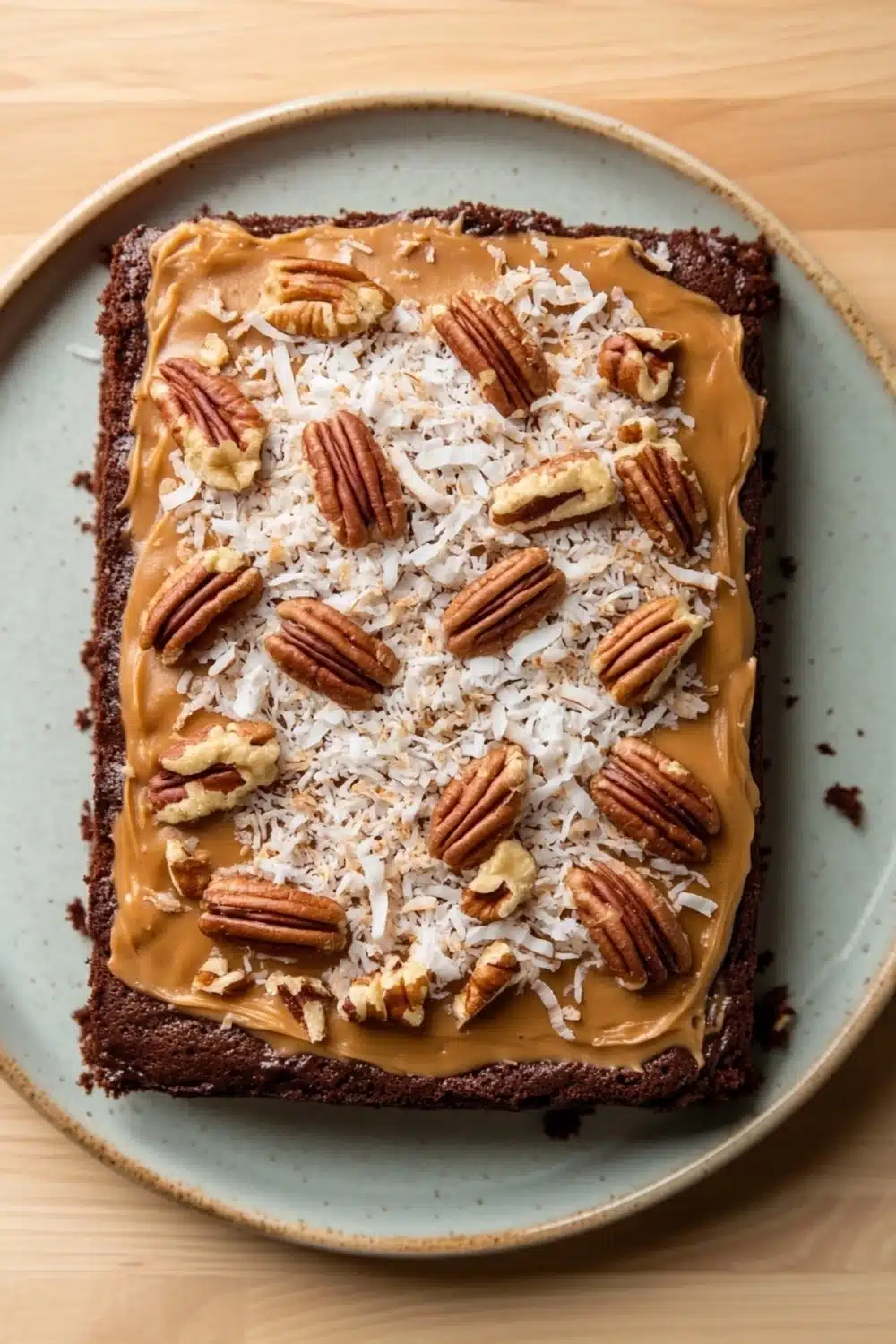
Chocolate moods incoming.
There’s something about baking a sheet cake that feels like a warm hug from the inside out. When I slid my pan into the oven, the kitchen instantly filled with that nostalgic scent—a mix of cocoa and toasted pecans, a siren call for every sweet tooth in the house. It’s the kind of aroma that stops conversations and demands attention.
The real magic here? The frosting. Not your run-of-the-mill spread—this one’s a gooey, golden-hued coconut-pecan concoction that clings to every crumb. It’s what turns a simple slab into a showstopper, the kind you sneak a forkful of when no one’s looking.
Gather your gear, because this sheet cake doesn’t mess around: quick to mix, easy to bake, and every bit as rewarding as grandma’s secret recipe—without the fuss. Ready to roll?
If you’re a fan of rich desserts, you’ll love our take on Sugar Cookie Brownies: A Chewy Meets Fudgy Classic Mashup as much as a classic sheet cake German chocolate.
Real-Life Perks of Making This German Chocolate Sheet Cake
- Feeds a crowd without turning your kitchen into a disaster zone—sheet pan style keeps it tidy and manageable.
- The coconut-pecan frosting? It’s the ultimate showstopper, adding a nutty crunch and gooey texture that turns heads at potlucks.
- Prepping this cake takes just 50 minutes total—perfect for when you’re short on time but craving something rich and homemade.
- Leftovers stay moist for days when stored right; no one wants a crumbly cake, right?
- It’s a crowd-pleaser that’s foolproof—even if you’re not a cake wizard, this recipe’s got your back with straightforward steps.
German Chocolate Sheet Cake
A rich and moist German Chocolate Sheet Cake topped with a classic coconut-pecan frosting. This easy-to-make sheet cake is perfect for gatherings and celebrations.
- Prep Time: 20 minutes
- Cook Time: 30 minutes
- Total Time: 50 minutes
- Yield: 12
Ingredients
2 cups all-purpose flour
2 cups granulated sugar
1 teaspoon baking soda
1/2 teaspoon salt
1 cup unsweetened cocoa powder
1 cup unsalted butter
1 cup water
1 cup buttermilk
2 large eggs
1 teaspoon vanilla extract
1 cup evaporated milk
1 1/2 cups granulated sugar
3 large egg yolks
1/2 cup unsalted butter
1 1/3 cups sweetened shredded coconut
1 cup chopped pecans
1 teaspoon vanilla extract
Instructions
Preheat the oven to 350°F (175°C). Grease and flour a 9×13-inch sheet pan.
In a large bowl, sift together the flour, sugar, baking soda, salt, and cocoa powder.
In a medium saucepan, combine the butter and water. Bring to a boil over medium heat, stirring occasionally.
Pour the hot butter and water mixture into the dry ingredients and mix until combined.
Add the buttermilk, eggs, and vanilla extract to the batter. Beat with an electric mixer on medium speed until smooth.
Pour the batter into the prepared sheet pan and spread evenly.
Bake for 30 minutes or until a toothpick inserted into the center comes out clean.
While the cake is baking, prepare the frosting. In a medium saucepan, combine the evaporated milk, sugar, egg yolks, and butter.
Cook over medium heat, stirring constantly, until the mixture thickens and turns golden brown, about 10 minutes.
Remove from heat and stir in the shredded coconut, chopped pecans, and vanilla extract. Mix well.
Allow the cake to cool for 10 minutes before spreading the warm frosting evenly over the top.
Let the cake cool completely before cutting into squares and serving.
Explore more:
Lunch Recipes
Mastering the German Chocolate Sheet Cake
The Butter-Water Boil: Why It’s the Game Changer
Here’s the kicker—most folks eyeball the cocoa powder and toss it dry. But this recipe flips the script by boiling butter and water together first. Why? That hot combo extracts deep cocoa flavor and ensures the batter stays moist as heck. I’ve seen too many cakes come out dry or crumbly because they skip this step. The heat melts the cocoa’s fat crystals and infuses the batter with a silky base, turning the crumb from meh to mouthwatering. Trust me, that bubbling butter-water magic is the backbone of this sheet cake’s rich texture.
Ingredient Swaps That Don’t Kill the Vibe
Need to swap out some ingredients? No sweat. Here’s the skinny:
- Buttermilk: If you’re out, mix 1 cup milk with 1 tablespoon lemon juice or vinegar. Let it sit for 5 minutes, and boom—sour punch intact.
- Evaporated Milk in Frosting: Full-fat coconut milk can slide in for a twist, lending a subtle tropical note without wrecking the chemistry.
- Pecans: Walnuts are the old faithful here. They’re slightly more bitter but still bring crunch and fat to the party.
I personally don’t mess with the cocoa powder—it’s the dark star here. If you swap that out, expect a big flavor nosedive.
Fixing Common Cake Roadblocks—From Sinkholes to Sad Frosting
Nothing’s worse than sinking cake centers or frosting that sets like concrete. Let’s troubleshoot:
- Sinking Centers: This often means the oven’s temp is off or you opened the door mid-bake (rookie error). Invest in an oven thermometer and keep the door shut tight.
- Gummy Texture: Overmixing the batter can develop too much gluten, making the crumb dense. Mix just until combined—no more.
- Frosting Breaks or Seizes: The egg yolks and sugar in the frosting need gentle, constant stirring over med heat. If you rush or crank the heat, you’ll get curdled bits. Patience is key. Also, spread this frosting warm—not hot—to avoid tearing the cake.
One last pro tip: Let the cake cool 10 minutes before frosting. I learned this the hard way—rushing it means your frosting slides right off and you’re left licking the pan.
German Chocolate Sheet Cake FAQs
Is this cake really easy to make?
Absolutely! This recipe is straightforward—no fancy moves required. Even if you’re juggling other kitchen chaos, you can toss this together without breaking a sweat.
Can I swap buttermilk for regular milk?
Yes, but it’s a bit of a curveball. Buttermilk adds tang and helps the cake rise just right. If you only have regular milk, mix it with a splash of vinegar or lemon juice and let it sit for 5 minutes to mimic buttermilk’s magic.
What if I don’t have evaporated milk?
Evaporated milk is the secret to that lush, creamy frosting texture. You can try whole milk, but the frosting might turn out thinner and less rich. If you’re in a pinch, simmer some milk to reduce it, but watch it like a hawk.
How long does the cake stay fresh?
Keep it airtight at room temp for a couple of days tops. Beyond that, pop it in the fridge for up to five days. Just be patient—bring it back to room temp before slicing to keep the texture in check.
Can I make this cake gluten-free?
No—traditional all-purpose flour is a must here. Gluten-free blends might work but expect a different crumb and possibly a denser bite. If you’re a GF wizard, experiment with blends that include xanthan gum.