
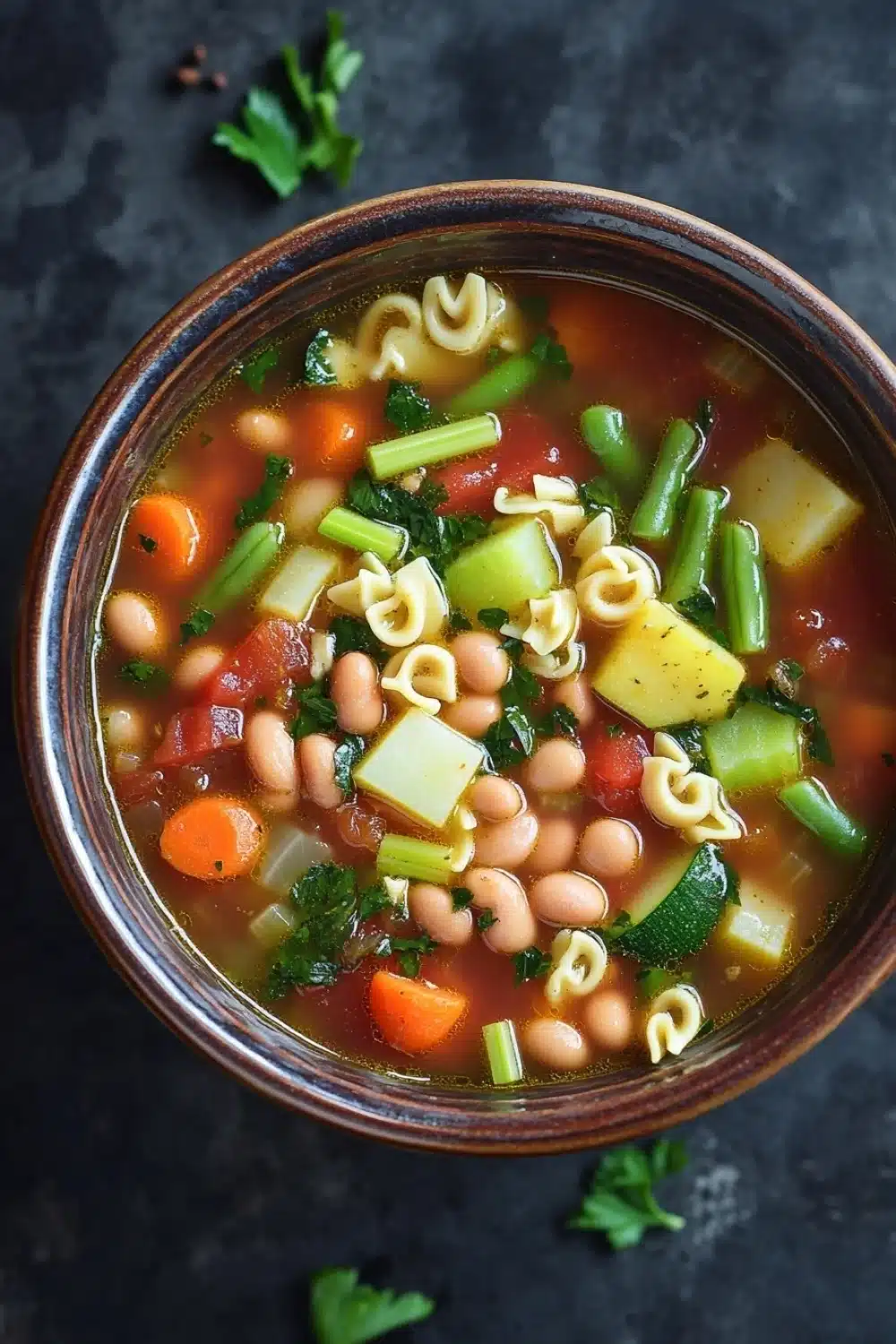
Soup’s on — and not just any soup.
There’s something about a steaming bowl of classic minestrone soup that makes the kitchen feel like home. The smell of garlic sizzling in olive oil, the slow simmer of fresh veggies and herbs, it’s like a warm hug from Nonna herself. I’ve always found that minestrone isn’t just food; it’s a ritual, a way to slow down and savor simple ingredients that punch way above their weight.
What really gets me about this recipe is its no-nonsense, heart-and-soul approach. No fancy tricks, just honest-to-goodness vegetables, beans, and pasta swimming around in a rich tomato broth. It’s the kind of dish that’s perfect for those days when you want comfort without fuss. I remember burning the midnight oil once, whipping up a batch after a long day—it was exactly what I needed: filling, earthy, and slurp-worthy.
Ready to dive into a bowl of pure Italian vibes? Let’s get chopping and simmering. This is minestrone at its most classic—and it’s a knockout every single time.
If you’re looking to warm up with a comforting meal, check out our Slow Cooker Beef Hotpot: Hearty Dinner for Cozy Nights for a delicious alternative to classic minestrone soup.
Real Life Benefits of Classic Minestrone Soup
- Quick to whip up—even on a chaotic weeknight, it’s ready in an hour from chopping veggies to simmering.
- Packs a punch with fiber and protein thanks to beans and fresh greens, keeping you full without weighing you down.
- Perfect for meal prep: leftovers hold up well in the fridge, making next-day lunches a no-brainer.
- It’s comfort food that doubles as a veggie boost, sneaking in a rainbow of produce with every spoonful.
- Easy to tweak—swap in whatever seasonal veggies you’ve got lying around; that’s the real MVP move in my kitchen.
Classic Minestrone Soup

A hearty and comforting classic Italian vegetable soup packed with fresh vegetables, beans, and pasta in a savory tomato broth.
- Prep Time: 20 minutes
- Cook Time: 40 minutes
- Total Time: 1 hour
- Yield: 6
Ingredients
2 tablespoons extra virgin olive oil
1 medium yellow onion, diced
2 medium carrots, peeled and diced
2 celery stalks, diced
3 cloves garlic, minced
1 medium zucchini, diced
1 medium potato, peeled and diced
1 cup green beans, trimmed and cut into 1-inch pieces
1 (14.5 ounces) can diced tomatoes with juice
6 cups vegetable broth
1 (15 ounces) can cannellini beans, drained and rinsed
1 teaspoon dried oregano
1 teaspoon dried basil
1/2 teaspoon dried thyme
1/4 teaspoon black pepper
1/2 teaspoon salt, or to taste
1/2 cup small pasta (such as ditalini or elbow macaroni)
2 cups fresh spinach, chopped
2 tablespoons freshly grated Parmesan cheese, for serving
Fresh parsley, chopped, for garnish
Instructions
Heat the olive oil in a large pot over medium heat.
Add the diced onion, carrots, and celery. Sauté for 5-7 minutes until the vegetables are softened.
Add the minced garlic and cook for 1 minute until fragrant.
Stir in the diced zucchini, potato, and green beans. Cook for 3-4 minutes, stirring occasionally.
Pour in the diced tomatoes with their juice and the vegetable broth. Stir to combine.
Add the cannellini beans, dried oregano, dried basil, dried thyme, black pepper, and salt. Stir well.
Bring the soup to a boil, then reduce heat to low and simmer uncovered for 25 minutes, or until the vegetables are tender.
Add the small pasta to the soup and cook for an additional 8-10 minutes, or until the pasta is al dente.
Stir in the chopped spinach and cook for 2 minutes until wilted.
Taste and adjust seasoning with additional salt and pepper if needed.
Ladle the soup into bowls and sprinkle each serving with freshly grated Parmesan cheese and chopped parsley.
Serve hot with crusty bread if desired.
Explore more:
Lunch Recipes
Classic Minestrone Soup Secrets
The Trick to Swapping Veg without Losing Soul
Listen, minestrone is like jazz—it thrives on improvisation but has that core rhythm you don’t want to kill. Say you find yourself out of green beans or zucchini; don’t sweat it. Swap in frozen peas or even chopped kale—yeah, kale’s a bit of a curveball, but it brings a nice bitter edge that cuts through the tomato broth. Potato? Sweet potato can slide in if you want a subtle sweetness punch. Just remember, the trick is to keep that hearty, chunky texture; mushy soup is a no-go, my friend. The beans? Cannellini is classic, but chickpeas or even black-eyed peas play a decent understudy.
Why We Simmer, Don’t Boil—The Heartbeat of Flavor
Here’s where many go sideways: the difference between a rolling boil and a gentle simmer. Boil your minestrone hard, and you’re in for a sad, broken-down veg massacre. The secret is slow and steady—let the soup simmer uncovered, so it thickens and the flavors marry into that rich, singed-tomato vibe that just hits different. It’s a slow dance—no need to rush this step. You want each veggie to keep its shape, each herb to whisper not shout. I once had a pot on too high heat, and the broth turned cloudy, veggies mushy, pasta a sad, gloopy mess. Never again.
Fixing Minestrone Mishaps: When Soup Goes Sideways
Too salty? Add a peeled potato or a splash of water to suck up excess salt. Too thin? Let it simmer longer, uncovered, or toss in a handful more pasta or beans—you’re bulking up the vibe again. Overcooked pasta? No shame in fishing it out and tossing fresh pasta in last minute. Too bland? A squeeze of lemon or dash of vinegar wakes up those tired flavors—acidity is your best homie for balancing tomato-based broths. And if it’s too sharp or acidic, a pinch of sugar or a splash of cream can mellow that bite. Minestrone is forgiving if you’re willing to tinker—just keep tasting, tasting, tasting.
Classic Minestrone Soup FAQ
A1: Absolutely. Swapping in chicken broth will give your minestrone a richer, meatier backbone, but it won’t be vegetarian anymore. Just remember, it might change the flavor profile slightly.
Q2: How do I keep the pasta from getting mushy when reheating?
A2: Great question! The trick is to cook the pasta just shy of al dente before adding it to the soup if you plan to reheat leftovers. When reheating, add a splash of broth or water and warm gently—this helps the pasta hold its shape and prevents it from turning into a soggy mess.
Q3: Can I make this gluten-free?
A3: Yes! Just swap the pasta for a gluten-free variety or even use quinoa or rice for a different twist. The veggies and beans stay the same. No worries about rocking the boat.
Q4: Is minestrone soup healthy?
A4: Heck yes. This soup is loaded with fibrous veggies, beans packed with protein, and a modest amount of pasta for carbs. It’s a low-fat, nutrient-dense option that’s easy on your gut and wallet.
Q5: Can I prepare this soup ahead of time?
A5: Yes, you can. In fact, minestrone is one of those soups that tastes even better the next day—flavors get cozy after some rest. Just keep the pasta separate if you want to avoid it soaking up all the broth during storage.