
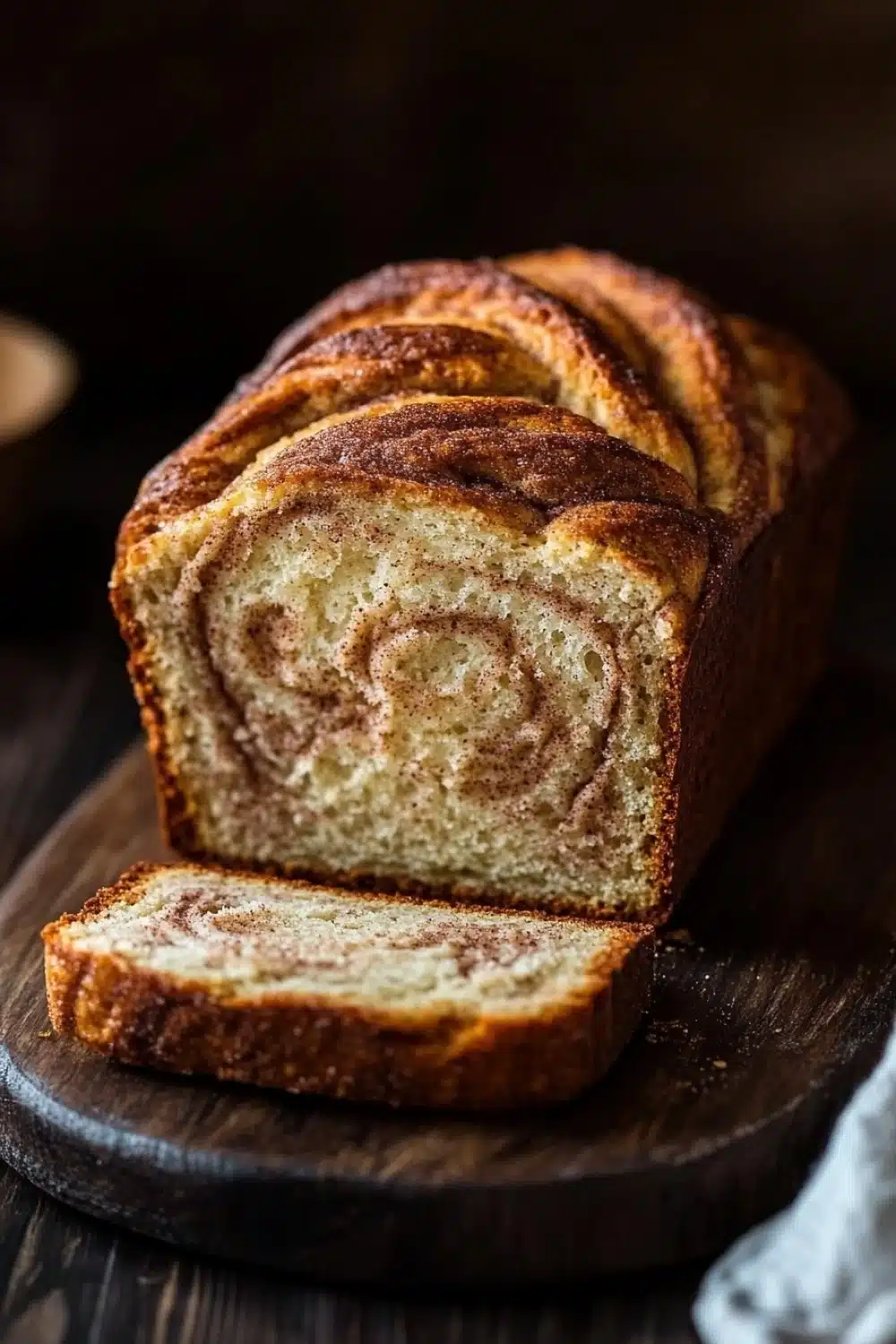
Warm aromas fill the air.
There’s something about cinnamon bread that pulls you right out of bed, even on the dreariest of mornings. I remember the first time I baked this loaf—my kitchen instantly turned into a cozy nook, the scent wrapping around me like a well-loved sweater. It’s not just bread; it’s a mood lifter.
The dough is soft, almost pillowy, begging for a gentle knead and a little TLC. While it rises, I mix cinnamon and brown sugar—this is where the real magic brews. Swirling that sugary goodness inside each fold feels like wrapping comfort in every bite.
Get ready to roll up your sleeves—this cinnamon bread isn’t just a treat, it’s your ticket to sweet sanctuary.
For a delicious meal that pairs perfectly with cinnamon bread, try our Cheesy Chicken Spaghetti Squash Casserole with a Jar of Lemons Twist.
Real Life Benefits of Homemade Cinnamon Bread
- Kick-start your mornings with a warm slice that’s soft and fluffy—no grocery runs needed.
- Perfect for those cozy evenings when you crave a snack that’s sweet but not over the top.
- Made with simple pantry staples, it’s a lifesaver when you want fresh bread without fuss.
- Freezing leftovers means you can enjoy that fresh-baked vibe anytime—no freezer burn drama.
- Hands-on baking that doubles as stress relief—kneading dough is oddly satisfying, trust me.
Homemade Cinnamon Bread
This homemade cinnamon bread is soft, fluffy, and swirled with a sweet cinnamon sugar filling, perfect for breakfast or a cozy snack.
- Prep Time: 20 minutes
- Cook Time: 35 minutes
- Total Time: 55 minutes
- Yield: 12 slices
Ingredients
3 1/4 cups all-purpose flour
1/4 cup granulated sugar
1 packet active dry yeast (2 1/4 teaspoons)
1 teaspoon salt
1 cup whole milk, warmed to about 110°F
1/4 cup unsalted butter, melted
1 large egg
1/2 cup brown sugar, packed
2 tablespoons ground cinnamon
2 tablespoons unsalted butter, softened
Instructions
In a large mixing bowl, combine 2 1/2 cups of the flour, granulated sugar, yeast, and salt.
Add the warmed milk, melted butter, and egg to the dry ingredients and mix until combined.
Gradually add the remaining 3/4 cup flour, mixing until a soft dough forms.
Turn the dough onto a lightly floured surface and knead for about 8-10 minutes until smooth and elastic.
Place the dough in a greased bowl, cover with a clean towel, and let it rise in a warm place for about 1 hour or until doubled in size.
While the dough is rising, mix the brown sugar and ground cinnamon in a small bowl.
After the dough has risen, punch it down and roll it out on a floured surface into a 12×9 inch rectangle.
Spread the softened butter evenly over the dough rectangle.
Sprinkle the cinnamon sugar mixture evenly over the buttered dough.
Starting from the longer side, tightly roll the dough into a log.
Pinch the seams and ends to seal and place the log seam-side down into a greased 9×5 inch loaf pan.
Cover the loaf pan with a towel and let the dough rise for another 30 minutes until it has risen slightly above the pan edges.
Preheat the oven to 350°F (175°C).
Bake the bread for 30-35 minutes or until the top is golden brown and a toothpick inserted into the center comes out clean.
Remove the bread from the oven and let it cool in the pan for 10 minutes.
Transfer the bread to a wire rack to cool completely before slicing.
Explore more:
Breakfast Recipes
Mastering Homemade Cinnamon Bread: Swaps, Science & Fixes
The Flour Power Play: Swapping Like a Pro
All-purpose flour is the go-to, but don’t get stuck in a rut. Want a heartier crumb? Try swapping half the all-purpose for bread flour—this bad boy pumps up the gluten, giving you a chewier, more resilient bite. On the flip side, if softness is your jam, mixing in some cake flour (up to 1 cup) will soften the texture, making it pillow-like. But heads up—too much cake flour and your loaf might flop (think flatbread vibes). Gluten-free? Use a blend designed for bread baking, and add a teaspoon of xanthan gum if your mix doesn’t have it. Milk? Feel free to sub with almond or oat milk warmed to the same temp—your yeast won’t throw shade as long as it’s cozy (around 110°F). Butter can be swapped for coconut oil if you want a subtle tropical hint, but it’ll change the crumb slightly. These swaps aren’t just kitchen whimsy—they’re the backstage pass to making this bread yours.
Why The Rise & Roll Dance Matters—A No-BS Breakdown
First rise isn’t just fluffing the dough—it’s yeast’s mad party, where they feast on sugars and pump out carbon dioxide, inflating the dough like a hot air balloon. Miss this step, and you’re stuck with dense bread that’s more brick than pillow. Punching down? It’s yeast’s timeout, letting the dough relax and redistribute gas bubbles for an even crumb. Now, the rolling step? Here’s where the magic happens. Spreading softened butter first creates a moisture barrier and slick surface that lets your cinnamon sugar swirl stay put, preventing leaks during the roll—think of it as a sticky dance partner keeping everything tight. Roll too loose, and you end up with cinnamon gaps; roll too tight, and the dough resists, making your loaf tough as nails. That pinch at the seams? Don’t skip it or the filling will escape like a jailbreak. Letting it rise again in the pan? This is the dough’s dress rehearsal—too short and the bread’s undercooked inside; too long and it deflates like a sad soufflé.
Three Common Cinnamon Bread Fails—and How to Fix ’Em
- Dense or Heavy Bread: Usually from under-kneading or cold liquids chilling your yeast. Fix: Knead until elastic and springs back—think about it like working out dough muscles. Also, double-check milk temp; too cold and your yeast naps instead of partying.
- Cinnamon Swirl Disappears: Swirl all mushy or lost? You might be spreading the butter too thin or rolling the dough unevenly. Fix: Use softened butter—not melted—and spread it thick enough to hold the sugar. Roll tight but gentle, sealing those edges like a vault.
- Crust Too Pale or Too Dark: Oven temps vary, so if your bread’s pale at 35 minutes, slide it in for another 5-10 minutes but keep an eagle eye. Too dark? Tent with foil halfway through baking to protect the crust without sacrificing bake-through.
Frequently Asked Questions about Homemade Cinnamon Bread
- Can I use instant yeast instead of active dry yeast?
- Yes, you can substitute instant yeast for active dry yeast. Use about 25% less instant yeast than the amount of active dry yeast called for, and mix it directly with the flour instead of dissolving it in warm milk.
- How do I know when the dough has risen enough?
- A good rule of thumb: The dough should double in size. To test, gently poke the dough with your finger—if the indentation springs back slowly but remains visible, it’s good to go. If it snaps back quickly, it needs more time.
- Can I add nuts or raisins to this cinnamon bread?
- Absolutely! Feel free to sprinkle chopped walnuts, pecans, or raisins over the cinnamon sugar before rolling up the dough. That extra crunch or chew adds a nice curveball to the classic.
- Is this bread best served warm or cooled?
- While it’s tempting to slice right out of the oven (guilty as charged), letting it cool fully helps the crumb set for cleaner slices. Warm slices are great for slathering with butter, but patience pays off here.
- How long will homemade cinnamon bread keep fresh?
- You’re looking at about 3 days at room temp if stored airtight. Beyond that, pop it in the freezer wrapped tight for up to 2 months. Defrost slowly at room temperature to keep it from turning into a brick.