
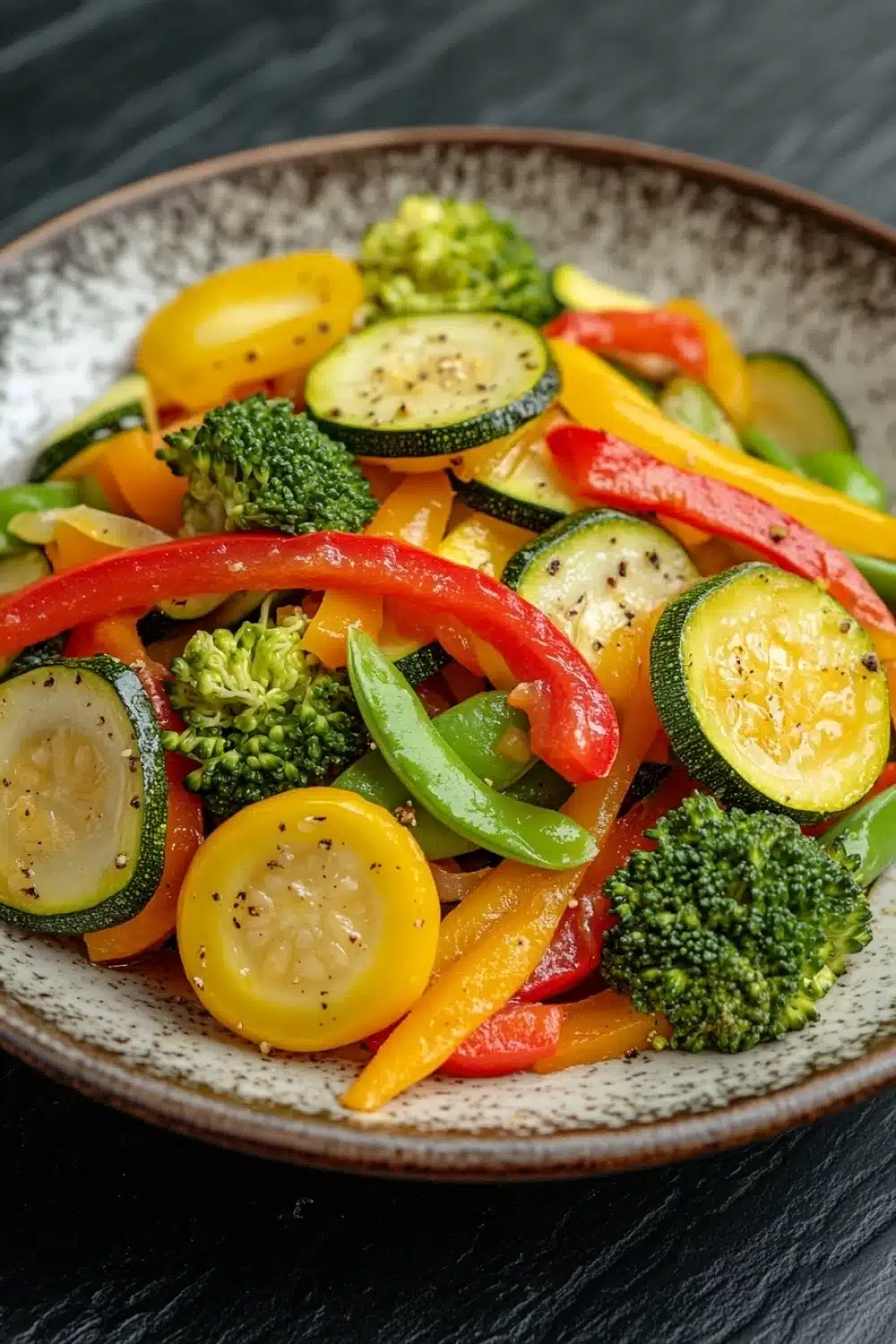
Veggie magic in minutes.
There’s something electric about the sizzle when fresh vegetables hit a hot pan—olive oil shimmering, garlic whispering aromatic secrets as it browns just right. This recipe nails that perfect restaurant-style sauté, where each vegetable holds its own crunch and bursts with flavor, not mushy or sad like some attempts I’ve endured.
I remember the first time I tried to recreate this at home. My pan was too crowded, and everything steamed instead of sautéed. Lesson learned: give those veggies space to dance. The thin bell pepper strips and crisp snap peas get a quick toss with thyme and oregano—simple herbs that pack a punch without stealing the spotlight.
In less than 20 minutes, you’ve got a colorful, vibrant side dish that feels anything but ordinary. No overcooking here—just bright, tender-crisp vegetables that could fool even the pickiest diner into thinking you’ve got a chef’s secret up your sleeve.
For those looking to master the art of restaurant style sauteed vegetables, this guide offers quick and easy tips to get it just right.
Why You’ll Actually Use This Sautéed Veggies Recipe
- Ready in just 20 minutes—perfect for weeknight warriors juggling work, family, and that elusive me-time.
- Vibrant colors and crisp-tender bite that make your plate pop without turning into mush city.
- Minimal ingredients, maximum flavor—using everyday pantry staples that won’t ghost you mid-cook.
- Pairs like a charm with pretty much any mains: grilled chicken, steak, or even a lazy dinner of rice and beans.
- Leftovers keep well in the fridge, so you’re not staring blankly into the fridge wondering what’s for lunch tomorrow.
Restaurant Style Sautéed Vegetables
A vibrant and flavorful mix of sautéed vegetables cooked to perfection with garlic and herbs, perfect as a side dish for any meal.
- Prep Time: 10 minutes
- Cook Time: 10 minutes
- Total Time: 20 minutes
- Yield: 4
Ingredients
2 tablespoons olive oil
1 medium red bell pepper, sliced into thin strips
1 medium yellow bell pepper, sliced into thin strips
1 medium zucchini, sliced into 1/4 inch rounds
1 medium yellow squash, sliced into 1/4 inch rounds
1 medium carrot, peeled and thinly sliced
1 cup broccoli florets
1 cup snap peas, trimmed
3 cloves garlic, minced
1/2 teaspoon salt
1/4 teaspoon freshly ground black pepper
1/2 teaspoon dried thyme
1/2 teaspoon dried oregano
1 tablespoon fresh parsley, chopped
Instructions
Heat olive oil in a large skillet over medium-high heat until shimmering.
Add the minced garlic to the skillet and sauté for 30 seconds until fragrant, stirring constantly to prevent burning.
Add the sliced red bell pepper, yellow bell pepper, zucchini, yellow squash, carrot, broccoli florets, and snap peas to the skillet.
Season the vegetables with salt, black pepper, dried thyme, and dried oregano. Stir well to evenly coat all the vegetables with the seasoning.
Cook the vegetables, stirring frequently, for 8 to 10 minutes or until they are tender-crisp and slightly caramelized. Avoid overcooking to maintain vibrant color and texture.
Remove the skillet from heat and sprinkle the chopped fresh parsley over the vegetables.
Give the vegetables a final gentle stir to combine the parsley evenly.
Serve immediately as a flavorful side dish.
Explore more:
Dinner Recipes
Mastering Restaurant Style Sautéed Vegetables
The Swap Game: When Life Hands You Veggies
Ever been stuck without a red bell pepper? No sweat. Swap it for some vibrant cherry tomatoes or even a splash of roasted red peppers from a jar. The key here? Keep the texture contrast alive. Zucchini out? Eggplant chunks or asparagus tips work like a champ, just mind the cooking time—they like it a bit slower. Snap peas? Green beans or sugar snap peas. Think of this as your veggie jazz session—improvise but keep the rhythm tight.
Why Sizzle Matters: The Magic Behind the Technique
Start with a hot pan—oil shimmering, almost to the point of a whispering hiss. That’s your green light. Toss in the garlic, but for just a blink—30 seconds tops. Burnt garlic is the kitchen’s equivalent of bad jazz; it’s shrill and ruins the vibe. Then, in go the veggies, but here’s the trick: keep them moving—stir often but not constantly. You want that golden flirtation with caramelization without turning it into mush. The goal is tender-crisp with a slight char kiss. The herbs? They’re your backstage pass—thyme and oregano get cozy with the heat to release their mojo, layering in complexity without shouting.
Flub Fixes: When Sauté Goes Sideways
Let’s get real—sometimes, things go sideways. Overcooked veggies? They turn into sad mush. Solution? Fire up the heat next round and shorten cooking time. No stir-frying marathon here. Too bland? Salt is your best mate. Don’t be shy—season in layers: a sprinkle at the start, a tweak mid-cook, and a pinch at the end. Garlic taste too raw or too bitter? Toss it in after the veggies have had a head start next time. Or better yet, roast the garlic beforehand for that mellow, nutty vibe. If your pan’s overcrowded, veggies steam instead of sauté—ditch half, cook in batches. Remember, space is flavor’s best friend.
FAQs About Restaurant Style Sautéed Vegetables
A: Absolutely. Butter adds a richer, creamier note, but watch the heat—it burns faster than olive oil. If you roll with butter, dial down the flame a smidge.
A: Nope. That’s a rookie move. The recipe’s timing lets everything hit that tender-crisp sweet spot simultaneously. Tossing in raw carrots and broccoli keeps the crunch alive—just stir often to avoid hot spots.
A: This recipe is already vegan! It’s all about those fresh veggies, olive oil, and herbs. No animal products sneaking in here, so you’re good to go straight off the bat.
A: Yes and no. You can chop and prep your veggies earlier, but sautéing is best done fresh. The texture and vibrant colors don’t hold up well after sitting. If you must, reheat gently to avoid turning the veggies to mush.
A: Not strictly. If they’re fresh and young, a quick scrub will do. If they’re thick-skinned or older, peeling helps avoid any bitterness or tough bits.