
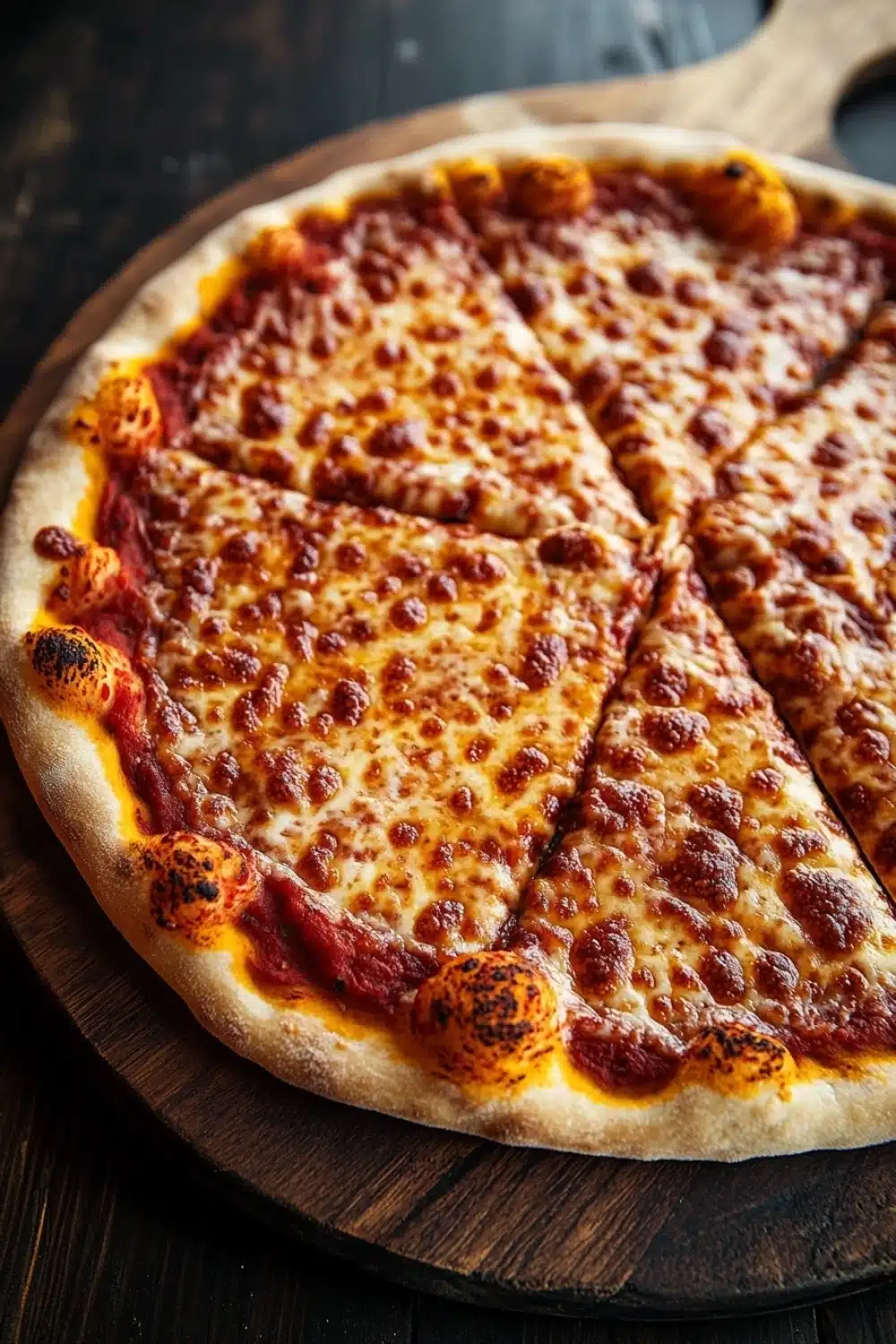
Crunch that crust!
There’s something hypnotic about stretching dough—watching it grow thinner and thinner, almost translucent, before it hits the oven. This isn’t your typical deep-dish escapade; Chicago style thin crust pizza is the underdog, the crispy rebel everyone secretly craves.
I still remember my first attempt, slapping that dough down on the floured countertop, fingers dusted with flour like a baker’s badge of honor. The yeast bubbled up, a foamy promise of that iconic crunch—light, cracker-thin, and unapologetically snappy. Folding in just the right amount of olive oil and salt? That’s where the magic lies—no fluff, just straightforward flavor and texture that holds up against any topping you throw its way.
Ready to roll? Let’s get that dough dancing under your fingertips and bring a slice of Chicago’s pizzeria grit right into your kitchen.
If you’re looking for the perfect base, try our Chicago Style Thin Crust Pizza Dough Recipe for Crispy, Crunchy Crusts to get that authentic, crispy texture.
Real Life Wins from Mastering Chicago Style Thin Crust Pizza Dough
- The crust’s ultra-thin crispness means your favorite toppings shine without that doughy bulk getting in the way—no soggy regrets here.
- Quick turnaround: From mixing to baking in just 25 minutes—perfect for those unexpected pizza cravings or a last-minute dinner hustle.
- Hands-on dough kneading is oddly therapeutic—trust me, I’ve knocked out stress with a good 10-minute stretch of this dough before.
- Leftover dough? No sweat. Wrap it tight, toss it in the fridge or freezer, and you’ve got a pizza ready to roll whenever hunger strikes again.
- Cooking at 500°F with a pizza stone crisps this bad boy up just right, giving you that authentic pizzeria edge without stepping foot outside your kitchen.
Chicago Style Thin Crust Pizza Dough

This Chicago Style Thin Crust Pizza Dough recipe yields a crisp, cracker-thin crust perfect for holding your favorite toppings. Unlike the deep-dish version, this dough is light and crunchy, delivering authentic Chicago pizzeria flavor right at home.
- Prep Time: 15 minutes
- Cook Time: 10 minutes
- Total Time: 25 minutes
- Yield: 2 (12-inch pizzas)
Ingredients
2 1/4 teaspoons active dry yeast (1 packet)
1 1/2 cups warm water (110°F/43°C)
1 teaspoon granulated sugar
3 1/2 cups all-purpose flour, plus extra for dusting
1 1/2 teaspoons salt
2 tablespoons olive oil, plus extra for greasing
Instructions
In a small bowl, combine the warm water, sugar, and active dry yeast. Stir gently and let sit for 5 to 10 minutes until the mixture is foamy.
In a large mixing bowl, whisk together the all-purpose flour and salt.
Make a well in the center of the flour mixture and pour in the yeast mixture and 2 tablespoons of olive oil.
Using a wooden spoon or your hands, mix until a rough dough forms.
Turn the dough out onto a lightly floured surface and knead for 8 to 10 minutes until the dough is smooth and elastic. Add small amounts of flour if the dough is too sticky.
Lightly oil a large bowl with olive oil. Place the dough in the bowl and turn it to coat all sides with oil.
Cover the bowl with a clean kitchen towel or plastic wrap and let the dough rise in a warm place for 1 hour, or until it has doubled in size.
Preheat your oven to 500°F (260°C). If using a pizza stone, place it in the oven to preheat as well.
Punch down the risen dough to release air bubbles and divide it into two equal portions.
On a lightly floured surface, roll each portion into a 12-inch thin circle, about 1/8 inch thick.
Transfer the rolled dough onto a pizza peel or baking sheet dusted with flour or cornmeal to prevent sticking.
Add your desired toppings and bake each pizza for 8 to 10 minutes, or until the crust is golden and crisp.
Remove from the oven, slice, and serve immediately.
Explore more:
Dinner Recipes
Nailing Chicago Style Thin Crust: Dough Secrets and Fixes
The Art of Swapping Flour Without Losing That Crunch
Here’s the scoop—Chicago thin crust demands a particular kind of flour mojo. All-purpose flour is the go-to for this dough, lending just enough protein to build that crisp, cracker-like base. But say you’re all out or fancy a twist—bread flour can sneak in as a sub, bumping up gluten for more chew, though it risks a bit more toughness. Pastry flour? Forget it. Too soft, and your crust turns limp, like soggy cardboard. I once tried whole wheat in a pinch—yeah, it gave a nutty vibe but also robbed the crust of its signature snap. My advice? If you’re swapping, keep a keen eye on hydration levels; whole wheat soaks up more water, so tweak accordingly or face a dough that’s drier than the Sahara.
Why the Yeast Foaming Stage Isn’t Just Fluff
Look, skipping the yeast bloom is like trying to catch waves without a surfboard — pointless and messy. That foamy surface after mixing warm water, sugar, and yeast is your dough’s green light. It signals the yeast is alive, kicking, ready to puff up your crust with those magical air pockets. No foam? Your yeast could be dead or water temperature off the charts. I learned this the hard way, once rushing the process and ending up with a dough brick. So, treat this step like your dough’s warm-up lap. Wait it out—no shortcuts here.
Fixing Dough Disasters: When Your Crust Stubbornly Refuses to Crisp
Dough issues? Happens to the best of us. If your crust stays floppy after baking, the usual culprit is excess moisture—either from overly wet toppings or dough that was rolled too thick. Thin it out—literally. Aim for that 1/8-inch thinness, and resist the urge to drown your pie in sauce. Another trick? Crank your oven hotter and bake on a preheated pizza stone or steel—these bad boys suck up moisture and crank the bottom heat, delivering that charred, crackly base that’s the hallmark of Chicago’s thin crust.
Also, remember the punch down. It’s not just for show; knocking out big air bubbles prevents giant holes that can cause uneven cooking. My first pizza looked like the moon’s surface—full of craters—no bueno. Punch down, roll thin, bake hot. This triple threat keeps the crunch alive.
Chicago Style Thin Crust Pizza Dough FAQ
Yes, you can swap instant yeast in a 1:1 ratio. Just mix it directly with the flour without proofing in water first. It’ll shave a bit off your rise time but watch that dough—it can spring up faster than a jackrabbit!
I aim for about 1/8 inch thick—think cracker-thin but not paper-thin. Too thin and you risk a sad, brittle crust that breaks under toppings. Too thick? You lose that signature Chicago thin crisp bite. Trust me, a rolling pin and a little patience are your best pals here.
Absolutely. After you knead and let it rise, punch it down and wrap it tight. Pop it into the fridge for up to 3 days. When you’re ready, let it come back to room temp before stretching out. It’s a busy cook’s secret weapon.
Yes! That oven temp is key to getting that crisp, golden crust that snaps when you bite. If you’ve got a pizza stone, toss it in as the oven heats—it mimics the hot bricks of a Chicago pizzeria. No stone? No worries; just use a heavy baking sheet and still crank the heat.
No. This dough is designed for thin, cracker-style crusts. Deep-dish dough is chunkier, oilier, and more bread-like—not this lean, crisp setup. So if you’re chasing that deep-dish vibe, better hunt down another recipe.