
Fuel up fast.
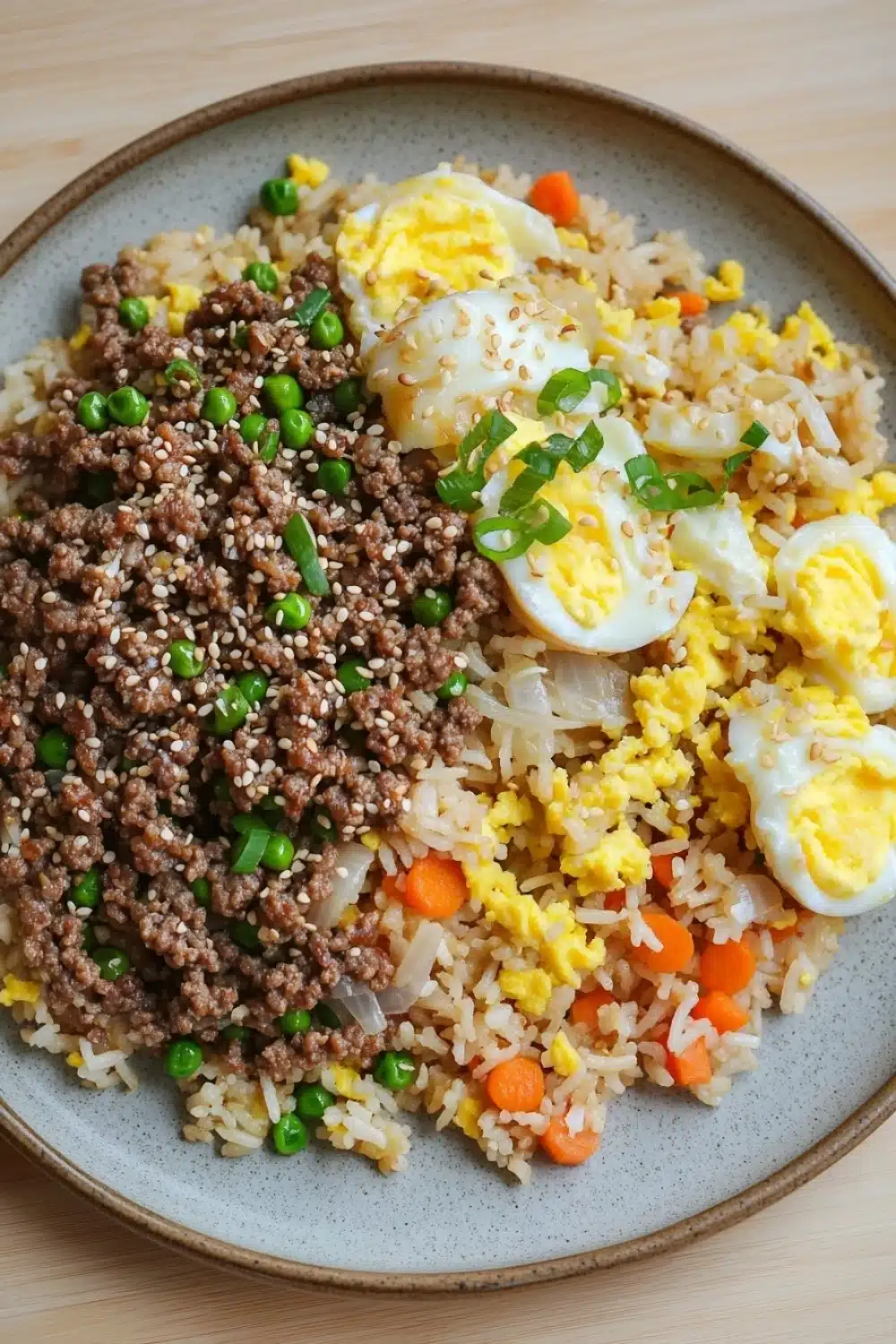
The kitchen buzzes—sizzling sounds from the skillet, the sharp aroma of garlic mingling with the deep umami of ground beef. There’s a kind of magic when you toss jasmine rice into the mix, each grain eager to soak up that fiery gochujang sauce. It’s not just food; it’s your next power-packed meal coming together, quick and no-nonsense.
Here’s the thing: I’m a sucker for dishes that bring the heat and the protein, especially when time’s tight. Lean beef browns to perfection, the veggies crisp yet tender, eggs folded in like a boss. Tossing everything with sesame oil and soy sauce? That’s the secret handshake only true foodies get. This Korean fried rice doesn’t play coy—it struts with bold flavors and a solid protein punch to keep you going.
One skillet. Twenty-five minutes. Meal prepped and ready to roll. Let’s get cooking.
If you’re looking for a delicious and kid-friendly meal, check out our Easy Ground Beef Dinner for Kids: Quick, Tasty & Nutritious that’s both high in protein and full of flavor.
Real Life Benefits of High Protein Korean Beef Fried Rice
- Quick turnaround: Ready in just 25 minutes—ideal for hustling weeknights when time’s tight but hunger’s roaring.
- Muscle fuel: Packed with lean ground beef and eggs, this dish hits the high-protein jackpot for anyone chasing gains or just staying full.
- Fridge-friendly leftovers: Keeps fresh for 3 days, so you can meal-prep like a boss without flavor fade.
- Flavor ride: That gochujang sauce kicks up the heat and umami without drowning the dish—perfect for spice lovers wanting a serious punch.
- Veggie boost: Carrots, peas, and green onions sneak in some fiber and freshness, making it a sneaky way to get your greens without the rabbit food blues.
High Protein Korean Beef Fried Rice
A flavorful and protein-packed Korean-inspired fried rice featuring lean ground beef, vegetables, and a savory gochujang sauce. Perfect for a quick and satisfying meal.
- Prep Time: 10 minutes
- Cook Time: 15 minutes
- Total Time: 25 minutes
- Yield: 4
Ingredients
2 tablespoons vegetable oil
1 pound lean ground beef (90% lean)
1 medium yellow onion, diced
3 cloves garlic, minced
1 cup carrots, diced
1 cup frozen peas, thawed
4 cups cooked jasmine rice, chilled
3 large eggs, beaten
3 tablespoons gochujang (Korean chili paste)
2 tablespoons low sodium soy sauce
1 tablespoon sesame oil
2 green onions, thinly sliced
1 tablespoon toasted sesame seeds
1/2 teaspoon ground black pepper
Instructions
Heat 1 tablespoon of vegetable oil in a large skillet or wok over medium-high heat.
Add the ground beef and cook, breaking it apart with a spatula, until browned and cooked through, about 5-6 minutes. Drain excess fat if necessary.
Add the diced onion and minced garlic to the skillet with the beef. Cook for 2-3 minutes until the onion becomes translucent and fragrant.
Stir in the diced carrots and cook for another 3 minutes until slightly tender.
Push the beef and vegetable mixture to one side of the skillet. Add the remaining 1 tablespoon of vegetable oil to the empty side.
Pour the beaten eggs into the empty side and scramble until just set, about 1-2 minutes.
Mix the scrambled eggs with the beef and vegetables.
Add the chilled cooked rice to the skillet. Stir well to combine all ingredients evenly.
In a small bowl, whisk together the gochujang, soy sauce, sesame oil, and black pepper.
Pour the sauce over the rice mixture and stir thoroughly to coat everything evenly.
Add the thawed peas and cook for another 2-3 minutes until heated through.
Remove from heat and stir in the sliced green onions.
Sprinkle toasted sesame seeds over the top before serving.
Explore more:
Dinner Recipes
Mastering High Protein Korean Beef Fried Rice
The Quick Fix for Mushy Rice Woes
If you’ve ever ended up with a soggy mess instead of that coveted fried rice texture, you’re not alone. The golden rule? Use day-old rice—or here, jasmine rice that’s been chilled and dried. Why? Because fresh rice is too moist, and moisture is the enemy of that perfect stir-fry snap. I’ve made the mistake of rushing this step, and trust me, it turns your dish from tiger-striped to sad and mushy in minutes. When you toss chilled rice into a hot skillet, each grain separates instead of clumping, keeping that coveted bite.
Pro tip: If you forgot to prep rice the day before, spread freshly cooked rice on a baking sheet to air-dry or pop it in the fridge for a bit. It’s not just about patience; it’s about respecting the rice’s texture before going full throttle on the stove.
Subbing Smart: When You’re Out of Gochujang
Gochujang is the heartbeat of this dish—its spicy, smoky kick is non-negotiable for that Korean flair. But what if you’re running on empty in the chili paste department? Don’t sweat it. I’ve swapped it out mid-cook and saved the day more than once.
Here’s the lowdown: mix a tablespoon of miso paste with a teaspoon of chili flakes and a splash of honey or molasses. That combo brings the umami, a touch of sweetness, and heat. It’s a hack that won’t fool a die-hard Korean cuisine purist but will nail the flavor for most home cooks in a pinch. Remember, the goal isn’t to replicate but to approximate the vibe.
Why You Scramble Eggs Separately—And Why It Matters
Eggs in fried rice are a classic—but I’m always surprised by how many skip the step of scrambling them separately, just tossing raw eggs into the hot pan, hoping for the best. Here’s the scoop: cooking eggs separately in their own space—pushed aside on the skillet or cooked in a separate pan—lets them set properly and maintain a fluffy, tender texture instead of turning rubbery or stringy. After scrambling, folding them gently back into the meat-and-veg mix gives you those luscious eggy pockets that contrast the chew of beef and crunch of carrots.
This step might seem like extra work, but it’s a game-changer. I used to rush through it, and my eggs would join the rice in a sad, gluey blob. That separate scramble? It’s the unsung MVP of fried rice texture dynamics.
Frequently Asked Questions About Korean Beef Fried Rice
A: Absolutely! Ground turkey or chicken work well, too. Just adjust cooking times since leaner meats can dry out faster. I’ve swapped in ground turkey on a busy night and it turned out just fine—still packed with protein and flavor.
A: It’s got a kick, but not nuclear level. It balances heat with a slightly sweet, fermented depth that’s unique. If you’re a spice wimp, start with less and build up.
A: Nope—eggs and beef are core here. But you could replace beef with crumbled tofu or tempeh and skip the eggs. Just keep the sauce, and you’ll still score major umami points.
A: Nah, any long-grain rice works. Jasmine’s subtle floral notes add a nice touch, but basmati or even leftover plain rice from yesterday’s dinner fits the bill just fine. Pro tip: chilled rice is clutch for fried rice texture—keeps it from turning mushy.
A: Up to 3 days in the fridge in an airtight container. Reheat it in a pan, stirring often to keep the rice grains from sticking and clumping. Microwave’s a fast fix, but skillet’s better for that fresh-from-the-wok vibe.