
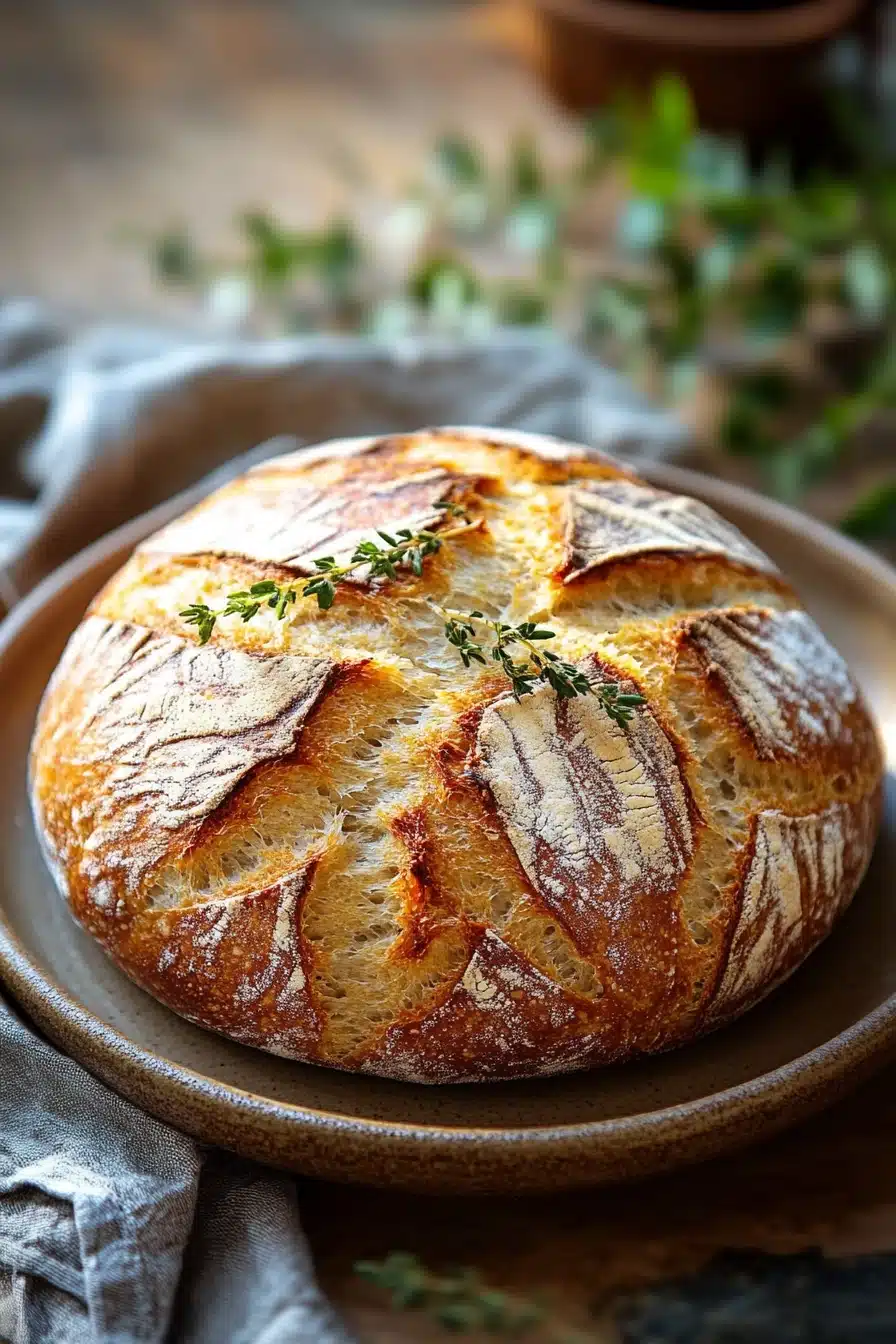
There’s something quietly satisfying about waking up to the smell of fresh bread. I tried this no knead bread with active dry yeast on a slow weekend morning when the house was still half asleep. The dough was sticky and a little unruly, sticking to my fingers more than I expected. I wasn’t sure if I’d done it right when I covered it and left it to rest, but the wait was part of the magic. Hours later, the dough had puffed up with bubbles, promising a crusty loaf without the fuss of kneading.
When I finally slid the bread into the oven, the aroma filled the kitchen and pulled me away from my half-finished book. The crust browned perfectly, crackling as it cooled on the rack. I sliced into it while it was still warm, the crumb soft and tender inside, with just enough chewiness. It wasn’t fancy, and the timing wasn’t exact, but it was just right for that particular morning — simple, comforting, and rewarding.
- Minimal hands-on time means you can start the dough and forget it for hours.
- The crust develops beautifully without complicated techniques.
- It’s simple—and that’s kind of the point—no fancy ingredients or equipment needed.
- The slow rise allows deep flavor to develop even with just a little active dry yeast.
If you’re nervous about timing, don’t stress. The dough is forgiving and I’ve left it a bit longer than the recipe suggests without a problem. Just keep an eye on the bubbles and volume, and you’ll know when it’s ready.
PrintNo Knead Bread with Active Dry Yeast

A simple and easy no knead bread recipe using active dry yeast that yields a crusty, flavorful loaf with minimal effort.
- Prep Time: 15 minutes
- Cook Time: 45 minutes
- Total Time: 5 hours
- Yield: 8
Ingredients
3 cups (360 grams) all-purpose flour
1/4 teaspoon active dry yeast
1 1/4 teaspoons salt
1 1/2 cups (360 ml) warm water (about 110°F / 43°C)
Instructions
In a large mixing bowl, combine the all-purpose flour, active dry yeast, and salt.
Add the warm water to the dry ingredients and stir with a wooden spoon or spatula until a shaggy, sticky dough forms and all flour is incorporated.
Cover the bowl tightly with plastic wrap or a clean kitchen towel and let the dough rest at room temperature for 4 to 5 hours, or until the surface is dotted with bubbles and the dough has doubled in size.
After the dough has risen, generously flour a clean work surface and your hands.
Turn the dough out onto the floured surface and fold it over on itself once or twice to shape it into a rough ball. Do not knead.
Place a large piece of parchment paper on a baking sheet or in a Dutch oven.
Transfer the dough ball onto the parchment paper, cover it loosely with a kitchen towel, and let it rest for 30 minutes.
While the dough rests, preheat your oven to 450°F (230°C). If using a Dutch oven, place it inside the oven to preheat as well.
After the 30-minute rest, carefully remove the hot Dutch oven from the oven (if using).
Using the parchment paper, lift the dough and place it into the Dutch oven or onto the baking sheet.
Cover with the lid (if using Dutch oven) or a large oven-safe bowl, and bake for 30 minutes.
Remove the lid or cover and bake for an additional 15 minutes, or until the bread is golden brown and crusty.
Remove the bread from the oven and transfer it to a wire rack to cool completely before slicing.
Kitchen Notes: I usually just use a heavy pot or Dutch oven to bake this bread, but a baking sheet with parchment works fine too. Serving it warm with butter or a drizzle of olive oil is my favorite way to enjoy it, though it’s also great toasted the next day. Sometimes I add a sprinkle of herbs or garlic powder to the dough, but I haven’t tested all the variations thoroughly so results can vary. Also, if you want a lighter crumb, letting the dough rise a bit longer can help. It’s forgiving enough to experiment.
FAQ: How long does the bread keep? Keep it in a paper bag or bread box at room temperature for up to two days to maintain the crustiness. For longer storage, wrap it tightly and freeze, then thaw at room temp. Can I use instant yeast? The recipe uses active dry yeast, but instant yeast can work with slight adjustments to water temperature and rise time. What if I don’t have a Dutch oven? Baking on a parchment-lined sheet with a covered bowl works well to trap steam and create that crusty surface.
This no knead bread recipe is a gentle invitation to slow down and enjoy the process—even if your kitchen clock is a little off or your dough is a bit sticky. Give it a try and see how a simple loaf can quietly change your day.