
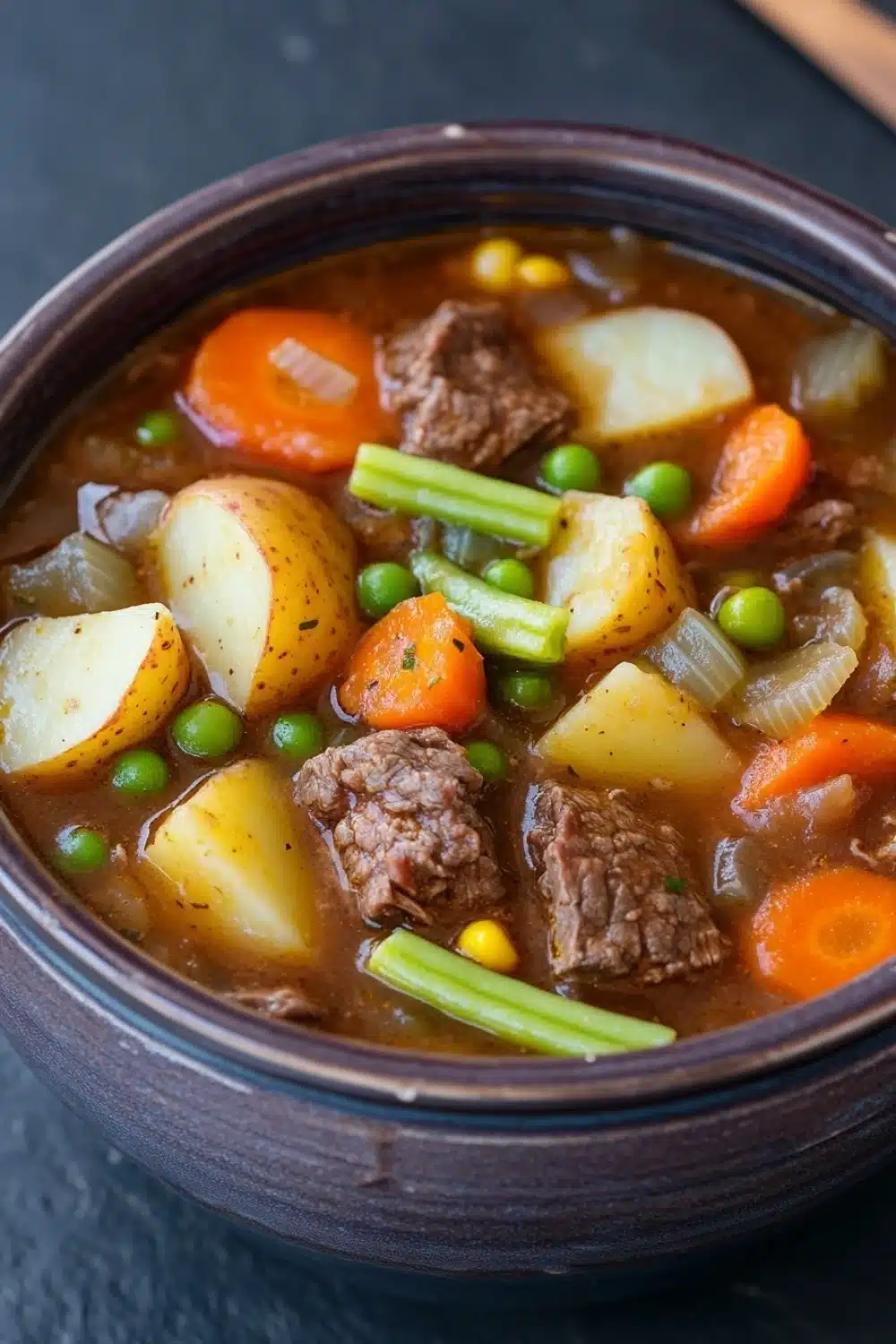
Cold day, warm pot.
There’s something about the simmering sound of a stew bubbling away on the stove that instantly transforms a kitchen into a cozy haven. I remember the first time I browned beef chuck for this freezer-friendly stew—it wasn’t just cooking; it was the beginning of a ritual. The sizzle hitting the pan reminded me that patience is the secret ingredient here.
Layering flavors takes time, but the payoff is worth every minute. Onions sweating down to sweet translucence, garlic releasing that punchy aroma, and a careful dusting of flour to thicken the broth—this isn’t your run-of-the-mill stew. Throw in bay leaves and sprigs of thyme, and you’ve got a pot that’s going to warm you from the inside out.
And then, the veggies—carrots, potatoes, celery, green beans, peas, and corn—each one playing its part like a well-oiled crew. The best part? This stew’s got freezer game. Make it once; eat it later, no fuss, no muss. When life’s hectic, this dish is your kitchen’s MVP.
If you’re looking for a quick and hearty meal, try our One Pot Beef Noodle Skillet: Easy Dinner in 35 Minutes as a delicious alternative to freezer vegetable beef stew.
Why Freezer Vegetable Beef Stew Works Wonders in Real Life
- Meal prep lifesaver—make a big batch on the weekend, stash it in the freezer, and forget about dinner stress during the week.
- Frozen gems for busy days: no takeout temptation when a hearty, home-cooked stew is just minutes away from warming up.
- Perfect for leftovers lovers—flavors actually get better after chilling and reheating, unlike some dishes that turn meh.
- Nutritious and balanced in one pot; you load up on beef protein plus a rainbow of veggies without extra fuss.
- Budget-friendly magic—tougher beef cuts become tender, and bulk veggies stretch meals, saving you cash without skimping on taste.
Freezer Vegetable Beef Stew
A hearty and wholesome vegetable beef stew perfect for freezing and enjoying later. Packed with tender beef, colorful vegetables, and rich flavors, this stew is an ideal make-ahead meal for busy days.
- Prep Time: 20 minutes
- Cook Time: 2 hours 30 minutes
- Total Time: 2 hours 50 minutes
- Yield: 6
Ingredients
2 pounds beef chuck, cut into 1-inch cubes
2 tablespoons olive oil
1 large onion, diced
3 cloves garlic, minced
4 cups beef broth
1 cup water
3 large carrots, peeled and sliced into 1/2-inch pieces
3 medium potatoes, peeled and diced into 1-inch cubes
2 stalks celery, sliced
1 cup frozen green beans, trimmed and cut into 1-inch pieces
1 cup frozen peas
1 cup frozen corn kernels
2 tablespoons tomato paste
1 teaspoon dried thyme
1 teaspoon dried rosemary
2 bay leaves
1/4 cup all-purpose flour
Salt, to taste
Black pepper, to taste
Instructions
Pat the beef cubes dry with paper towels and season with salt and black pepper.
In a large heavy-bottomed pot or Dutch oven, heat the olive oil over medium-high heat.
Add the beef cubes in batches, browning them on all sides, about 5-7 minutes per batch. Remove browned beef and set aside.
In the same pot, add the diced onion and cook until softened and translucent, about 5 minutes.
Add the minced garlic and cook for 1 minute until fragrant.
Sprinkle the flour over the onions and garlic, stirring constantly for 2 minutes to cook the flour.
Gradually pour in the beef broth and water while stirring to prevent lumps.
Add the tomato paste, dried thyme, dried rosemary, and bay leaves. Stir to combine.
Return the browned beef to the pot. Bring the stew to a boil, then reduce heat to low and cover.
Simmer the stew gently for 1 hour and 30 minutes, stirring occasionally.
Add the carrots, potatoes, and celery to the pot. Cover and continue simmering for 45 minutes, or until the vegetables and beef are tender.
Stir in the frozen green beans, peas, and corn. Cook uncovered for an additional 10 minutes.
Remove the bay leaves. Taste and adjust seasoning with salt and black pepper as needed.
Allow the stew to cool completely before portioning into freezer-safe containers or bags.
Label and freeze for up to 3 months. To reheat, thaw overnight in the refrigerator and warm on the stovetop over medium heat until heated through.
Explore more:
Dinner Recipes
Mastering Your Freezer Vegetable Beef Stew
The Browning Hustle: Why Searing Beats Just Tossing Meat In
Here’s a nugget from the trenches: if you skip browning your beef cubes, you’re basically robbing your stew of a deep, meaty backbone. I’ve been guilty of just dumping meat straight into the pot, thinking ‘meh, it’ll cook anyway.’ Big mistake. Browning isn’t just about color—it’s Maillard magic, the chemical buzz that amps up flavor and locks in juices. You want each cube to get that gorgeous crust, a crust that whispers caramelized goodness with every bite. But—heads up—it’s gotta be dry meat, hot pan, and don’t crowd the pot. Crowd it, and you’re steaming instead of searing. Trust me, the difference hits your taste buds like night and day.
Veggie Lineup: Swap, Slide, and Keep It Solid
Carrots, potatoes, celery—solid classics. But what if you’re working with what’s on hand or want to mix things up? Here’s the skinny:
- Potatoes: Yukon Golds hold shape better than russets, but sweet potatoes can bring a cozy twist—just chunk them bigger so they don’t turn into mush.
- Carrots: Baby carrots are a lazy shortcut, but fresh carrots sliced on the bias soak up stew juices way better.
- Frozen Veggies: Green beans, peas, and corn are freezer staples for a reason—they hold texture like champs when added late in cooking.
Pro tip: If you’re swapping with denser veggies—think parsnips or turnips—add them earlier in the simmer to soften. Leafy greens? Toss in right at the end. Nobody wants swampy spinach stealing the show.
The “Oops, My Stew’s Watery!” Fixer-Upper
Ever opened your stew only to find it swimming in a sad, thin broth? Happens to the best of us. Here’s how to slam the brakes and thicken it up, pronto:
— Mix a tablespoon of flour or cornstarch with cold water to make a slurry.
— Stir that into your simmering stew gradually.
— Give it 5-10 minutes to work its magic.
— Repeat if you want it thicker, but don’t go crazy or you’ll turn the texture gummy.
— Alternatively, mash a few cooked potatoes right in—they’ll act like a natural thickener and boost that hearty vibe.
Remember: steady heat is key here. High flames can break the sauce down, making it watery again. Low and slow wins the thickening race.
Freezer Vegetable Beef Stew FAQs
- Can I freeze this stew without cooking it first?
- No, you need to cook it fully before freezing. The slow simmer develops flavors and tenderizes the beef—freezing raw would leave you with a lackluster meal.
- How long does it take to reheat from frozen?
- After thawing overnight in the fridge, reheating on the stove usually takes about 15-20 minutes. Stir occasionally so it heats evenly and doesn’t scorch at the bottom.
- Can I swap out the veggies?
- Absolutely. That’s the beauty of a stew. Just keep similar cooking times in mind—you don’t want to toss in quick-cooking greens too early or they’ll turn to mush. Root veggies like parsnips or turnips make great stand-ins.
- Do I need to brown the beef?
- Yes. Browning develops a deeper flavor and texture—skip this step, and you’re basically boiling meat chunks. Trust me, it’s worth the extra 10 minutes.
- Is this recipe gluten-free?
- No, because of the all-purpose flour used to thicken it. But you can swap it with cornstarch or a gluten-free flour blend to keep the stew thick and tasty.