
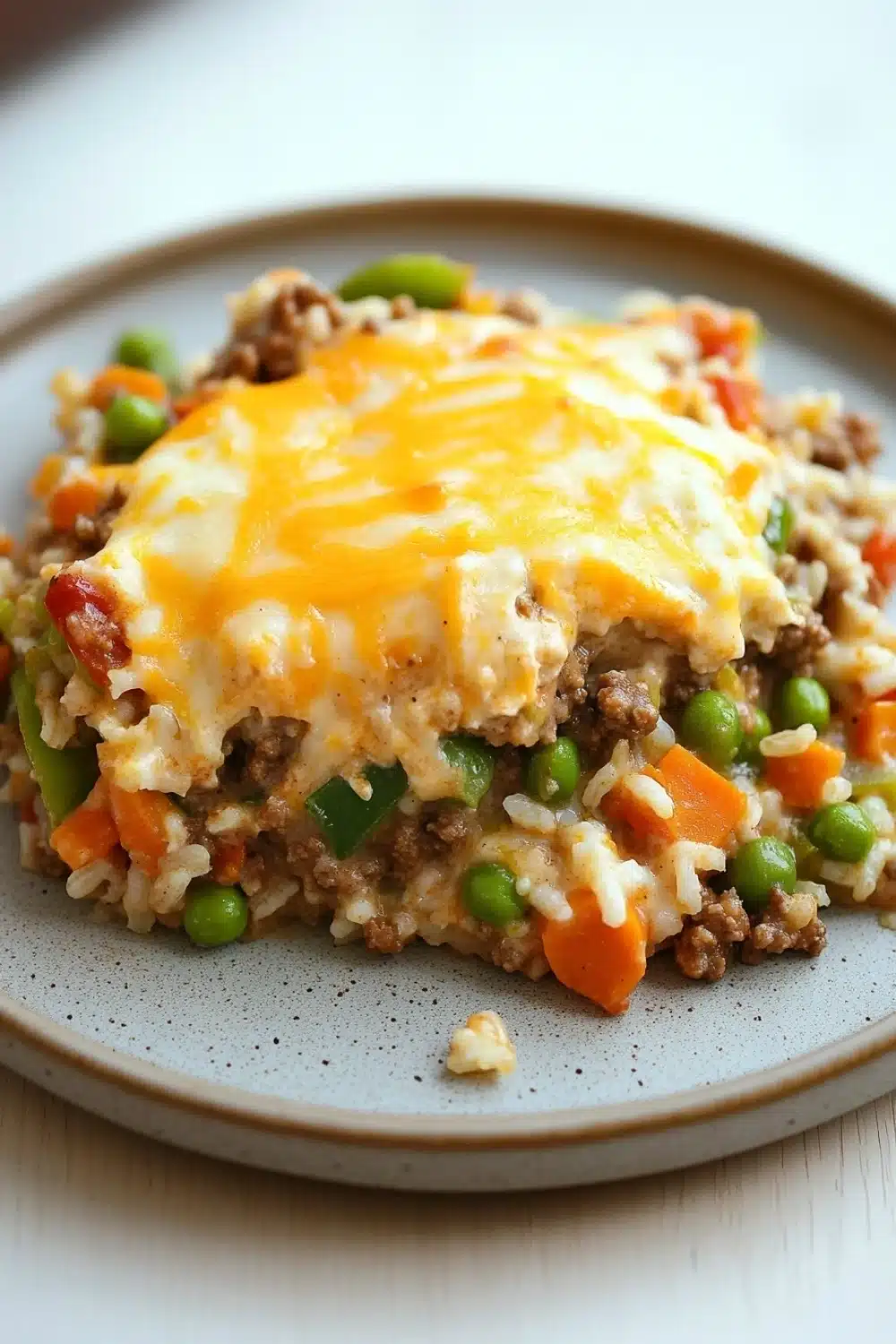
One-pot magic.
There’s something about the smell of ground beef sizzling alongside garlic and onions that pulls me right in. Mix in fresh, diced veggies and uncooked rice, and you’re halfway to a no-fuss dinner that’s as practical as it is satisfying. I remember those nights when I’d come home after a long day, craving a meal that could do the heavy lifting without me hovering over the stove. This beef rice veggie casserole checks every box.
Why fuss with multiple pans when everything can meld together in one casserole dish? The rice absorbs all those rich, savory juices, while the veggies add pops of color and texture—no limp, soggy bits here. Topped with cheddar cheese baked to golden perfection, it’s the kind of dish that even picky eaters won’t turn their noses up at. If you’ve ever been caught in a dinner rut, this recipe is a game changer—comfort food that’s straightforward, hearty, and genuinely satisfying.
For a tasty alternative, check out our How to Make Ahead Chicken Taco Casserole for Easy Dinner recipe that pairs perfectly with beef rice veggie casserole.
Why Beef Rice Veggie Casserole Rocks Your Weeknight Dinner
- One-pan wonder — you toss everything together, then let the oven do the heavy lifting while you kick back or tackle chores.
- Hands-off cooking means less babysitting the stove and more time chilling with the fam or binge-watching your latest obsession.
- Loaded with colorful veggies and protein, it’s a sneaky way to get everyone eating their greens without complaining.
- Leftovers reheat like a champ, making lunch the next day a no-brainer — just zap and go.
- Freezer-friendly, so you can double batch and have a hearty meal ready when life throws you a curveball.
Beef Rice Veggie Casserole

A hearty and comforting beef rice veggie casserole packed with ground beef, colorful vegetables, and tender rice, baked to perfection with a cheesy topping.
- Prep Time: 15 minutes
- Cook Time: 45 minutes
- Total Time: 1 hour
- Yield: 6
Ingredients
1 pound ground beef
1 cup long grain white rice, uncooked
1 medium onion, diced
2 cloves garlic, minced
1 cup carrots, diced
1 cup green bell pepper, diced
1 cup frozen peas
1 can (14.5 ounces) diced tomatoes, undrained
2 cups beef broth, low sodium
1 teaspoon dried oregano
1 teaspoon dried basil
1/2 teaspoon salt
1/4 teaspoon black pepper
1 1/2 cups shredded cheddar cheese
2 tablespoons olive oil
Instructions
Preheat the oven to 375°F (190°C).
Heat olive oil in a large skillet over medium heat.
Add diced onion and minced garlic to the skillet and sauté for 3-4 minutes until softened.
Add ground beef to the skillet and cook, breaking it up with a spoon, until browned and no longer pink, about 6-8 minutes.
Drain excess fat from the skillet if necessary.
Add diced carrots and green bell pepper to the skillet and cook for 3 minutes, stirring occasionally.
Stir in the uncooked rice, frozen peas, diced tomatoes with their juice, beef broth, dried oregano, dried basil, salt, and black pepper.
Bring the mixture to a boil, then remove from heat.
Transfer the beef and rice mixture into a 9×13 inch casserole dish and spread evenly.
Cover the casserole dish tightly with aluminum foil.
Bake in the preheated oven for 35 minutes.
Remove the foil and sprinkle shredded cheddar cheese evenly over the top.
Return the casserole to the oven and bake uncovered for an additional 10 minutes, or until the cheese is melted and bubbly.
Remove from the oven and let stand for 5 minutes before serving.
Explore more:
Dinner Recipes
Mastering Your Beef Rice Veggie Casserole: Tips, Tricks, and Fixes
The Veggie Swap Game—Why It’s More Than Just Color
When you dive into a beef rice veggie casserole, the veggies aren’t just filler—they’re the backbone of texture and flavor balance. I always drop in diced carrots and green bell peppers for that sweet-and-earthy punch, but here’s the kicker: swapping peas for chopped green beans or corn can totally change the vibe. Why? Peas bring subtle sweetness and softness, while green beans add crunch and corn kicks up the natural sugars. It’s a little thing, but it shifts the whole mouthfeel. I once made this casserole with roasted butternut squash instead of carrots—talk about a game-changer. But heads up: swapping veggies means minding the cooking time and moisture. Denser veggies like squash or zucchini may need a quick sauté before mixing in, or they’ll turn to mush during bake-time. Tweak your veggie game, but keep the integrity of the dish intact—don’t let your casserole turn into a soggy mess.
Why Browning Your Beef Matters—The Flavor Undercoat You Can’t Skip
Browning ground beef isn’t just about color—it’s flavor gold. When you sear beef properly, you’re coaxing out Maillard reactions—those toasty, caramelized bits that build deep, savory notes. The skillet shows those little browned bits (fond), and if you don’t drain them off or deglaze properly, you lose that punch. I always tell folks: don’t rush this step. Brown your beef in batches if needed to avoid stewing it in its own juices. The fat you drain? Save a little to cook your onions and garlic—it’s flavor recycling at its finest. Also—don’t just dump the broth in and forget it. Bring that mixture to a boil on the stove first; this jump-starts the rice cooking and locks in flavor before it heads into the oven to finish low and slow. Skipping this step? Your rice ends up gummy or undercooked, turning a potential winner into a sad one-dish flop.
Fixing the Common Casserole Curveballs: Soggy Rice, Dry Beef, and More
Let’s get real—casseroles can go sideways fast. Soggy rice? That usually means too much liquid or undercooking before baking. Solution: stick to the broth ratio and make sure you bring the mix to a proper boil first. No half measures. Dry beef? Could be you over-drained the fat or overbaked without cover. That foil tent is your best friend here—locks moisture in like a charm. Another trick? Let the casserole rest 5-10 minutes post-bake. This is where it sets up and finishes cooking off gently, giving you that perfect slice and texture. Oh, and cheese on top? Don’t dump it on too early or it’ll burn or get rubbery. Add it in the last 10 minutes uncovered for that melty, bubbly crown that makes people go “wow.” Trust me—I’ve been there, fixing casseroles saved from disaster by these tiny but mighty tweaks.
Beef Rice Veggie Casserole FAQs
- Can I use brown rice instead of white rice?
- Yes, but you’ll need to adjust the cooking time and liquid. Brown rice generally takes longer and absorbs more broth, so add about 1/2 cup more beef broth and bake uncovered for an extra 20 minutes.
- Is this casserole freezer-friendly?
- Absolutely. Wrap it tight in foil or use an airtight container. Freeze for up to 2 months. Just thaw in the fridge overnight before reheating. Perfect for meal prep or busy weeknights when you’re running on empty.
- Can I swap ground beef for ground turkey?
- Sure thing. Ground turkey works well here, though it’s leaner, so you might want to add a splash of olive oil or a bit more seasoning to keep things from drying out. I’ve done this swap when I’m trying to keep things light without losing flavor.
- Will this work without cheese on top?
- Yes/No. You can skip the cheese, but it’s the crown jewel for that golden, melty finish. Without it, the casserole will still taste great—just missing that gooey, crispy top layer that makes you wanna dive in.
- How do I get the rice perfectly cooked every time?
- Key is keeping the casserole tightly covered during the first part of baking to trap steam. That’s the secret sauce for tender rice. Also, don’t rush the standing time after baking; it lets the rice settle and soak up all those savory juices.