
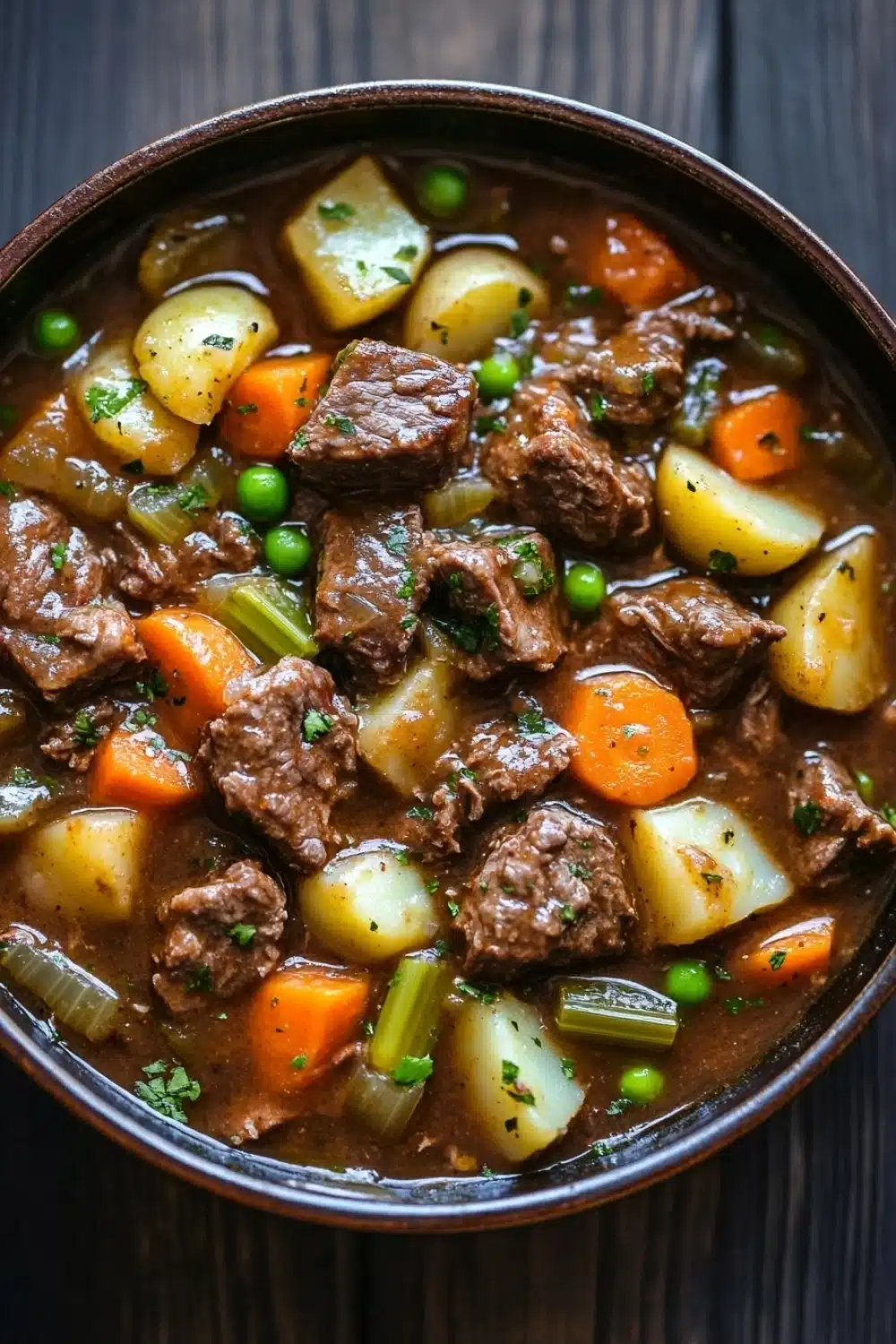
There’s something about the slow-simmered magic of beef stew that makes any kitchen feel like home. I’m talking about that rich, meaty aroma wafting through the air—it’s like a warm blanket on a chilly evening. When I toss skillet beef stew meat into a hot pot, searing those pieces until they’ve got a nice crust, it’s pure gold. The sizzle is the first note in this hearty tune. Then come the onions—softened just right—and garlic that wakes up your senses. As the broth bubbles, infused with red wine and herbs, the kitchen turns into a playground for flavors. It’s not just cooking; it’s a slow dance of textures and tastes. The veggies join in later, absorbing all that beefy goodness. I love letting the stew thicken naturally, the way a thick gravy clings to your spoon, promising comfort in every bite. This isn’t your run-of-the-mill stew—there’s a rustic, stick-to-your-ribs character in every mouthful. When the parsley hits the top, it’s that final touch, like a wink from the chef. After a long day, this stew doesn’t just fill your stomach—it settles your soul. Grab a crusty loaf, dig in, and you’ll get why this dish never goes out of style.
If you’re a fan of beef stew made with skillet beef stew meat, you’ll definitely want to check out this cozy recipe for One Pot Beef Potatoes for Slow Evenings. It’s the perfect dish to warm you up and unwind after a long day.
Real-Life Perks of Cooking Hearty Beef Stew with Skillet Beef Stew Meat
- One-pot wonder: This stew cooks mostly in one pot, cutting down on cleanup — a lifesaver after a long day.
- Comfort food made easy: The rich, slow-simmered flavors fill your kitchen and soul, perfect for those days when you need a warm hug on a plate.
- Meal prep hero: Makes enough to feed six, with leftovers that taste even better the next day — talk about winning at midweek dinners.
- Flexible and forgiving: The recipe handles some tweaks—swap in your favorite root veggies or skip the wine if you’re fresh out. No sweat.
- Freezer-friendly: Freeze portions for nights you want to skip cooking but still want something hearty and homemade.
Hearty Beef Stew with Skillet Beef Stew Meat
A classic, comforting beef stew made with tender skillet beef stew meat, simmered with vegetables in a rich, flavorful broth. Perfect for a cozy meal.
- Prep Time: 20 minutes
- Cook Time: 1 hour 40 minutes
- Total Time: 2 hours
- Yield: 6
Ingredients
Scale
2 pounds skillet beef stew meat, cut into 1-inch pieces
2 tablespoons vegetable oil
1 large onion, diced
3 cloves garlic, minced
4 cups beef broth
1 cup dry red wine
2 tablespoons tomato paste
1 teaspoon dried thyme
1 teaspoon dried rosemary
2 bay leaves
4 large carrots, peeled and cut into 1-inch pieces
3 medium potatoes, peeled and cut into 1-inch cubes
2 stalks celery, sliced
1 cup frozen peas
Salt, to taste
Black pepper, to taste
2 tablespoons all-purpose flour
2 tablespoons cold water
Fresh parsley, chopped (for garnish)
Instructions
Heat vegetable oil in a large heavy-bottomed pot or Dutch oven over medium-high heat.
Add skillet beef stew meat in batches, avoiding overcrowding, and brown on all sides, about 5 minutes per batch. Remove browned meat and set aside.
In the same pot, add diced onion and cook until softened, about 5 minutes.
Add minced garlic and cook for 1 minute until fragrant.
Return the browned beef to the pot. Stir in tomato paste and cook for 2 minutes.
Pour in beef broth and dry red wine, scraping the bottom of the pot to release browned bits.
Add dried thyme, dried rosemary, bay leaves, salt, and black pepper. Stir to combine.
Bring the mixture to a boil, then reduce heat to low. Cover and simmer for 1 hour.
After 1 hour, add carrots, potatoes, and celery to the pot. Cover and continue simmering for 40 minutes, or until vegetables and beef are tender.
In a small bowl, whisk together all-purpose flour and cold water until smooth to make a slurry.
Stir the slurry into the stew and cook uncovered for 5-10 minutes until the stew thickens.
Add frozen peas and cook for an additional 5 minutes.
Remove bay leaves. Taste and adjust seasoning with salt and pepper as needed.
Serve hot, garnished with chopped fresh parsley.
Explore more:
Dinner Recipes
Hearty Beef Stew with Skillet Beef Stew Meat
Substitution Secrets
Let’s talk swaps—because not everyone has skillet beef stew meat lounging in their fridge. If you find yourself staring at an empty meat section, chuck in chuck roast or brisket cut into chunks. These cuts have enough marbling to keep the stew juicy and tender through the long simmer. No skillet beef? No problem. For broth, beef broth is the OG, but if all you’ve got is chicken or vegetable stock, they’ll do in a pinch though the stew’s depth will shift gears. And hey—don’t sweat the wine. Dry red is classic, but if wine isn’t your thing or you’re cooking for the kiddos, swap in extra broth with a splash of balsamic or a spoonful of red grape juice. It’s not blasphemy; it’s kitchen hustle. Need a veg swap? No celery? Use fennel stalks or even green beans for crunch. The key is balance—maintain the texture and the flavor punch without losing the soul of the stew.
The Science
Ever wonder why stew meat has to brown first? That’s the Maillard reaction, where proteins and sugars cook up a flavor party—think of it as flavor fireworks. This browning creates those deep, savory notes that define a good stew. Then there’s the slow simmer—low and slow breaks down connective tissue, turning tough cuts into tender bites that almost melt. The tomato paste isn’t just for color; it adds umami and acidity, which balances the richness of the beef. The addition of herbs like thyme and rosemary releases essential oils that infuse the broth subtly but profoundly over time. Adding flour slurry at the end thickens the stew by gelatinizing starch granules—no fancy thickeners needed. Finally, peas go in last because they’re delicate and cook quickly; overcooking them turns sweetness into mush. Understanding these layers helps avoid a bland stew, no matter how many times you’ve winged it before.
Real-world fix
Here’s a nugget from my stew chronicles: sometimes, stew can end up watery or flat even after hours. When that happens, don’t just toss salt and call it a day. First, double-check your browning—if the meat didn’t get a good sear, it’s like skipping the foundation of a building. Next, let it simmer uncovered for 10-15 minutes—evaporation thickens up the broth naturally. Forgot the slurry? Whisk in a spoonful of instant mashed potato flakes or corn starch diluted in cold water for a quick fix. Another trick? Splash a teaspoon of soy sauce or Worcestershire sauce—those umami boosts punch the stew’s flavor up a notch without screaming for attention. And if your veggies are mush? Dump them in later in the cooking process next time. Stew isn’t a one-size-fits-all; it’s a live wire that needs your tweaks.
Hearty Beef Stew: Your Burning Questions Answered
Q1: Can I use a different cut of beef for this stew?
Absolutely! While skillet beef stew meat is perfect here, chuck roast cut into chunks works like a charm. Just make sure to brown it well for that deep, meaty punch.
Q2: What if I don’t have red wine on hand?
No sweat. Beef broth alone works, but toss in a splash of balsamic vinegar or a spoonful of grape juice to mimic that tang and depth red wine usually brings.
Q3: Why do we brown the meat in batches?
Good question! Crowding the pot makes the meat steam instead of sear, robbing you of those flavorful brown bits. Patience here means a richer stew.
Q4: Can I prep this stew ahead of time?
For sure. In fact, letting it sit overnight actually amps up the flavors. Just cool it down, refrigerate, and reheat gently before serving.
Q5: How can I tweak the thickness if I don’t have flour?
If you’re out of flour, cornstarch or arrowroot powder will do the trick. Mix with cold water first, then stir in and cook until the stew hits your desired thickness.