
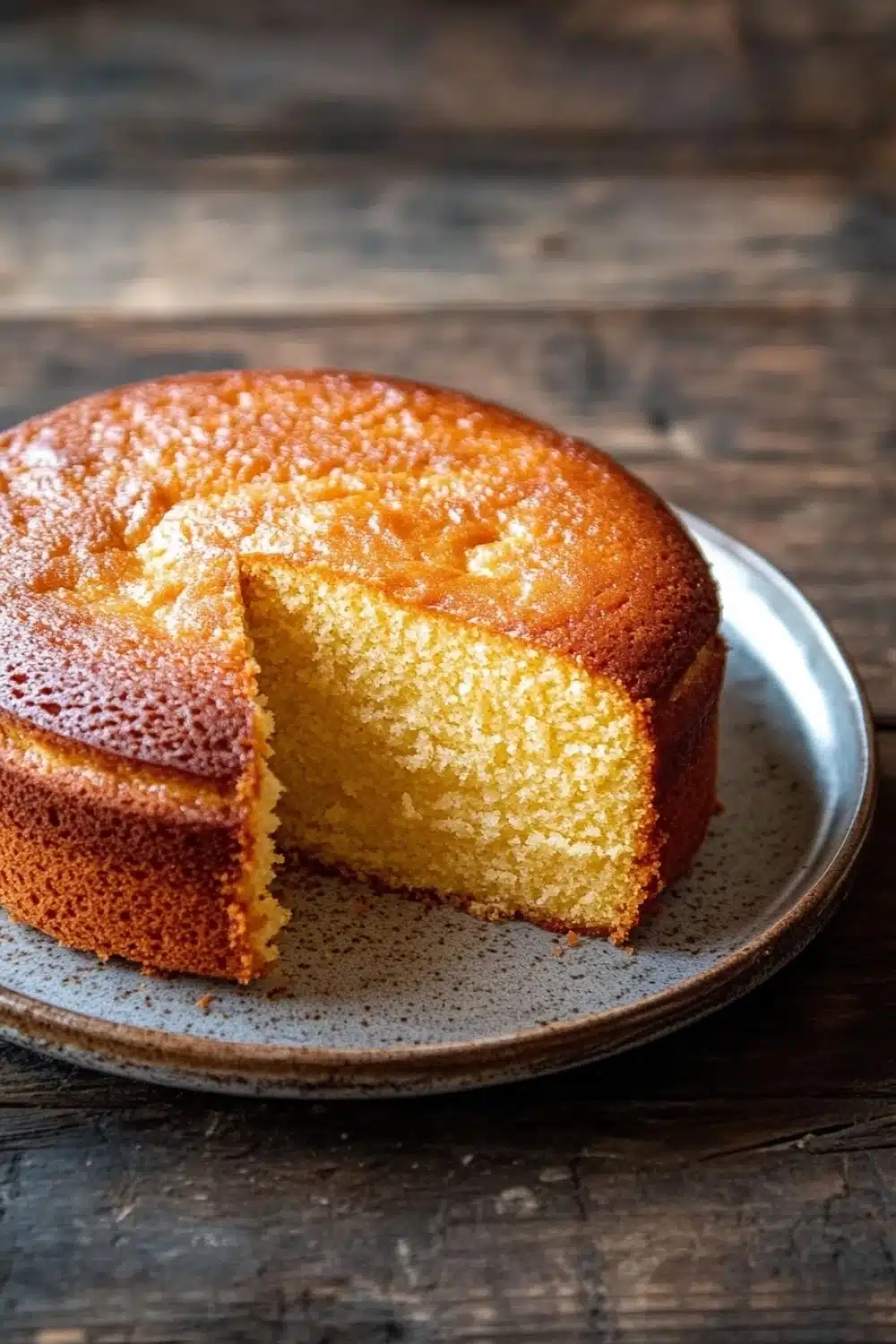
Ready for a cake fix?
There’s something about baking a vanilla cake from scratch that pulls you right into the heart of the kitchen’s hum and bustle. Flour dust floats in the air, the soft clink of mixing bowls, and that unmistakable aroma of vanilla swirling around—this is where magic brews, one whisk at a time.
Butter and sugar start the party—creamed together until they hit the perfect fluffy cloud stage. Then, eggs join the dance, each one folded in with a heartbeat’s rhythm. The secret? Folding in the flour and milk gently, like coaxing a secret out, to keep the crumb tender and light—not dense and heavy like a brick.
Pulling that golden cake from the oven, still warm, with just a hint of springiness when pressed—that’s the jackpot. It’s a classic move, a slice of homemade nostalgia that never gets old.
If you’re looking to expand your baking skills beyond vanilla cake scratch, this Moist Banana Almond Cake Recipe for a Nutty Afternoon Treat is a must-try.
Why This Classic Vanilla Cake Rocks in Real Life
- Simple pantry staples mean you can whip it up even when you’re caught without fancy ingredients—no last-minute store runs.
- The batter comes together fast, perfect for when you’re racing the clock but still want something homemade that doesn’t taste like it.
- Moist and tender crumb stays fresh for days—ideal for prepping ahead and skipping the stress on party day.
- Versatile flavor—works as a blank canvas for anything from a quick dusting of powdered sugar to a full-on multi-layer spectacle.
- Freezing options? Yes, please. Make in bulk, stash in the freezer, and pull out slices for impromptu sweet fixes or unexpected guests.
Classic Vanilla Cake from Scratch
This classic vanilla cake from scratch is moist, tender, and full of rich vanilla flavor. Perfect for birthdays, celebrations, or any occasion that calls for a delicious homemade cake.
- Prep Time: 20 minutes
- Cook Time: 30 minutes
- Total Time: 50 minutes
- Yield: 12 servings
Ingredients
2 1/2 cups (312 grams) all-purpose flour, sifted
2 1/2 teaspoons baking powder
1/2 teaspoon salt
1 cup (226 grams) unsalted butter, softened
1 3/4 cups (350 grams) granulated sugar
4 large eggs, at room temperature
1 tablespoon pure vanilla extract
1 cup (240 ml) whole milk, at room temperature
Instructions
Preheat the oven to 350°F (175°C). Grease and flour two 9-inch round cake pans, tapping out excess flour.
In a medium bowl, whisk together the sifted all-purpose flour, baking powder, and salt. Set aside.
In a large bowl, using an electric mixer, beat the softened butter on medium speed until creamy, about 1 minute.
Gradually add the granulated sugar to the butter and continue beating on medium-high speed until the mixture is light and fluffy, about 3-4 minutes.
Add the eggs one at a time, beating well after each addition to fully incorporate.
Mix in the pure vanilla extract.
With the mixer on low speed, alternately add the dry flour mixture and the whole milk to the butter mixture in three additions, beginning and ending with the flour mixture. Beat until just combined after each addition. Do not overmix.
Divide the batter evenly between the prepared cake pans and smooth the tops with a spatula.
Bake in the preheated oven for 28-32 minutes, or until a toothpick inserted into the center of the cakes comes out clean.
Remove the cakes from the oven and allow them to cool in the pans for 10 minutes.
Run a knife around the edges of the pans to loosen the cakes, then invert them onto wire racks to cool completely before frosting.
Explore more:
Breakfast Recipes
Mastering the Classic Vanilla Cake from Scratch
The Butter-Sugar Tango: Why Creaming Matters
One quick tip from my early cake-baking days—never skimp on creaming your butter and sugar. This step is the backbone of your cake’s tender crumb and rise. The magic? It’s all about aeration. Beating the butter until it’s soft and creamy, then gradually adding sugar, traps tiny air bubbles. These little air pockets puff up during baking, giving you that light, fluffy texture instead of a dense hockey puck. When I rush this step, my cakes turn out tougher than I want—lesson learned! Pro tip: Use room temperature butter, not melted or cold, to get the best ‘butter-sugar tango’ going on your mixer bowl.
Milk vs. Buttermilk — The Moisture Tug-of-War
Whole milk is the classic choice here, but if you’re craving a slight tang and even more moistness, swap in buttermilk. Why? Buttermilk’s acidity tenderizes the gluten strands, resulting in a softer slice that practically melts on your tongue. Don’t have buttermilk? No sweat. Just stir a tablespoon of lemon juice or vinegar into your milk and let it sit for 5 minutes. Boom—instant buttermilk vibes without the extra grocery run.
Be careful with your milk temperature—cold milk straight from the fridge can slow down the creaming process and mess with batter consistency. Let it warm up to room temp before mixing. Trust me, this small detail saves headaches.
When Your Cake Falls Flat: Common Fails & Quick Fixes
Flat cakes? Gummy centers? I’ve been there, friend. The root causes usually boil down to a few culprits:
- Overmixing: This is the sneaky villain that turns a tender cake into a rubbery chew fest by developing too much gluten.
- Oven Temperature: An off-kilter oven is like playing roulette with your cake. Too hot, and the edges burn before the center cooks; too cool, and your cake won’t rise properly.
- Old Leavening Agents: Baking powder past its prime won’t give you that airy lift. Always test by dropping a pinch in warm water—if it fizzes, it’s good to go.
Here’s a hack: set your oven thermometer inside before baking. Most ovens can be off by 25°F (yes, really), and that tiny difference wrecks your cake’s rise. Also, resist the urge to open the oven door multiple times during baking—that cold air blast will make your cake flop faster than a fish out of water.
Classic Vanilla Cake from Scratch FAQs
- Can I use a different flour?
- All-purpose flour is your best bet here—it’s the go-to for structure without making the cake too dense. Using cake flour might make it too light, and bread flour will stiffen things up too much.
- Do I have to sift the flour?
- Yes, sifting helps mix the baking powder and salt evenly and keeps your batter lump-free. Trust me, skipping this step is asking for a lumpy mess that ruins the crumb.
- Is it okay to use margarine instead of butter?
- No. Butter isn’t just about fat; it gives that rich flavor and creamy texture you want. Margarine tends to water down the taste and mess with the crumb—a real rookie move.
- Can I make this cake ahead of time?
- Absolutely. You can bake the layers, cool them completely, then wrap tightly in plastic wrap. Store at room temp for a couple of days or freeze for up to 3 months. Just bring them to fridge temp overnight before frosting to avoid a frosting slip-n-slide.
- What’s the secret to a moist cake?
- Room temperature ingredients and careful mixing. If your eggs and milk are cold, the batter won’t emulsify properly. Also, don’t overmix once you add flour—that’s the cardinal sin that makes cakes tough.