
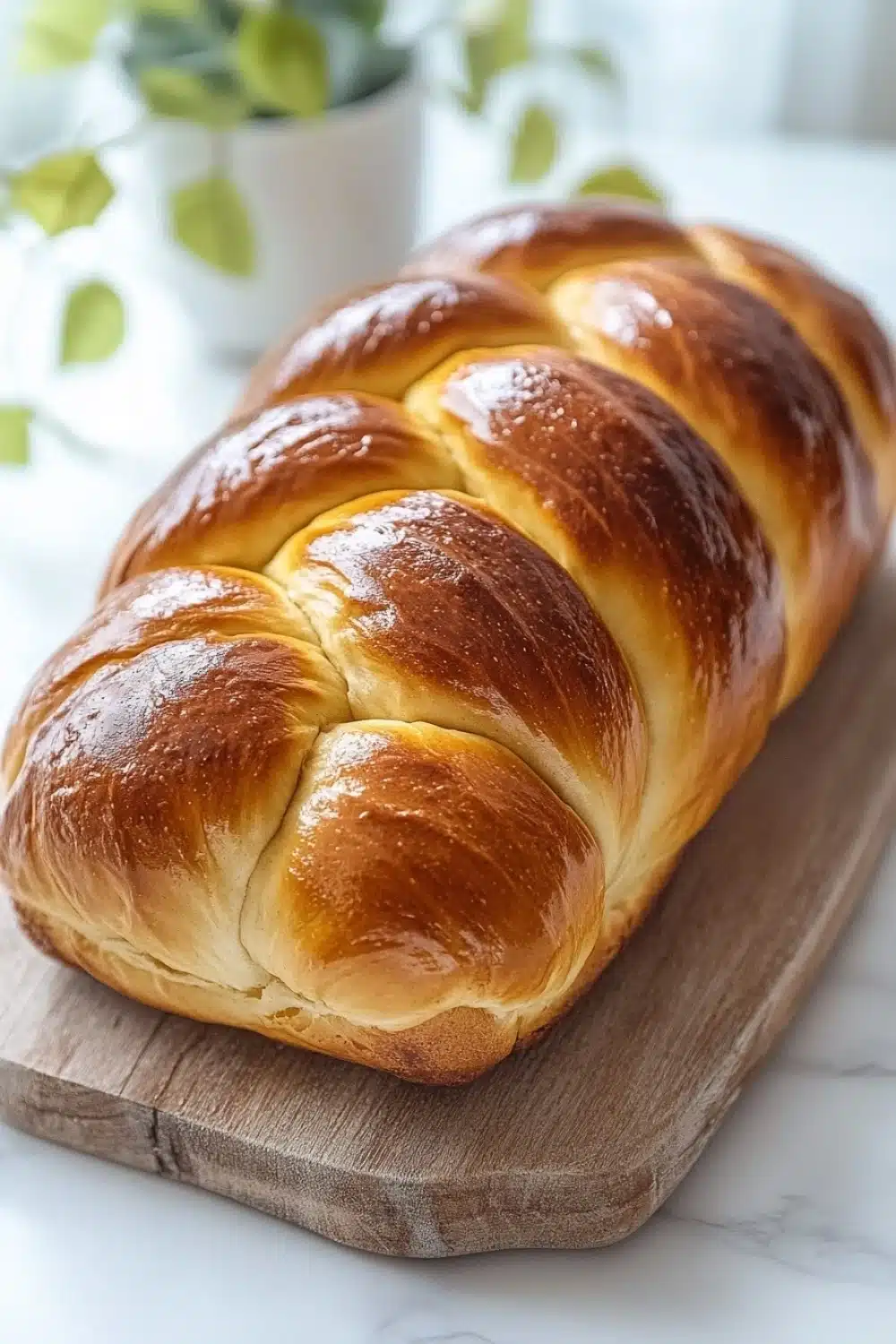
Ready to braid magic?
There’s something hypnotic about working dough between your fingers—wet flour dusted on the countertop, the slight tug and release of the soft challah dough. I remember the first time I tried to braid this golden beauty; my ropes were all over the place, but the oven’s heat turned that humble mess into a shiny, pillowy loaf that made the whole kitchen smell like Sunday morning.
Challah isn’t just bread. It’s tradition—woven into every twist and turn of its three-strand braid. This loaf, slightly sweet and tender, wears a glossy crust that’s all about that egg wash glow. It’s the kind of bread that begs you to slap some butter on it while it’s still warm, no waiting around.
Baking challah is a rhythm—a dance of patience, sticky fingers, and that rich honey-kissed dough rising with promise. Trust me, once you nail the braid, you’ll be hooked for life.
For an easy-to-follow guide, check out this Classic Challah Bread Recipe: Soft, Sweet, and Braided to Perfection to master your challah bread baking skills.
Why You’ll Love Baking Classic Challah Bread at Home
- Soft, pillowy texture that makes even plain sandwiches sing—no store-bought loaf can compete.
- The slightly sweet crumb pairs effortlessly with both savory and sweet toppings, from schmears of cream cheese to honey drizzles.
- Perfect centerpiece for your table—braided beauty that sparks conversations and invites compliments.
- Baking challah is a zen moment—kneading dough and watching it rise is oddly therapeutic after a long day.
- Leftovers? Freeze slices individually, then pop them straight into the toaster for a just-baked vibe anytime.
Classic Challah Bread
A traditional Jewish braided bread that is soft, slightly sweet, and perfect for any occasion. This classic challah recipe yields a beautiful golden loaf with a tender crumb and a shiny crust.
- Prep Time: 30 minutes
- Cook Time: 30 minutes
- Total Time: 3 hours
- Yield: 12 slices
Ingredients
4 cups all-purpose flour, plus extra for kneading
1/4 cup granulated sugar
2 1/4 teaspoons active dry yeast (1 packet)
1 teaspoon salt
1 cup warm water (about 110°F)
1/4 cup vegetable oil
2 large eggs, plus 1 large egg for egg wash
1 tablespoon honey
Instructions
In a small bowl, combine warm water, sugar, and active dry yeast. Stir gently and let sit for 5 to 10 minutes until foamy.
In a large mixing bowl, whisk together flour and salt.
In a separate bowl, beat 2 eggs with vegetable oil and honey.
Add the yeast mixture and egg mixture to the flour mixture. Stir with a wooden spoon or dough hook until a rough dough forms.
Turn the dough onto a floured surface and knead for about 8 to 10 minutes until smooth and elastic. Add flour as needed to prevent sticking, but keep the dough slightly tacky.
Place the dough in a lightly oiled bowl, cover with a clean kitchen towel or plastic wrap, and let rise in a warm place for about 1 to 1.5 hours, or until doubled in size.
Punch down the dough and turn it out onto a lightly floured surface. Divide the dough into three equal pieces.
Roll each piece into a long rope about 12 to 14 inches long.
Braid the three ropes together by placing the right rope over the center rope, then the left rope over the new center rope, repeating until the braid is complete. Pinch the ends together and tuck them underneath the loaf.
Place the braided loaf on a parchment-lined baking sheet. Cover loosely with a towel and let rise for another 30 to 45 minutes until puffy.
Preheat the oven to 350°F (175°C).
In a small bowl, beat the remaining egg and brush it gently over the loaf to create a shiny crust.
Bake the challah bread for 25 to 30 minutes, or until the loaf is golden brown and sounds hollow when tapped on the bottom.
Remove from the oven and let cool on a wire rack before slicing.
Explore more:
Breakfast Recipes
Classic Challah Bread Tips and Tricks
The Secret to That Golden Crust
Here’s the lowdown: that shiny, crackly crust everyone’s after isn’t magic—it’s all about that egg wash. I always keep one egg aside just for this purpose because brushing the loaf right before it hits the oven traps moisture, giving you that irresistible sheen. If you’re feeling cheeky, splash a teaspoon of water or milk into the beaten egg; it helps the wash spread smoother without cracking. Skip this step, and you’re left with a dull, sad loaf. Remember, the egg wash isn’t just about looks—it also helps lock in freshness, keeping your challah soft inside while the crust crisps up like a champ.
Swapping Ingredients Without Losing Soul
Let’s talk flour. All-purpose is classic, but whole wheat or bread flour? They’re game-changers—just watch the water ratio. Whole wheat soaks up more liquid, making dough heavier and less springy. If you’re going that route, add an extra tablespoon or two of water. And hey, if you’re egg-free or dairy-free, ditch the eggs for flaxseed “eggs” (one tablespoon ground flaxseed mixed with three tablespoons water) and swap vegetable oil for avocado or light olive oil. Honey isn’t just sweetness; it’s the tenderizer in disguise, so don’t skip it—maple syrup or agave nectar can join the party if you need alternatives. But beware: switch too much and you’ll have a loaf that tastes more like a science experiment than Sunday brunch.
When Your Challah Goes Rogue: Fixing Common Fails
So you’ve kneaded away, but your dough’s still sticky and rebellious? Chill out—literally. Rest the dough for 10 minutes, then dust your surface again. Tackiness is normal but don’t drown the dough in flour; too much creates a brick, no one wants that. If your braided loaf flattens out instead of puffing up, it probably means your yeast was lazy (or water too hot, killing the little guys). Try proofing yeast with warm—not hot—water next time. And if your crust burns before the inside cooks? Lower the oven temp by 25°F and tent the loaf with foil halfway through baking. Challah is patient, but it demands respect. Treat it right, and it’ll reward you with that tender crumb and golden glow every time.
Classic Challah Bread FAQs
A: Yes, you can swap active dry yeast for instant yeast, but skip proofing it in warm water. Just mix it straight into the dry ingredients, and you’ll shave off some prep time.
A: A dense loaf usually means the dough didn’t get enough rise or wasn’t kneaded well. Yeast needs time and warmth to work its magic. Also, don’t be shy with kneading — that gluten needs building.
A: Crucial! That egg wash gives your challah its trademark shiny, golden crust. Skipping it means a dull, less appealing loaf—your bread deserves to look as good as it tastes!
A: Absolutely. Fold them in after the first rise before shaping your dough. Just make sure not to overload it, or you’ll have trouble braiding.
A: Store it in an airtight container at room temp for up to three days. For anything longer, freeze it wrapped tight in plastic. Thaw naturally and you’re good to go.