
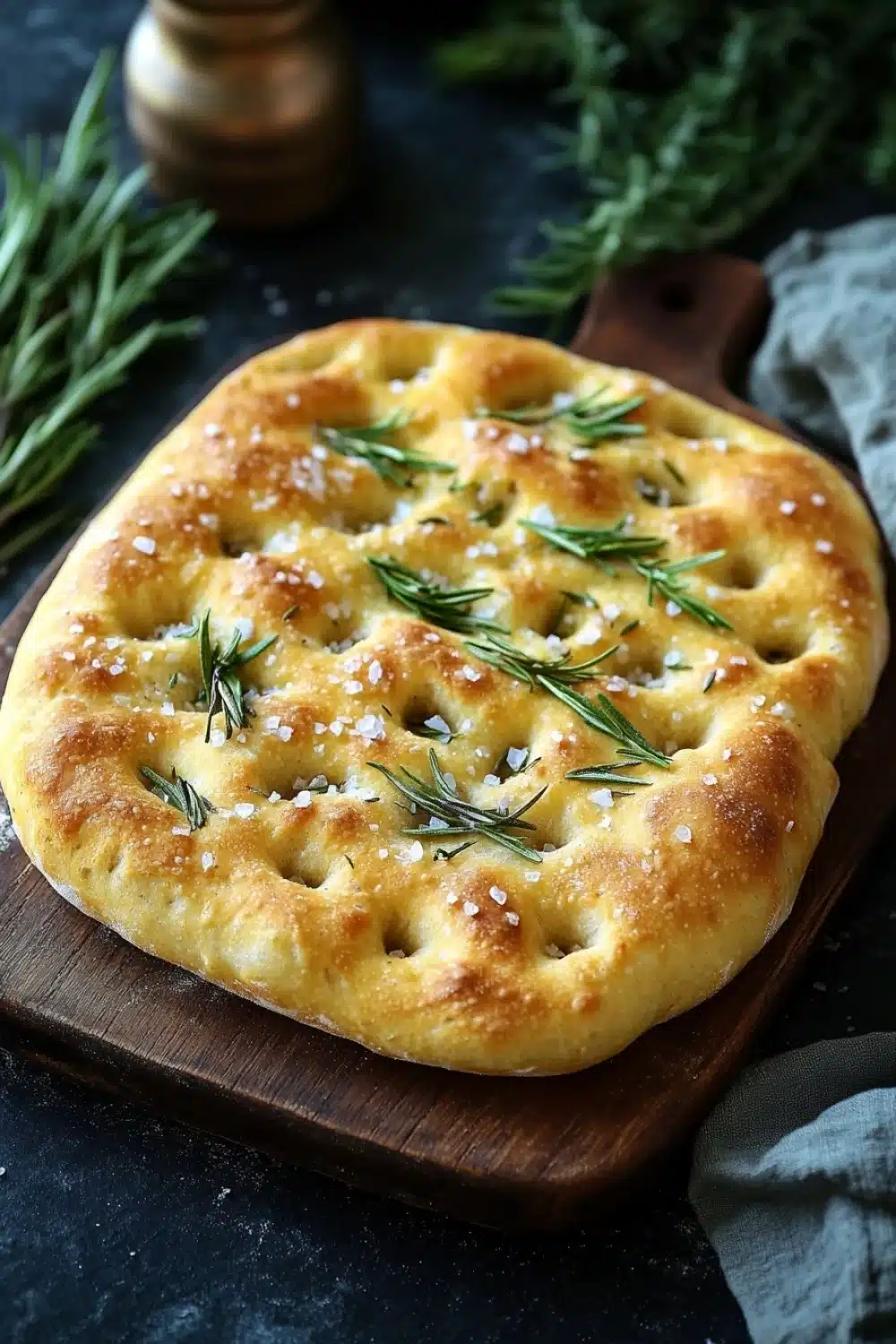
Focaccia magic starts here.
There’s something about the way this bread puffs up—soft and airy inside, golden and crackly outside—that instantly whisks me away to a rustic Italian kitchen. The scent of fresh rosemary mingling with olive oil hits your nose before the first bite. I remember the first time I tried my hand at this; the dough was sticky, a bit unruly, but the payoff? Totally worth the wrist workout.
Don’t underestimate the power of those finger dimples. They’re not just for show—they trap pools of olive oil, creating those irresistible crispy pockets. If you skip this step, you’re basically robbing yourself of the best part. Trust me, as someone who’s been around the baking block, you want every drop of that golden goodness.
Once baked, this focaccia is a jack-of-all-trades: a side for dinner, a base for sandwiches at lunch, or just a snack to satisfy that carb craving. It’s simple, honest bread that’s all about texture and flavor—no frills, just the good stuff.
For delicious ideas beyond focaccia bread, check out our Lunch recipe collection to find your next favorite meal.
Real Life Benefits of Making Classic Italian Focaccia Bread
- Perfect for impromptu gatherings—this focaccia pairs effortlessly with whatever’s on hand, from cheeses to charcuterie or just a splash of good olive oil.
- Homemade means no weird preservatives—freshness you can taste and trust, straight from your own oven. No mystery ingredients here.
- The dough is forgiving; even if you’re not a bread whisperer, a couple of tries will have you tossing that dough with confidence and swagger.
- It’s versatile: slap some slices in a sandwich, serve it alongside your favorite soup, or just eat it plain while the crust’s still warm and flaky.
- Hands-on baking like this is oddly therapeutic—kneading, stretching, dimpling. It’s a mini workout and stress-buster that ends with a golden prize.
Classic Italian Focaccia Bread
A soft and airy focaccia bread with a golden crust, topped with fragrant rosemary and sea salt. Perfect as a side, for sandwiches, or simply enjoyed with olive oil.
- Prep Time: 20 minutes
- Cook Time: 25 minutes
- Total Time: 1 hour 45 minutes
- Yield: 8
Ingredients
4 cups (480 grams) all-purpose flour, plus extra for dusting
1 tablespoon sugar
2 teaspoons active dry yeast
1 1/2 teaspoons fine sea salt
1 3/4 cups (420 ml) warm water (about 110°F/43°C)
1/4 cup (60 ml) extra virgin olive oil, plus extra for drizzling
2 teaspoons fresh rosemary leaves, chopped
1 teaspoon coarse sea salt
Instructions
In a small bowl, combine the warm water, sugar, and active dry yeast. Stir gently and let sit for 5 to 10 minutes until the mixture is foamy.
In a large mixing bowl, whisk together the all-purpose flour and fine sea salt.
Make a well in the center of the flour mixture and pour in the yeast mixture and 1/4 cup olive oil.
Using a wooden spoon or your hands, mix until a rough dough forms.
Transfer the dough to a lightly floured surface and knead for about 8 to 10 minutes until smooth and elastic. Alternatively, knead with a stand mixer fitted with a dough hook for 6 to 7 minutes.
Lightly oil a large bowl with olive oil. Place the dough in the bowl and turn it to coat with oil.
Cover the bowl with a clean kitchen towel or plastic wrap and let the dough rise in a warm place for about 1 hour, or until doubled in size.
Generously oil a 9×13 inch (23×33 cm) baking pan.
Punch down the risen dough and transfer it to the prepared pan. Use your fingers to gently stretch and press the dough evenly to the edges of the pan.
Cover the dough with a towel and let it rise again for 20 to 30 minutes until puffy.
Preheat the oven to 425°F (220°C).
Using your fingertips, dimple the surface of the dough all over, pressing about 1/2 inch deep.
Drizzle 2 tablespoons of olive oil evenly over the dough.
Sprinkle the chopped fresh rosemary and coarse sea salt evenly on top.
Bake the focaccia in the preheated oven for 20 to 25 minutes, or until the top is golden brown and the bread sounds hollow when tapped.
Remove from the oven and let cool in the pan for 5 minutes.
Transfer to a wire rack to cool slightly before slicing and serving.
Explore more:
Lunch Recipes
Classic Italian Focaccia Bread: Secrets and Fixes
The Power of the Perfect Dough Stretch
When it comes to focaccia, the dough isn’t just a bland blob—it’s the foundation that sets the whole vibe. You want to coax it gently, not batter it into submission like some sad, overworked pizza dough. After the first rise, the trick is to punch down that dough like you mean it—hard enough to deflate but gentle enough to keep the air bubbles intact. Then, no rolling pins allowed; your fingers are your best friends. Use your fingertips to stretch and coax the dough evenly to the pan’s edges, like calming a wild stallion into its stall. This keeps the crumb airy but structured, allowing the focaccia to puff-up beautifully in the second rise. Plus, those finger dimples? They’re not just for looks—they trap olive oil pools, turning the crust into pockets of crispy, oily goodness that make every bite a slap to the taste buds.
Ingredient Swaps That Don’t Play Nice (And What To Use Instead)
Been tempted to swap all-purpose flour for bread flour? Hold up. Bread flour’s higher protein content might seem tempting—more gluten, more chew, right? But for focaccia, that extra chew can tip into toughness. All-purpose flour strikes that sweet middle ground, giving you a tender crumb with just enough structure. Sugar? Don’t ditch it. It’s the yeast’s BFF, feeding it to get that bubbly rise going. Warm water at about 110°F (43°C)—too hot and you’re throwing yeast a molotov cocktail; too cold and it’s the equivalent of a slacker morning. And olive oil? Skimping here is a rookie mistake. It’s not just about flavor—it softens the crumb and keeps the crust from turning into a brick.
Common Focaccia Fails and How to Ghost Them
Ever ended up with a dense, brick-like focaccia that could moonlight as a doorstop? That’s usually a sign of under-proofing or rough handling. If your dough doesn’t double in size after the first rise, you’re either in a cold spot or the yeast is on vacation. Try a warmer corner (next to the stove or inside the oven with the light on). Overkneading can be just as cruel—fight the urge to keep pushing past the smooth stage. When baking, keep an eye on color—a too-dark crust means you’ve gone rogue on the oven temp. Lastly, don’t skip the olive oil drizzle before baking: it’s the golden ticket for that crisp, shiny top that makes focaccia worth the effort. Remember, focaccia rewards patience and gentle hands; rush it, and you’re asking for a flat, sad slab instead of that soft, airy, rosemary-scented loaf.
Classic Italian Focaccia Bread FAQs
A: Yes, you can swap active dry yeast for instant yeast. Just skip the proofing step with warm water and sugar; mix it straight into the flour. Instant yeast cuts down the wait time, but the rise might be a bit faster, so keep an eye on your dough!
A: It’s crucial. Those dimples aren’t just for show — they trap the olive oil, creating pockets of flavor and keeping the crust from puffing up unevenly. Skipping this is like going to a jazz gig and sitting on your hands.
A: Absolutely. While rosemary and coarse sea salt are classic, feel free to toss on sliced olives, cherry tomatoes, caramelized onions, or even thinly sliced garlic before baking. Each twist brings a new vibe to this old-school fave.
A: Yes, focaccia freezes nicely. Wrap it tight in plastic wrap and foil, then freeze up to a month. When you’re ready, thaw at room temp and crisp it up in the oven. Perfect for meal prep or if you’re flying solo on a lazy Sunday and want fresh bread without the fuss.
A: Hot from the oven or room temp works great. I like a splash of olive oil or a dip in balsamic vinegar. It shines as a sandwich base, alongside soups, or just as a solo snack — no fancy plates needed.