
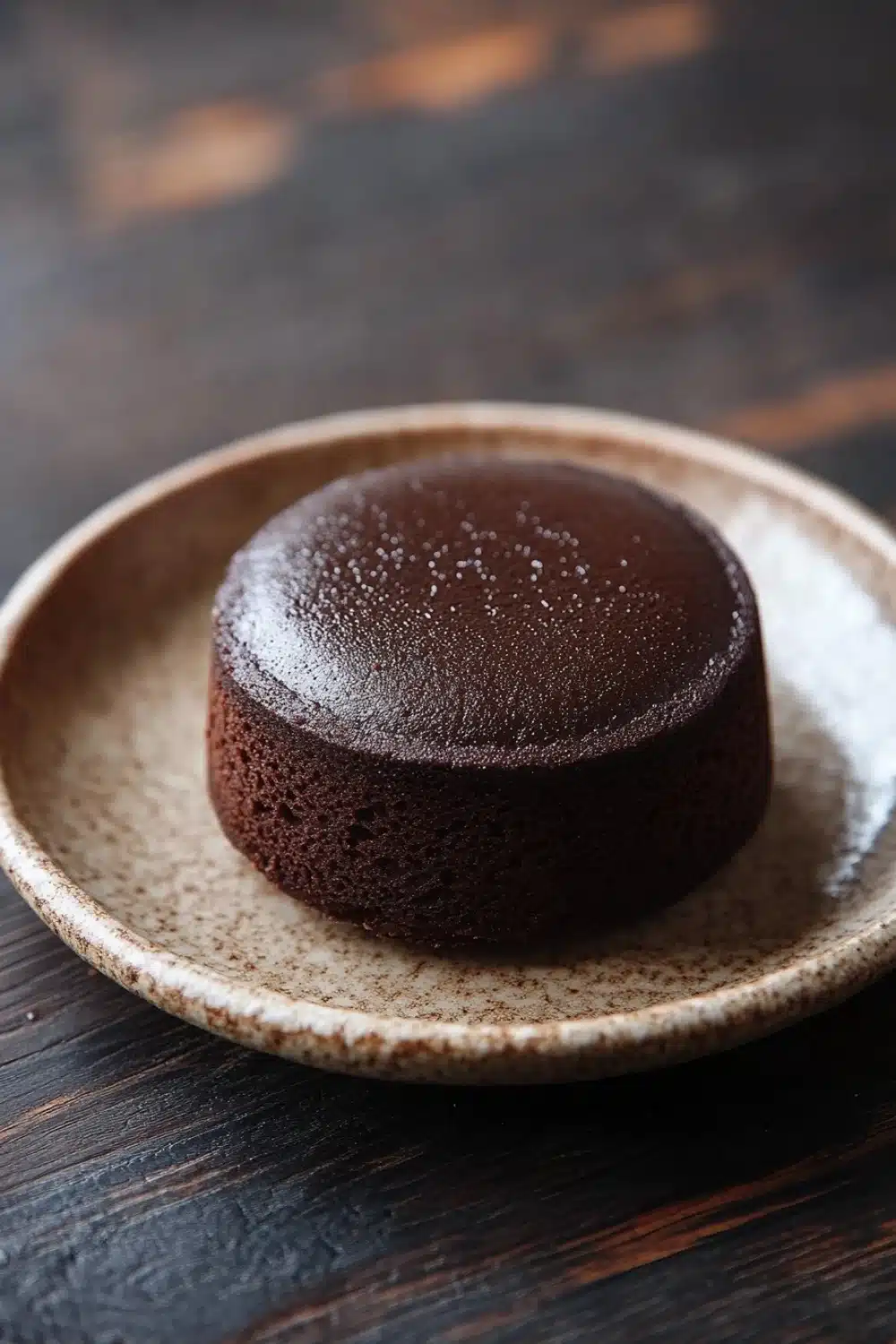
Light as air.
That’s the first thing you notice when a slice of Japanese chocolate cake hits your taste buds. It’s nothing like your typical dense, fudgy chocolate cake. Instead, it’s a cloud of cocoa-infused delight, with a texture that almost melts before you even chew. This cake isn’t just dessert—it’s an experience, a testament to the magic of technique over heavy ingredients.
From the moment you start whisking the egg whites to stiff peaks, you know this isn’t your average bake. The folding process is where the magic happens—delicate, purposeful, and patient. I’ve spent afternoons getting my hands messy with this recipe, chasing that perfect bounce in the batter. Every step demands respect, especially when you’re coaxing that airy batter into the oven—like handling a fragile secret.
And when that timer dings? The reward is a cake that’s ethereal yet deeply chocolatey, perfect for moments when you want to impress without breaking a sweat. It’s proof that Japanese baking isn’t just about flavor; it’s about finesse. Ready to give your chocolate game a serious makeover? Let’s dive in.
If you’re curious about unique twists on classic desserts, check out our Light & Lively Lemon Cake with Japanese Ingredients for some inspiration beyond chocolate cake Japanese styles.
Real-Life Perks of Making Japanese Chocolate Cake
- Light as air texture means you can enjoy rich chocolate without feeling like you’ve just eaten a brick—perfect for those afternoon cravings.
- Prepping the batter only takes about 20 minutes, so you’re not stuck in the kitchen all day—great for last-minute dessert plans.
- The cake holds up well for a couple of days at room temperature, making it surprisingly low-maintenance for party leftovers.
- Using vegetable oil instead of butter gives it a moist crumb that stays fresh longer—no sad, dry slices here.
- Separating eggs and folding in meringue might sound fiddly, but it’s the secret sauce for that signature fluffy bounce you just can’t fake.
Japanese Chocolate Cake (Japanese Style)
A light and fluffy Japanese chocolate cake with a delicate texture and rich chocolate flavor, perfect for any occasion.
- Prep Time: 20 minutes
- Cook Time: 35 minutes
- Total Time: 55 minutes
- Yield: 8
Ingredients
100 grams all-purpose flour, sifted
30 grams unsweetened cocoa powder, sifted
1 teaspoon baking powder
1/4 teaspoon salt
4 large eggs, separated
100 grams granulated sugar
50 milliliters whole milk
50 milliliters vegetable oil
1 teaspoon vanilla extract
1/4 teaspoon cream of tartar
Instructions
Preheat the oven to 170°C (340°F). Grease and line an 8-inch (20 cm) round cake pan with parchment paper.
In a medium bowl, sift together the all-purpose flour, unsweetened cocoa powder, baking powder, and salt. Set aside.
In a large bowl, whisk the egg yolks with 50 grams of granulated sugar until the mixture becomes pale and slightly thickened.
Add the whole milk, vegetable oil, and vanilla extract to the egg yolk mixture. Mix until well combined.
Gradually add the dry ingredients to the wet ingredients and gently fold until just combined. Do not overmix.
In a separate clean bowl, beat the egg whites with cream of tartar using an electric mixer on medium speed until foamy.
Gradually add the remaining 50 grams of granulated sugar to the egg whites while continuing to beat until stiff peaks form.
Gently fold one-third of the meringue into the chocolate batter to lighten it. Then carefully fold in the remaining meringue until fully incorporated, maintaining as much air as possible.
Pour the batter into the prepared cake pan and smooth the top with a spatula.
Bake in the preheated oven for 30 to 35 minutes, or until a toothpick inserted into the center comes out clean.
Remove the cake from the oven and let it cool in the pan for 10 minutes. Then transfer it to a wire rack to cool completely before serving.
Explore more:
Lunch Recipes
Mastering Japanese Chocolate Cake: Tricks and Tips
The Secret to That Featherlight Fluff
Japanese chocolate cake isn’t your average dense fudgy brownie—nope, it’s more like a pillow wrapped in cocoa. The trick? Separating the eggs and whipping those whites into stiff peaks. You’re basically folding in tiny air balloons, giving the cake that ethereal lift that makes it almost float off your fork. But here’s the kicker—not all folding is created equal. You want to fold gently, like you’re cradling a newborn, not slamming the batter with a baseball bat. Overmix, and you’ll lose that precious air, ending up with a sad, flat cake. Trust me, I learned this the hard way on my first attempt—ended up with a brick masquerading as a cake. Now, I’m all about slow, careful folding, almost like a slow dance between the meringue and the chocolate batter.
Swap It Like a Pro: Ingredients That Won’t Kill Your Cake
Out of vegetable oil? No sweat. Go for light-tasting oils like canola or grapeseed—anything neutral that won’t throw off the delicate flavor. Whole milk is preferred for that slight creaminess, but if you have to, almond milk or oat milk can work in a pinch, just don’t expect the exact same mouthfeel. Flour? Stick with all-purpose, but if you want to get fancy and have cake flour on hand, it can make things even softer—just reduce it by about 2 tablespoons to keep the balance. And cocoa powder? Dutch-processed will deepen the flavor and mellow out the acidity, but natural cocoa works fine too. One note: don’t substitute baking powder with baking soda here; the cake needs a gentle rise rather than a quick puff.
When Things Go South: Troubleshooting Common Mishaps
Too dense? Usually means you overfolded and beat out the air from the meringue. Next time, slow down and fold with a spatula’s grace. Cake cracked on top? Oven temp too high, or maybe the batter was a bit dry—check your measurements and dial down the heat by 10°C if needed. Sinking center? Could be underbaking or opening the oven door too early (rookie move). Keep that door closed tight, eyes through the window, and test with a toothpick only near the end. And if the cake tastes a bit flat—don’t be shy with the vanilla; it’s the unsung hero adding that warm backdrop that makes the chocolate pop. Sometimes a pinch more salt also helps lift flavors—salt’s the quiet MVP in chocolate treats.
FAQs About Japanese Chocolate Cake
A: Yes, you absolutely can. Cake flour will make the texture even softer and more tender, which suits this recipe perfectly if you want that ultra-light mouthfeel.
A: Yes, separating the eggs is crucial here. The whipped egg whites are what give this cake its signature fluffiness. Skipping this step means missing out on that airy lift that sets this cake apart from regular chocolate cakes.
A: Not at all. The vegetable oil keeps the crumb moist without weighing it down. Plus, it blends seamlessly with the milk to create a tender bite. Think of it as the secret sauce that stops this cake from turning into a dry dud.
A: You can skip it if you’re in a pinch, but it helps stabilize the egg whites, making your meringue stronger and fluffier. Without it, you might end up with a less lofty cake, so it’s worth grabbing a tiny bottle for your pantry.
A: Store it in an airtight container at room temperature for up to two days, or refrigerate for up to five days wrapped tightly. Just remember to bring it back to room temp before serving — it wakes the flavors up nicely.