
Craving bread without the carb crash?
In my kitchen, the yeast is bubbling like a lively jazz riff, promising a loaf that’s both soft and surprisingly low in carbs. The almond flour and psyllium husk come together like old friends, creating a dough that’s sticky enough to feel satisfying but light enough to rise beautifully. I remember the first time I tackled this recipe—I was skeptical. Would it hold up? Could it really replace the usual wheat-heavy sandwich slices? Spoiler: it does.
Mixing the wet ingredients into the dry feels like chemistry meets art. The warm water with yeast and erythritol fizzes up like a potion brewing, while the eggs and olive oil lend richness. Watching that dough puff up under a kitchen towel, slowly but surely, is a moment worth savoring — patience pays off here.
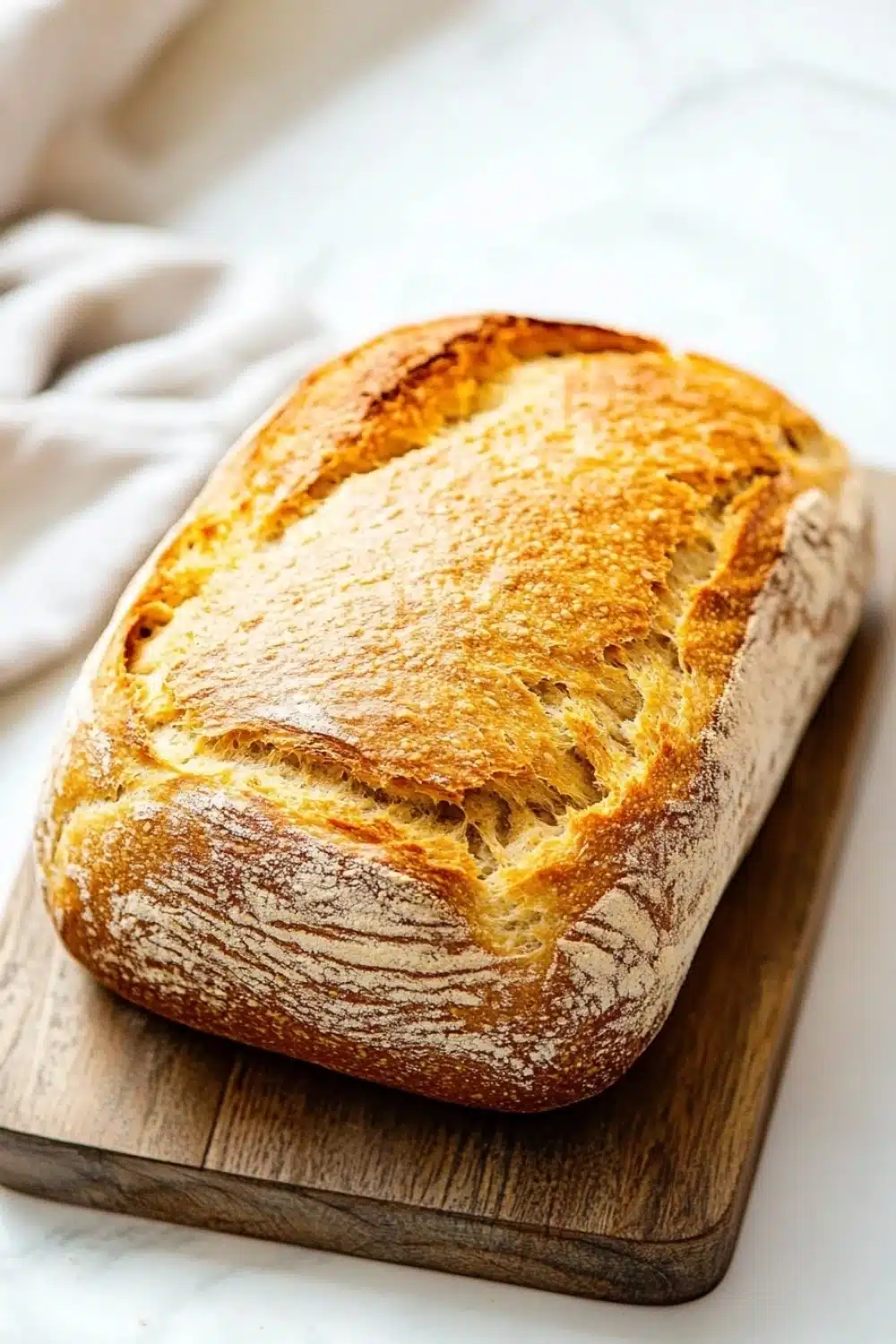
This bread bakes into a golden crown of low carb goodness. When you slice into it, you get that tender crumb with just a hint of chew, perfect for stacked sandwiches or a quick toast. No grainy grit, no cardboard vibes—just honest bread that fits your lifestyle. Grab your mixing bowl; it’s about to get real in the carb-conscious bread world.
If you’re looking to pair your meal with something special, check out our Classic Tuna Casserole: The Ultimate Comfort Food for Dinner for a cozy dinner idea.
Real-Life Benefits of Low Carb Yeast Sandwich Bread
- Perfect for anyone dodging grains but still craving a fluffy, sandwich-ready bread.
- Lets you prep a batch and stash it in the freezer—grab a slice whenever the carb cravings hit.
- Thanks to almond flour and psyllium husk, it keeps you full longer without the bloated aftermath.
- Great for quick morning toast routines—no more sacrificing texture for low carb.
- Finally, a bread that can hold up to hearty fillings without turning into crumbly sad bread mush.
Low Carb Yeast Sandwich Bread
A soft and fluffy low carb yeast sandwich bread perfect for sandwiches and toast, made with almond flour and psyllium husk for a healthy, grain-free alternative.
- Prep Time: 15 minutes
- Cook Time: 45 minutes
- Total Time: 1 hour
- Yield: 12 slices
Ingredients
2 1/2 cups almond flour
1/4 cup psyllium husk powder
1 tablespoon baking powder
1 teaspoon salt
2 teaspoons active dry yeast
1 tablespoon granulated erythritol
1 cup warm water (110°F / 43°C)
3 large eggs
2 tablespoons olive oil
Instructions
In a small bowl, combine the warm water, active dry yeast, and granulated erythritol. Stir gently and let it sit for 5 to 10 minutes until the mixture becomes frothy.
In a large mixing bowl, whisk together the almond flour, psyllium husk powder, baking powder, and salt until well combined.
In a separate bowl, beat the eggs and olive oil together until smooth.
Add the frothy yeast mixture and the egg mixture to the dry ingredients. Mix thoroughly using a hand mixer or stand mixer with a paddle attachment until a dough forms and is well combined. The dough will be thick and slightly sticky.
Line a 9×5 inch loaf pan with parchment paper or grease it lightly with olive oil.
Transfer the dough into the prepared loaf pan and smooth the top with a spatula.
Cover the loaf pan loosely with a clean kitchen towel or plastic wrap and let the dough rise in a warm place for 45 minutes to 1 hour, or until it has risen noticeably.
Preheat the oven to 350°F (175°C).
Bake the bread for 40 to 45 minutes, or until the top is golden brown and a toothpick inserted into the center comes out clean.
Remove the bread from the oven and let it cool in the pan for 10 minutes.
Carefully lift the bread out of the pan using the parchment paper and transfer it to a wire rack to cool completely before slicing.
Slice into 12 even slices and serve as desired.
Explore more:
Lunch Recipes
Mastering Low Carb Yeast Sandwich Bread
The Psyllium Puff: Why It’s a Game-Changer
Let’s talk psyllium husk powder—this isn’t your average fiber fling. In low carb bread, psyllium acts like the glue that holds the crumb structure together when gluten is off the table. Without it, your bread would crumble faster than a stale cookie. Trust me, I’ve been there, feeling the heartbreak of dry, crumbly loaves that don’t hold up to a sandwich stack.
The magic? Psyllium absorbs water and swells, creating a gel-like consistency that traps air bubbles—this gives the bread its soft, fluffy bounce back. It’s the unsung hero behind that satisfying chew you crave. Almond flour provides the nutty base, but psyllium husk powder brings the resilience. Swap it out for flax or chia? You’ll end up with a totally different beast—denser, wetter, and often gummy. So, psyllium isn’t just a fiber boost; it’s the backbone of a breathable, sliceable loaf.
The Rise and Shine: Getting Yeast to Work Its Magic (Short and Snappy)
Warm water—110°F, no hotter. Yeast loves a spa day, not a sauna. Too cold? It naps. Too hot? It dies. Timing is everything: 5 to 10 minutes for that frothy proof. Watch for bubbles like a hawk. No froth? Your yeast is dead weight, and you’ll be left with a brick. Sugar (erythritol here) isn’t just for sweetness—it’s yeast fuel. No sugar, no puff. I once skipped the sweetener, thinking it was optional—rookie move.
Cover it loosely. Tight seals stifle the yeast’s oxygen party. Let it breathe and rise. This step separates the ‘meh’ from the magnificent. Don’t rush it—patience here pays dividends in airy crumb.
Fixing the Flat: When Your Loaf Falls Short
Flat bread? Been there. First thing I check: psyllium freshness. Old psyllium means no spring; it’s like trying to blow up a limp balloon. Second—did you let the dough rise enough? Less than 45 minutes? Your loaf will be a dense dud.
Also, watch your water temp. Too hot can kill yeast, too cold keeps it dormant. The dough should feel thick and slightly sticky, not dry or runny. If the dough’s off, add a splash more water or almond flour to balance. Lastly, don’t skip the rest! Letting the bread cool fully on a wire rack before slicing prevents that gummy, doughy texture that ruins the vibe.
One tip from my kitchen: use parchment paper to lift the loaf out easily. No wrestle with a stuck bread—just smooth moves and clean edges.
Low Carb Yeast Sandwich Bread FAQs
Almond flour is key here because of its low-carb profile and texture. Swapping it for coconut flour or regular flour will throw off the moisture and density big time. Stick with almond flour for this one.
Yes—no ifs, ands, or buts. Psyllium husk acts like a binder and gives the bread that fluffy, bread-like crumb. Without it, you’re looking at a crumbly mess that won’t hold together.
Absolutely. The dough can be mixed and popped into the fridge overnight for a slow rise, which sometimes amps up the flavor. Just let it come to room temp and rise before baking. Perfect for those night-before meal preps.
Totally. It’s soft enough to hold your fillings without falling apart but sturdy enough to toast. I’ve stuffed it with everything from turkey to avocado and it’s never let me down.
Store it room temp airtight for about 3 days or freeze it wrapped well for up to a month. Thaw fully before slicing. No one wants freezer brick sandwiches!