
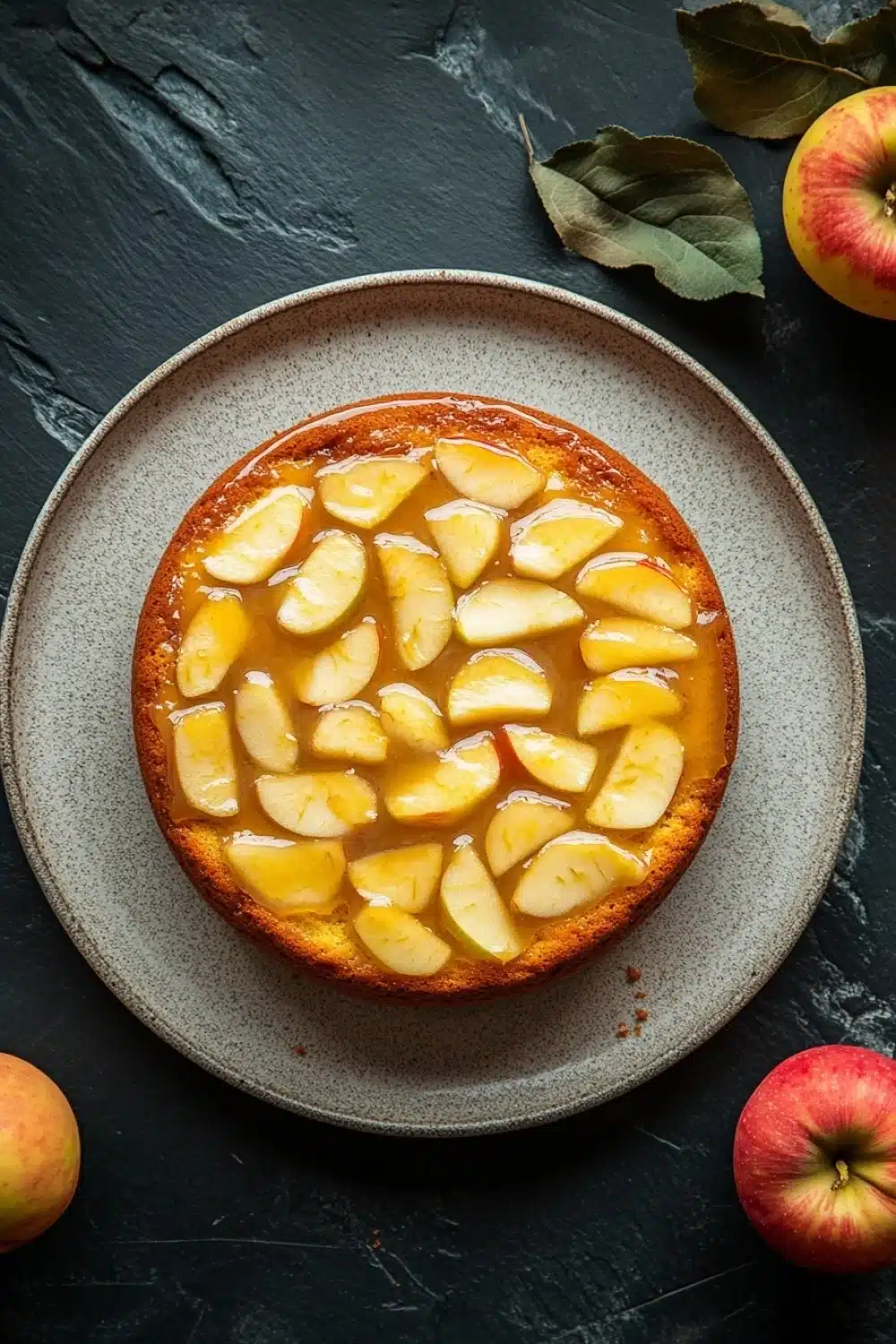
Sticky and sweet—this glaze hooks you immediately.
Picture this: the kitchen buzzing, a simmering pan releasing warm apple aroma, the sugar and butter dancing together in a glossy embrace. I’ve always found that the right glaze can make or break a homemade apple cake. It’s more than just decoration; it’s that final kiss of flavor and sheen that turns a humble cake into a showstopper.
The magic happens fast. In under ten minutes, you whip up a smooth, shiny glaze that’s not too thick, not too thin—just right for drizzling. The cornstarch slurry thickens the mix perfectly, while a splash of lemon juice cuts through the sweetness, keeping things balanced. Every time I pour this over a warm apple cake, it’s like watching the glaze work its charm—making the cake’s edges glisten and catching every crumb in a sticky, fruity hug.
Ready to give your apple cake that slick, glossy finish? Let’s dive into the glaze game and nail this classic trick.
If you’re curious about adding a delicious apple cake glaze to your treats, check out our easy recipe for a perfect finish.
Real-Life Wins of Apple Cake Glaze
- Quick fix for a dry cake—just a drizzle of this glaze and boom, your apple cake feels fresh out of the oven.
- Transforms a simple slice into a glossy, bakery-style treat that your guests will think you spent hours on.
- The zing from lemon juice keeps the glaze from getting cloying, balancing sweet and tart like a boss.
- Keep leftovers handy in the fridge—perfect for a last-minute dessert upgrade or an impromptu snack.
- Perfect for those days when you want to jazz up breakfast or tea-time without breaking a sweat—five minutes, tops.
Apple Cake Glaze
A sweet and smooth apple-flavored glaze perfect for drizzling over apple cakes, adding a glossy finish and enhancing the apple flavor.
- Prep Time: 5 minutes
- Cook Time: 5 minutes
- Total Time: 10 minutes
- Yield: 1 cup glaze
Ingredients
1/2 cup apple juice
1/4 cup granulated sugar
2 tablespoons unsalted butter
1 teaspoon lemon juice
1 teaspoon cornstarch
1 tablespoon cold water
Instructions
In a small saucepan, combine the apple juice, granulated sugar, and unsalted butter.
Heat the mixture over medium heat, stirring occasionally, until the sugar dissolves and the butter melts completely.
In a small bowl, mix the cornstarch with cold water until fully dissolved to create a slurry.
Slowly whisk the cornstarch slurry into the saucepan with the apple mixture.
Continue cooking over medium heat, stirring constantly, until the glaze thickens and becomes glossy, about 2-3 minutes.
Remove the saucepan from heat and stir in the lemon juice to brighten the flavor.
Allow the glaze to cool slightly before drizzling over your apple cake.
Explore more:
Breakfast Recipes
Apple Cake Glaze: Tricks for That Perfect Gloss and Flavor
The Secret to That Glossy Finish — Why Butter and Cornstarch Matter
Ever wondered why some glazes sit pretty on cakes, shining like a morning dew, while others just dull out or run everywhere? The magic here lies in the butter and cornstarch combo. Butter? It’s not just a rich mouthfeel cheat code; it acts like a natural sheen agent that catches light and gives the glaze that irresistible shimmer. Then there’s cornstarch—our unsung hero. Mixing it into a slurry before adding prevents those dreaded lumps and helps thicken the glaze without clouding its translucent vibe. Got a glaze that’s too runny? You missed this step or didn’t cook it long enough. Trust me, those few extra minutes stirring over medium heat will turn your glaze from meh to mesmerizing.
Ingredient Swaps That Don’t Kill the Vibe
Short on apple juice? No sweat. I’ve pulled this trick more times than I can count. Swap it for pear juice or even white grape juice—both keep that fruity brightness but offer a subtle twist. Just watch your sugar levels; these juices can be naturally sweeter or more tart. Butter substitute? I get it—you might want a dairy-free jam. Coconut oil works here but remember, it changes the flavor profile and texture slightly. And if cornstarch isn’t in your pantry? Arrowroot powder is your go-to wingman, keeping the glaze sleek and shiny without the starchy aftertaste.
When the Glaze Goes South — Common Fails and How to Bounce Back
Slumpy glaze? It’s usually the heat game. Too hot, and sugar crystallizes, turning grainy and sad—too cold, and you end up with a runny mess. Here’s a pro move: Cook on medium heat and never walk away. Stir like your life depends on it—cornstarch thickens fast, and you want to catch the moment it turns glossy. If lumps crash your party despite your best efforts, strain the glaze through a fine mesh sieve—instantly smooth. And if it’s too thick? Thin it out with a splash of apple juice, warming it gently to reincorporate. Remember, glazing isn’t just science; it’s patience and intuition mixed in a pot.
Apple Cake Glaze FAQ
Absolutely! Apple cider brings a bit more tang and depth, but watch the sweetness—it might change the glaze balance slightly. Go with what’s in your fridge!
The glaze should be glossy and thick enough to coat the back of a spoon. If it’s too runny, it won’t stick well; too thick, and it’ll look clumpy. Keep stirring while it thickens—patience is key here.
Yes and no. The lemon juice cuts through the sweetness and brightens things up. Skip it, and the glaze might feel a little flat or overly sweet. I always toss it in—even a splash makes a world of difference.
Pop it into an airtight container, fridge it up to 3 days. When you want it back in action, reheat gently, stirring like a mad scientist so it doesn’t separate or scorch.
Yes, you can make this a day ahead. Just keep it chilled and reheat before drizzling. This makes your life easier when you’re juggling other dishes.