
Simple wins hearts.
There’s something about a casserole bubbling in the oven that feels like home. I remember the first time I tried making a lowfat version of tuna casserole—skeptical but hopeful. The kitchen filled with the scent of sautéed onions and garlic, the promise of warmth and nourishment hanging in the air.
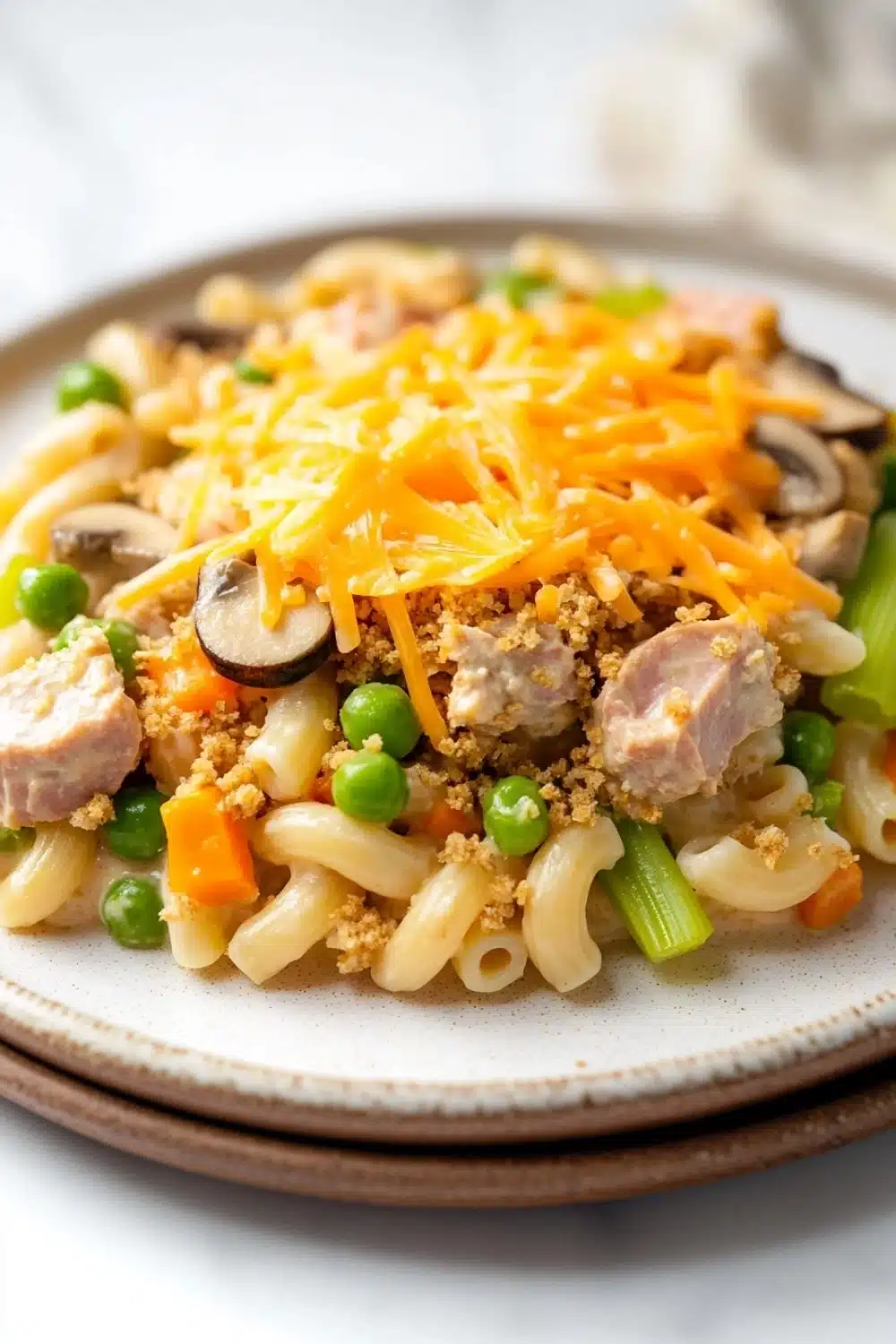
Using whole wheat pasta instead of the usual refined stuff gave it a nutty backbone. Then, there’s the light cream sauce—silky yet not heavy—tied together with a modest splash of Dijon mustard and a sprinkle of thyme. Toss in a colorful bunch of veggies—mushrooms, peas, carrots, celery—and the tuna itself, and you’ve got a dish that’s anything but boring.
This isn’t your grandma’s casserole laden with cream and butter. It’s a lean, mean comfort machine that’s ready to hit the table in under an hour, perfect for weeknight dinners when you want something cozy but don’t want to crash on the couch afterward.
If you’re looking for a delicious dinner idea beyond lowfat tuna casserole, check out our guide on How to Get Juicy Baked Chicken Legs and Thighs Every Time for a juicy, satisfying meal.
Real Life Benefits of This Low-Fat Tuna Casserole
- Whips up a quick, hearty dinner in under an hour—perfect for busy weeknights when you’re running on empty but still want to feed the fam something solid.
- Uses whole wheat pasta and plenty of veggies, so it’s a sneaky way to sneak fiber and nutrients onto even the pickiest plates.
- The light cream sauce keeps the texture creamy without drowning everything in fat—because nobody wants a casserole that feels like a brick.
- Prepping it in one dish means less cleanup hassle, which is a total score after a long day juggling work and life.
- Great for meal-prep enthusiasts: makes enough to stash leftovers for a couple of days, saving you from the “what’s for lunch?” panic midweek.
Low-Fat Tuna Casserole

A healthy and delicious low-fat tuna casserole made with whole wheat pasta, light cream sauce, and plenty of vegetables. Perfect for a comforting family meal without the extra fat.
- Prep Time: 15 minutes
- Cook Time: 30 minutes
- Total Time: 45 minutes
- Yield: 6
Ingredients
8 ounces whole wheat elbow macaroni
1 tablespoon olive oil
1 medium onion, finely chopped
2 cloves garlic, minced
1 cup sliced mushrooms
1 cup frozen peas, thawed
1 cup chopped celery
1 cup chopped carrots
2 cans (5 ounces each) tuna in water, drained
2 cups low-fat (1%) milk
3 tablespoons all-purpose flour
1 teaspoon Dijon mustard
1/4 teaspoon black pepper
1/2 teaspoon salt
1/4 teaspoon dried thyme
1/2 cup low-fat shredded cheddar cheese
1/4 cup whole wheat breadcrumbs
Instructions
Preheat the oven to 350°F (175°C).
Cook the whole wheat elbow macaroni according to package instructions until al dente. Drain and set aside.
In a large skillet, heat olive oil over medium heat. Add the chopped onion and minced garlic, sautéing for 3-4 minutes until softened.
Add the sliced mushrooms, chopped celery, and chopped carrots to the skillet. Cook for 5-6 minutes until vegetables are tender.
Sprinkle the flour over the vegetables in the skillet and stir well to coat. Cook for 1-2 minutes to remove the raw flour taste.
Gradually whisk in the low-fat milk, stirring constantly to create a smooth sauce. Continue cooking until the sauce thickens, about 3-4 minutes.
Stir in Dijon mustard, black pepper, salt, and dried thyme. Mix well.
Add the drained tuna and thawed peas to the sauce, stirring gently to combine.
In a large mixing bowl, combine the cooked macaroni and the tuna-vegetable sauce. Mix well.
Transfer the mixture to a 9×13 inch baking dish. Sprinkle the low-fat shredded cheddar cheese evenly over the top.
Sprinkle the whole wheat breadcrumbs over the cheese layer.
Bake in the preheated oven for 20-25 minutes, until the casserole is bubbly and the topping is golden brown.
Remove from the oven and let it cool for 5 minutes before serving.
Explore more:
Dinner Recipes
Mastering Your Low-Fat Tuna Casserole: Tricks and Tweaks
The Secret to That Creamy, Low-Fat Sauce
Whipping up a luscious sauce without the usual heavy cream can feel like threading a needle blindfolded. But here’s the lowdown: that magic comes from the simple flour-and-milk roux, thickened just right. Don’t rush the flour step—once you sprinkle it over your sautéed veggies, give it a good stir and cook for a solid minute or two. This little dance gets rid of that dreaded raw-flour flavor that can wreck your sauce faster than you can say “bland.” Then, as you slowly whisk in your 1% milk, keep your arm moving—no lumps allowed. This slow integration is the unsung hero of that smooth, clingy texture that hugs your pasta and tuna perfectly. Trust me, flubbing this part turns your sauce into a sad, watery mess that won’t stick. Toss in the Dijon mustard and thyme at the end for a little cheeky pop of flavor that cuts through the creaminess without overpowering it.
Ingredient Swaps That Won’t Kill Your Vibe
Now, let’s talk substitutions—because sometimes pantry raids don’t go as planned. Whole wheat elbow macaroni? No sweat. Penne, rotini, or even fusilli will play nice here. Just watch your cooking time; different shapes soak up water differently. Tuna in water is the star, but if you’re feeling wild, chunk light salmon or canned chicken can step into the spotlight. Mushrooms? Swap ‘em with zucchini or bell peppers if you want to add a fresh crunch. And hey, if you’re dairy-free, swap milk for unsweetened almond or oat milk—but here’s the kicker: add a teaspoon of nutritional yeast to fake that cheese umami, or your sauce will fall flat. Breadcrumbs on top? Panko crumbs or crushed whole grain crackers work too—just toast them lightly before sprinkling to avoid soggy topping syndrome.
Common Failures and How to Patch Them Up Fast
Ever had a casserole so dry it’s practically a desert? Or one where the topping sinks into a sad soggy mess? Happens to the best of us. If your sauce looks thin before you bake, don’t despair—give it a quick simmer on the stove with a teaspoon of cornstarch mixed in cold water. That’ll thicken it pronto. Overbaking? Yeah, that dries everything out faster than a Monday morning meeting. Keep that oven timer close and peek through the door at 20 minutes—golden brown is your cue, not burnt black. And if your topping went limp? A quick blast under the broiler for 1-2 minutes (watch like a hawk!) crisps it back to life. Pro tip: let the casserole rest before serving; the sauce firms up and flavors meld, so patience pays off big time.
Low-Fat Tuna Casserole FAQ
A: Absolutely! Regular elbow macaroni works fine, but whole wheat adds that extra fiber punch. Swap away if that’s what you have—no harm done.
A: Yes and no. You can freeze it before baking, but after baking, textures might get a little mushy. If you plan to freeze, thaw completely overnight in the fridge before reheating.
A: Yes. If you’re cutting down on dairy or just don’t dig cheese, just leave it off. The casserole will still hold together and taste solid since there’s plenty of flavor in the sauce and veggies.
A: It’s doable. Swap the low-fat milk for unsweetened almond or oat milk, and use dairy-free cheese or skip it entirely. Keep in mind the sauce consistency might shift slightly, so watch your thickening step closely.
A: Store leftovers in an airtight container in the fridge, and you’ll have about 3 days to chow down. Beyond that, things start to lose their charm and risk going off.