
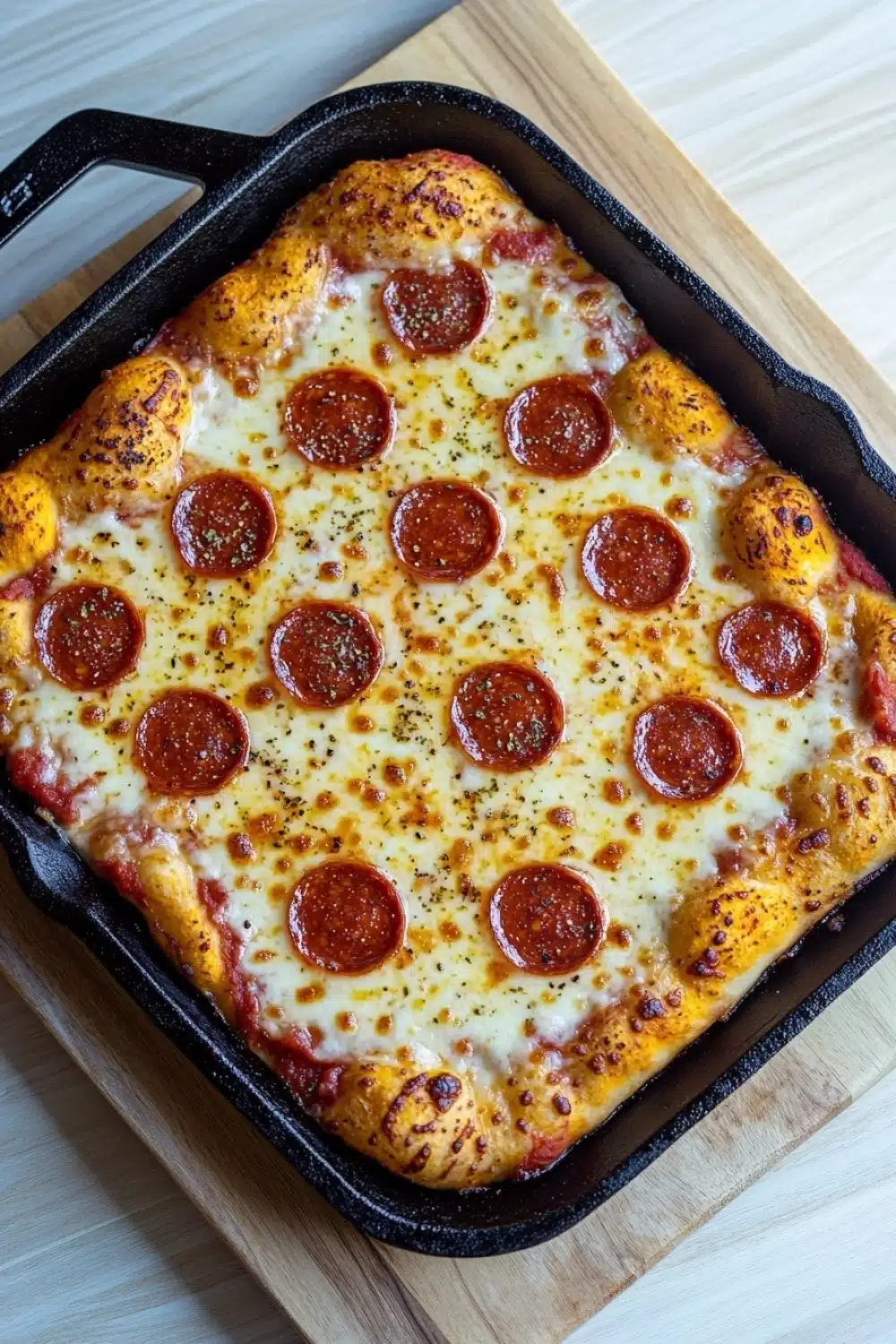
Cast iron magic awaits.
There’s something wildly satisfying about the crackle of cheese caramelizing against the heavy metal of a cast iron skillet — it’s the kind of kitchen soundtrack that makes you drop everything and pay attention. I remember the first time I tried making Detroit style pizza this way, the dough puffed up just right, thick and airy, while the cheese bubbled to those iconic crispy edges. No flimsy crust here; this is a no-nonsense, grab-it-with-your-hands kind of pizza.
The secret? It’s all in that pan and the fearless application of cheese right to the skillet’s edge, creating a golden, crunchy barrier that traps the juiciness inside. The tomato sauce stripes laid over the top aren’t just for show — they add a punch of flavor that cuts through the rich cheese and oily crust like a hot knife through butter. You want layers of texture and taste, and this method nails the balance every time.
If you’re tired of the same old pizza routine and want to shake things up, give cast iron Detroit style a whirl. It’s rustic, bold, and downright addictive.
If you’re a fan of Detroit style pizza in cast iron, you’ll love exploring new techniques like those in Mastering Chicago Deep Dish Pizza in Your Cast Iron Skillet.
Why You’ll Crave Detroit Style Pizza Made in Cast Iron
- Thick, airy crust that’s crisp on the bottom—no soggy middles here.
- Cheese caramelizes into a golden, crispy edge that you won’t stop picking at.
- Cooking right in cast iron locks in heat evenly, delivering pizza perfection every time.
- Prep and cook in under an hour—weeknight dinners just got a major upgrade.
- Leftovers reheat like a champ, tasting almost as good as fresh from the skillet.
Detroit Style Pizza in Cast Iron

Enjoy a crispy, cheesy Detroit style pizza made right in your cast iron skillet. This recipe features a thick, airy crust with a caramelized cheese edge and a flavorful tomato sauce topping.
- Prep Time: 20 minutes
- Cook Time: 25 minutes
- Total Time: 45 minutes
- Yield: 4
Ingredients
2 1/4 teaspoons active dry yeast
1 1/4 cups warm water (110°F/43°C)
1 teaspoon granulated sugar
3 cups bread flour
1 teaspoon kosher salt
2 tablespoons olive oil, plus extra for greasing skillet
10 ounces shredded brick cheese or a blend of mozzarella and Monterey Jack cheese
1 cup crushed canned tomatoes
1 teaspoon dried oregano
1/2 teaspoon garlic powder
1/2 teaspoon onion powder
1/4 teaspoon crushed red pepper flakes
1/2 teaspoon salt
1 tablespoon olive oil (for sauce)
1/2 cup sliced pepperoni (optional)
Instructions
In a small bowl, combine the warm water, yeast, and sugar. Stir gently and let sit for 5-10 minutes until foamy.
In a large mixing bowl, combine the bread flour and kosher salt. Add the yeast mixture and 2 tablespoons olive oil.
Mix until a sticky dough forms. Knead the dough on a lightly floured surface for about 7-10 minutes until smooth and elastic.
Place the dough in a lightly oiled bowl, cover with a clean towel or plastic wrap, and let it rise in a warm place for 1 to 1 1/2 hours or until doubled in size.
While the dough is rising, prepare the sauce by mixing crushed tomatoes, oregano, garlic powder, onion powder, crushed red pepper flakes, salt, and 1 tablespoon olive oil in a bowl. Set aside.
Once the dough has risen, preheat your oven to 500°F (260°C). Place a 10-inch cast iron skillet in the oven to heat for 10 minutes.
Carefully remove the hot skillet from the oven and grease it generously with olive oil.
Transfer the dough to the skillet and press it evenly to the edges. The dough will be thick and should fill the skillet.
Distribute the shredded brick cheese evenly over the dough, making sure to spread it all the way to the edges to create the signature crispy cheese crust.
Add sliced pepperoni evenly over the cheese if using.
Spoon the prepared tomato sauce in three thick stripes across the top of the cheese and pepperoni.
Bake the pizza in the oven for 20-25 minutes until the crust is golden brown and the cheese is bubbly and caramelized around the edges.
Remove the pizza from the oven and let it cool in the skillet for 5 minutes before slicing and serving.
Explore more:
Dinner Recipes
Mastering Detroit Style Pizza in Cast Iron
The Secret to That Golden Crust
Detroit style pizza isn’t just about slapping cheese on dough — it’s about coaxing out that legendary crust with a signature crunchy edge. The magic? Cast iron skillet heated to a blistering 500°F before the dough even hits the pan. This initial sear creates a sizzle factor that locks in moisture while giving you that crispy, caramelized cheese edge that’s nothing short of addictive. I always tell folks: skip preheating your iron, and you’re basically asking for a limp, doughy mess—no one wants that. When you push the dough right to the skillet’s edges, that cheese melts over and crisps up against the hot metal, turning into an irresistible golden crust that whispers, “Eat me now.”
Ingredient Swaps That Don’t Screw Things Up
Let’s talk cheese—brick cheese is the OG for Detroit style, known for its high fat content and perfect melt. But hey, I get it, not everyone has access to brick cheese. Here’s the lowdown: a mix of mozzarella and Monterey Jack is a killer stand-in; it mimics that gooey melt without turning into a rubber band. Just don’t skimp or swap in low-moisture shredded mozzarella alone—that’s a one-way ticket to bland-ville. Now, on the sauce front, canned crushed tomatoes with dried herbs nail the flavor profile, but if you’re feeling fresh, blitz some San Marzano tomatoes and toss in fresh oregano. Just keep it simple—no need to overdo it, or you’ll overshadow the crust’s glory.
Fixing Common Fails — When Your Pizza Falls Flat
Alright, let’s get real. Sometimes your Detroit pizza can flop—your dough might not rise, or that crust stays soggy. First off, yeast is your best bud but a fickle one: water temperature has to be just right—not too hot to kill the yeast, not too cold to leave it dormant. I’ve seen too many folks fail here. If the dough’s too dense, your kneading game needs a boost—don’t be lazy. Knead long enough to develop gluten; it’s the backbone for that airy, chewy texture. Another rookie mistake? Not pressing the dough all the way to the skillet edges. This kills the signature caramelized cheese border. And if the cheese isn’t browning? Check your oven temp—500°F is the sweet spot. Lower temps give you bland cheese and a sad crust, no cap.
Detroit Style Pizza in Cast Iron FAQs
- Can I use regular mozzarella instead of brick cheese?
- Yep, you can swap in mozzarella, but brick cheese gives you that signature crispy, caramelized edge Detroit style pizzas are famous for. Mixing mozzarella with Monterey Jack is a solid hack if you can’t find brick cheese.
- Does the cast iron skillet really make a difference?
- Absolutely — cast iron nails the crust texture like no other. It holds heat way better than a regular pan, so your crust crisps up perfectly while the cheese crisps and bubbles with that golden blush only cast iron can coax out. Trust me, it’s a game changer for this style.
- How long does the dough need to rise?
- Typically, 1 to 1.5 hours or until it doubles in size. If you’re short on time, crank the rise time a bit by putting the dough in a warm (not hot) spot—think sunny window sill or near your oven after it’s off. But don’t rush it too much; that slow rise develops flavor and texture.
- Can I make this pizza without pepperoni?
- Yes! Pepperoni is optional and the sauce-cheese-crust combo stands strong on its own. Throw on your favorite veggies, sausage, or keep it classic and simple.
- Is this recipe hard for beginners?
- Nope! It’s beginner-friendly. The biggest thing is handling the sticky dough and being patient with the rise. If you follow the steps, you’ll have a killer pie that looks and tastes like you spent hours on it.