
Let’s get real.
There’s something downright rebellious about baking Detroit style pizza in a cast iron skillet. The kitchen fills with a tantalizing buzz—the sizzling cheese meeting the hot, oiled iron creates that coveted crispy edge, a crust that snaps and crackles like firewood in a hearth. It’s pizza with attitude, no fluff.
I’ll never forget the first time I pressed that dough into my trusty cast iron pan. It pushed back like a champ, demanding respect. But once that mozzarella started melting, oozing over the edges, the wait was worth every second. This isn’t just pizza; it’s a full-on flavor fistfight with every bite—cheesy, tangy, and with that golden crust that’s the hallmark of the Motor City’s pride.
Trust me, once you nail that skillet method, you’re gonna ditch your pizza stone for good. Let’s dive into this crispy, saucy, cheesy journey—your taste buds will thank you later.
Discover the ultimate guide on making delicious detroit style pizza in cast iron right at home.
Why Detroit Style Pizza in Cast Iron Wins Every Time
- That cast iron crust? It’s a game changer—crispy, chewy, and packed with the kind of crunch that makes you want to do a happy dance in the kitchen.
- Thick, airy dough that’s surprisingly quick to whip up, proving you don’t need to slave over complicated recipes to score big on taste and texture.
- Mess-free cheese edges that caramelize right against the skillet — a little bit of scorch, a ton of flavor, and zero cleanup drama.
- The tomato sauce laid over the cheese in bold stripes? It’s not just for looks — it keeps every bite punchy and fresh, cutting through the richness perfectly.
- Leftovers reheat like a charm—skip the microwave and toss a slice back in a hot skillet for a few minutes. Crispy crust, melty cheese, just like day one.
Detroit Style Pizza in Cast Iron

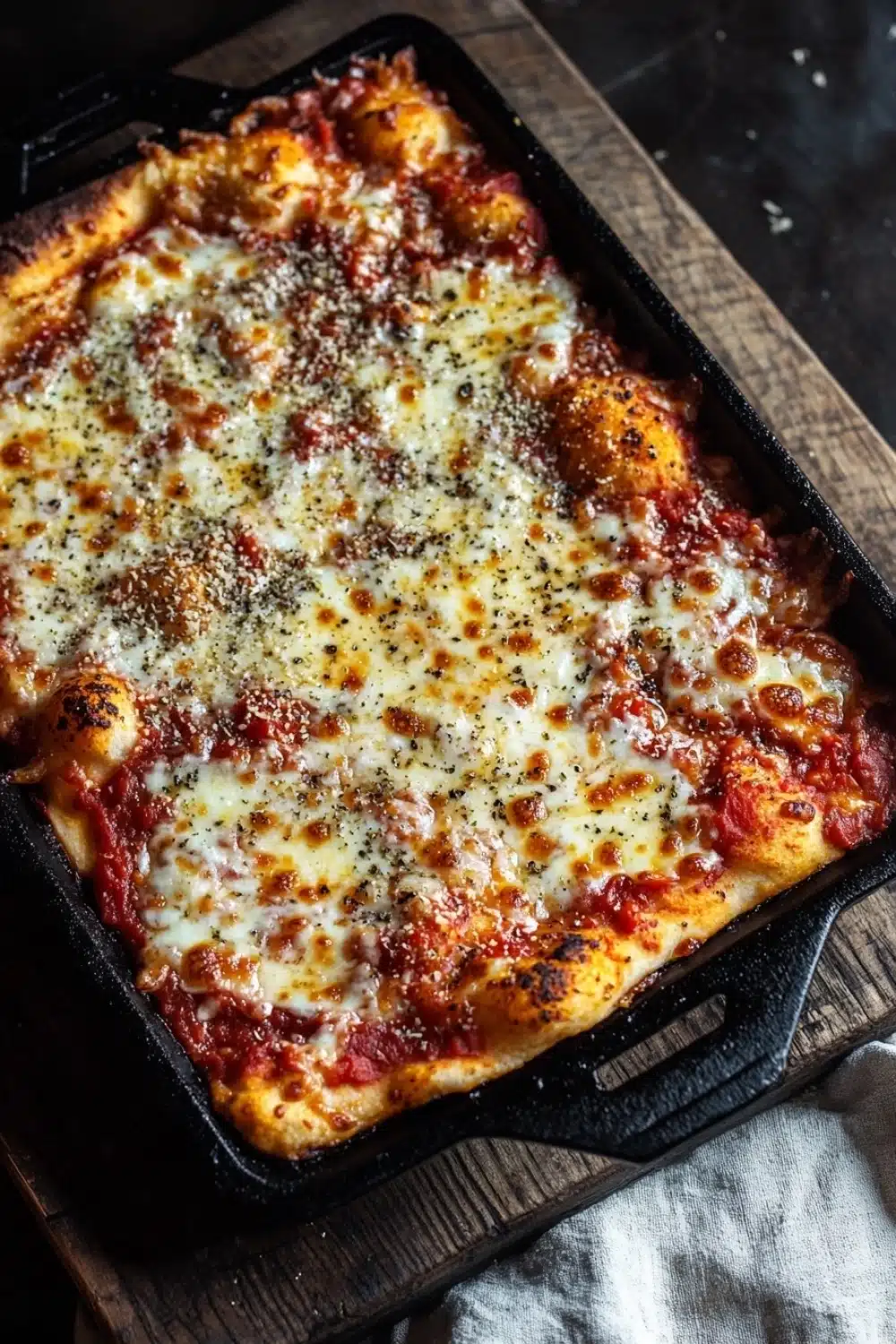
A delicious Detroit style pizza baked in a cast iron skillet featuring a thick, airy crust with a crispy, cheesy edge, topped with tangy tomato sauce and melty mozzarella cheese.
- Prep Time: 20 minutes
- Cook Time: 25 minutes
- Total Time: 45 minutes
- Yield: 4
Ingredients
2 1/4 teaspoons active dry yeast (one 7g packet)
1 teaspoon granulated sugar
1 1/4 cups warm water (about 110°F)
3 cups bread flour
1 teaspoon salt
2 tablespoons olive oil, plus more for the skillet
10 ounces shredded mozzarella cheese
1/2 cup grated Parmesan cheese
1 cup canned crushed tomatoes
1 teaspoon dried oregano
1/2 teaspoon garlic powder
1/2 teaspoon onion powder
1/4 teaspoon crushed red pepper flakes (optional)
Salt to taste
Instructions
In a small bowl, combine the active dry yeast, sugar, and warm water. Stir gently and let sit for 5 to 10 minutes until foamy.
In a large mixing bowl, whisk together the bread flour and salt.
Pour the yeast mixture and 2 tablespoons olive oil into the flour mixture. Stir with a wooden spoon until a sticky dough forms.
Turn the dough onto a lightly floured surface and knead for about 8 minutes until smooth and elastic. Alternatively, use a stand mixer with a dough hook for 5 minutes.
Lightly oil a large bowl and place the dough inside, turning to coat with oil. Cover with a clean kitchen towel or plastic wrap and let rise in a warm place for 1 to 1 1/2 hours until doubled in size.
While the dough is rising, prepare the sauce by mixing the crushed tomatoes, dried oregano, garlic powder, onion powder, crushed red pepper flakes (if using), and salt to taste in a bowl. Set aside.
Once the dough has risen, generously oil a 10-inch cast iron skillet with olive oil.
Transfer the dough to the skillet and press it evenly to the edges. If the dough resists stretching, let it rest for 5 minutes and try again.
Sprinkle the shredded mozzarella cheese evenly over the dough, making sure to cover all edges to create the signature crispy cheese crust.
Bake the pizza in a preheated oven at 475°F (245°C) for 15 minutes.
Remove the pizza from the oven and spoon the prepared tomato sauce in three thick stripes across the top of the cheese.
Sprinkle the grated Parmesan cheese evenly over the pizza.
Return the pizza to the oven and bake for an additional 10 minutes until the cheese is bubbly and the crust is golden brown and crispy.
Remove from oven and let cool for 5 minutes before slicing and serving.
Explore more:
Dinner Recipes
Mastering Detroit Style Pizza in Cast Iron: Tips, Tricks & Fixes
The Magic of Cast Iron and Why It Counts
Cast iron isn’t just a pan—it’s a game changer for Detroit style pizza. Its thick walls hold heat like a champ, giving that coveted crispy crust without burning the bottom to a charcoal nightmare. I’ve seen many home cooks ditch their cookie sheets after tasting the crispy, almost fried edges you get from a well-oiled skillet. Plus, cast iron’s seasoning adds subtle layers of flavor over time (think of it as your pizza crust’s secret weapon). However, don’t just slap the dough in dry. Generous olive oil coating in the skillet is non-negotiable—not just to keep the dough from sticking, but to create those golden, crackling corners everyone raves about.
Ingredient Swaps That Don’t Kill the Vibe
Let’s talk bread flour. It’s the backbone here—high protein for that chewy, airy crumb. But if bread flour’s playing hard to get? All-purpose flour can step in, though expect a slightly less springy chew. Don’t sweat it too much; flavor still rocks if you nail your fermentation. Another curveball: mozzarella. Whole milk shredded mozzarella is ideal for melt and stretch, but part-skim or a mix with fontina can add savory depth—just adjust salt accordingly. Parmesan? Pecorino Romano works wonders too—just sharper and saltier, pack a punch in the cheese crust edge. And a little secret from my kitchen lab: a teaspoon of cornmeal on the skillet before the dough helps prevent sticking and adds tiny crunchy specks underfoot.
When the Dough Fights Back: Fixing Stretching Drama
Ever wrestled your dough into the pan, only to have it spring back like a stubborn cat? Yup, been there. The trick? Let it rest. Dough’s like a stretched rubber band—it needs to chill before stretching again. If resistance hits, stop. Cover with a towel and wait 5-10 minutes—this relaxes gluten strands. Push gently again. Repeat if needed. Also, room temperature matters—the dough loves to be warm for easy stretching. Cold dough = fight night. Lastly, if your cast iron skillet seems too small or the dough’s too tight, consider dividing the dough for smaller pans. Don’t force it; the crust’s airiness depends on gentle coaxing, not brute strength.
Spotting & Fixing Common Pizza Pitfalls
Blistered top but soggy bottom? Likely your oven racks are too low or the skillet wasn’t preheated enough. Try preheating the skillet in the oven before adding dough—instant heat shock makes crust snap tighter. Sauce sliding off cheese? Spoon it last minute, after a quick bake—not before—so cheese melts under the sauce, locking it down. Burnt edges? Trim the cheese coverage slightly, or dial down the oven temp by 25°F and bake a little longer. And if your crust comes out dense, check your yeast and rise times. Underproofed dough is a common culprit. Remember, pizza dough should double in size—not just look bigger but feel airy when poked. Patience, grasshopper, patience.
Detroit Style Pizza in Cast Iron: FAQs
- Can I use regular flour instead of bread flour?
- It’s a no-go if you want that iconic chewy texture. Bread flour’s higher protein content builds better gluten, giving the dough its bouncy, airy punch. All-purpose flour will work, but your crust might be a bit limp and less structured.
- Do I need a stand mixer for kneading?
- Nope! Kneading by hand is totally doable. I actually prefer it—feels more hands-on, like you’re bonding with the dough. Just about 8 minutes on a floured surface until it’s smooth and elastic should do the trick.
- Why does the cheese edge get crispy?
- This is where Detroit style pizza stands apart—the cheese is spread right to the edges. As it bakes in that oiled cast iron skillet, it caramelizes and forms a crispy, almost crunchy lace around the crust. That cheesy crust is what’s called the “frico” in pizza lingo—pure bliss.
- Can I prep the dough in advance?
- Absolutely! After the first rise, punch it down and pop it in the fridge overnight. Just bring it back to room temp before stretching it in the skillet. This slow ferment deepens flavor and makes your dough sing.
- Is this pizza gluten-free friendly?
- No. Gluten is essential here for that airy, elastic crust. You’d need a specialized gluten-free mix and technique to replicate Detroit style, which is a whole other beast. Stick with this recipe if you want the real-deal pie.