
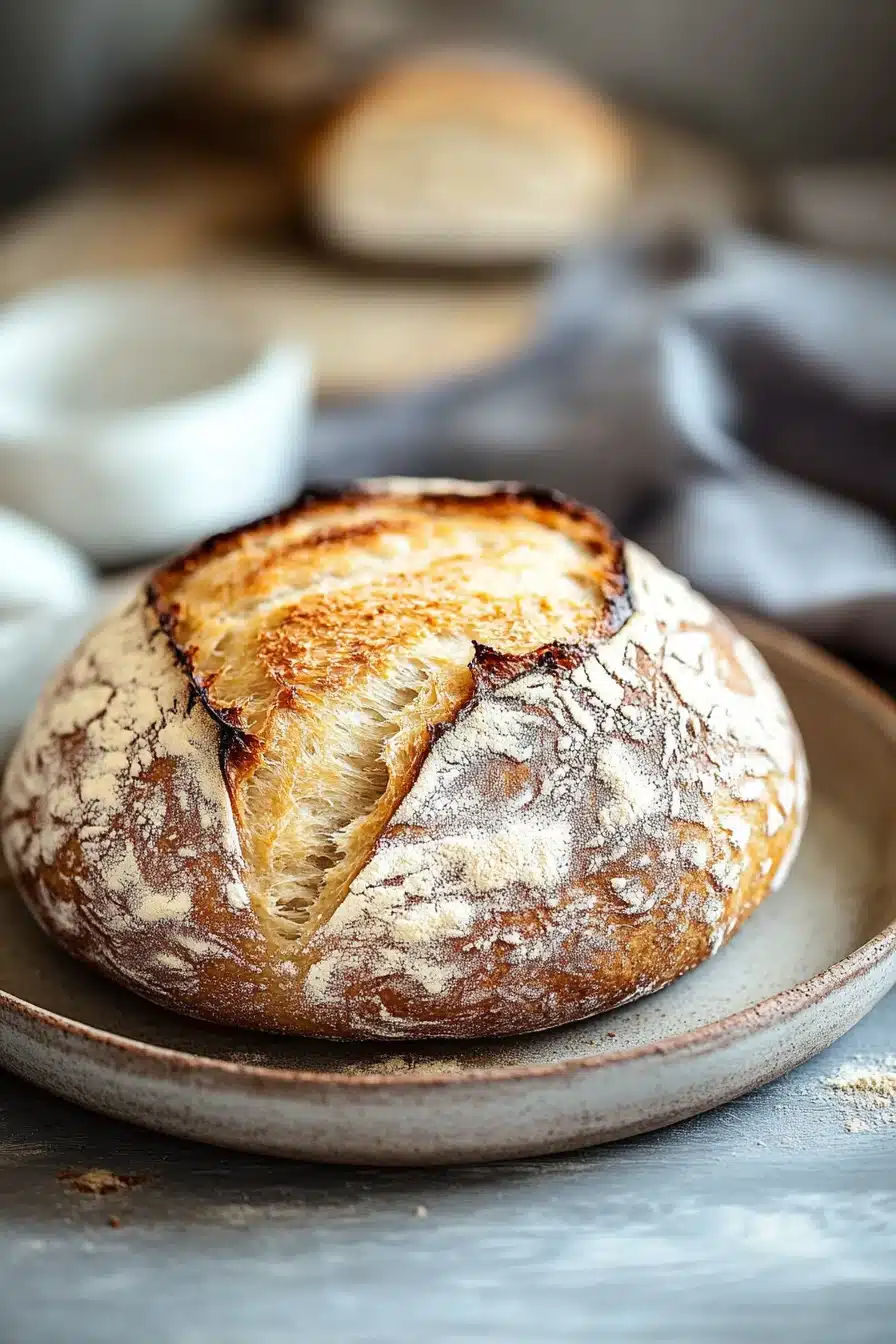
There’s something quietly satisfying about waking up to the smell of fresh bread. It’s not just the scent—it’s the promise of something homemade, warm, and comforting. This no knead bread dough fits right into those mornings when the day is already full but you still want something special on the table. You don’t have to rush or stress; the dough waits patiently, bubbling away in its bowl, while you sip your coffee or catch a few quiet moments before the chaos begins.
I remember the first time I tried this method. I wasn’t exactly sure how the dough would turn out since I didn’t knead it at all. Honestly, I was halfway distracted by an email and almost forgot to cover the bowl. But when I finally pulled the loaf out of the oven, that rustic crust and soft crumb made me realize how little fuss it took to get there. It’s the kind of recipe that feels like a win, even on days when everything else feels a bit off.
Why You’ll Love It:
- Effortless preparation: just mix and rest, no kneading needed.
- Hands-off rising makes it perfect for busy schedules or overnight prep.
- The crusty, golden exterior contrasts beautifully with a soft, flavorful interior.
- It’s simple — and that’s kind of the point. No complicated techniques here.
- Because the dough rests for hours, timing can be a little flexible, but not infinitely so.
If you’re feeling hesitant about the long rise, know that it’s worth the wait. Plus, it’s forgiving enough that you don’t have to babysit it every step of the way.
PrintNo Knead Bread Dough

A simple and easy no knead bread dough recipe that requires minimal effort and yields a crusty, flavorful loaf perfect for beginners and busy bakers.
- Prep Time: 10 minutes
- Cook Time: 45 minutes
- Total Time: 12 hours 55 minutes
- Yield: 1 loaf
Ingredients
3 cups (375 grams) all-purpose flour
1/4 teaspoon instant yeast
1 1/4 teaspoons salt
1 5/8 cups (390 ml) warm water (about 75°F/24°C)
Instructions
In a large mixing bowl, combine the all-purpose flour, instant yeast, and salt. Stir to evenly distribute the ingredients.
Add the warm water to the dry ingredients and mix with a wooden spoon or spatula until a shaggy, sticky dough forms. Ensure all flour is incorporated.
Cover the bowl tightly with plastic wrap or a clean kitchen towel and let the dough rest at room temperature for 12 to 18 hours, until the surface is dotted with bubbles and the dough has doubled in size.
Lightly flour a clean work surface and turn the dough out onto it. Using floured hands, fold the dough over on itself once or twice to shape it into a rough ball. Do not knead.
Place the dough seam side down on a large piece of parchment paper. Cover with a clean kitchen towel and let it rest for 1 to 2 hours, until it has almost doubled in size.
About 30 minutes before baking, place a heavy covered Dutch oven or oven-safe pot with lid into the oven and preheat to 450°F (230°C).
Carefully remove the hot pot from the oven. Using the parchment paper, lift the dough and place it into the pot. Cover with the lid and bake for 30 minutes.
Remove the lid and bake for an additional 15 minutes, until the bread is deep golden brown and crusty.
Carefully remove the bread from the pot and transfer to a wire rack. Let cool completely before slicing.
Kitchen Notes:
You don’t need any special equipment—just a sturdy, oven-safe pot with a lid to create that steamy environment for baking. I usually use a heavy Dutch oven, but anything similar will work fine. Once the loaf is baked, it’s great on its own or alongside a simple spread of butter or olive oil. For a slight twist, I’ve tried adding herbs during the mixing stage, but honestly, I haven’t tested all of these variations thoroughly—sometimes I just want the classic flavor. You could also let the dough rise a bit longer or shorter depending on your schedule, though the texture might change slightly. If you’re feeling adventurous, folding in nuts or seeds during the shaping phase might work, but I’d recommend experimenting cautiously.
FAQ:
Can I use a different type of flour? All-purpose works best for this recipe, but you might try bread flour for a chewier texture. Whole wheat tends to make the dough denser, so you may need to adjust water amounts.
What if I don’t have a Dutch oven? Any heavy pot with a lid that can go in the oven at high heat will do. You want to trap steam to get that crusty finish.
How long can I store leftover bread? Wrapped in a clean towel at room temperature, it stays good for a couple of days. For longer, slice and freeze—toast straight from frozen when you want a quick snack.
Try this no knead bread dough next time you crave something homemade but don’t have hours to spend in the kitchen. Once it’s done, you might just find yourself sneaking a slice before anyone else wakes up.