
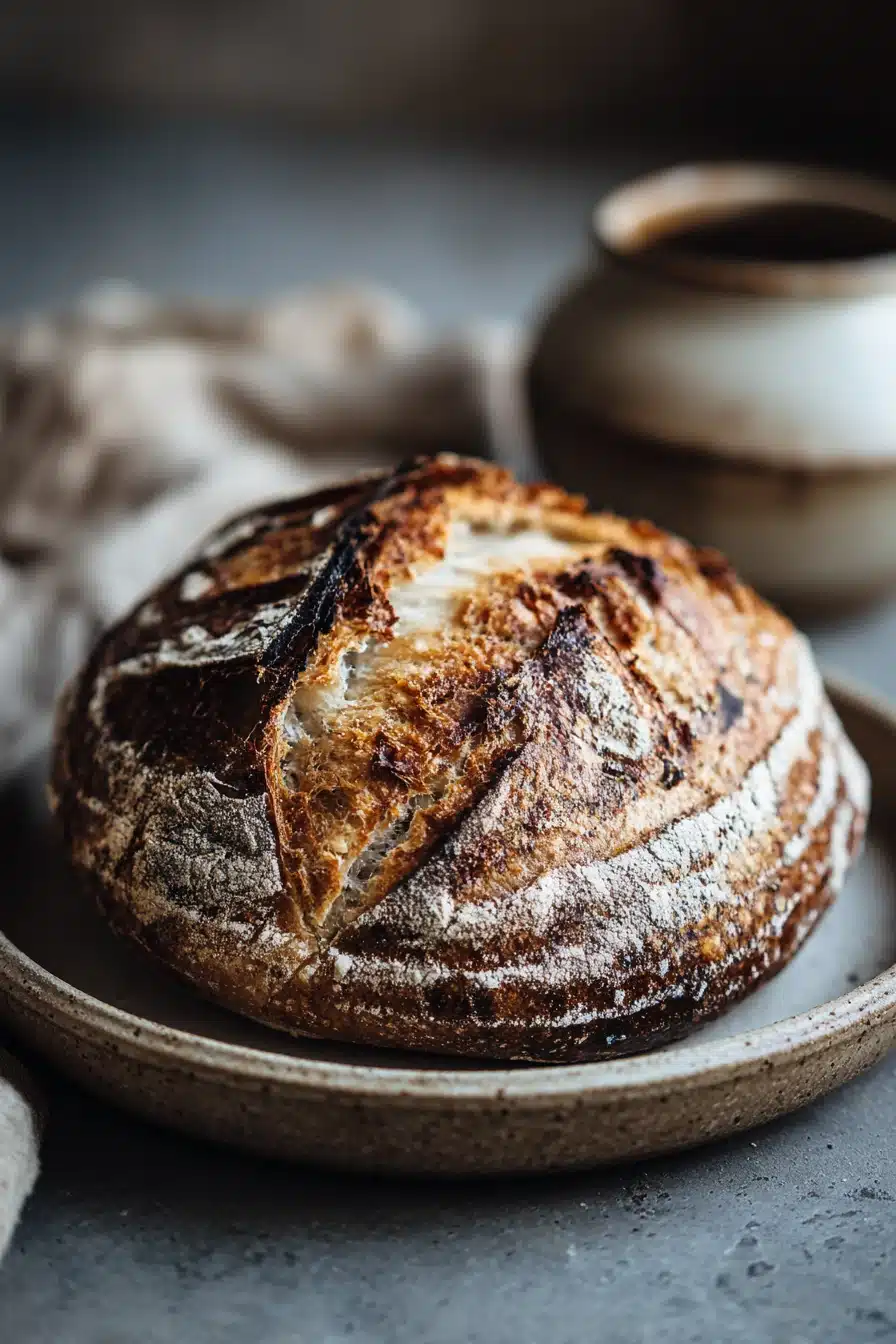
There’s something deeply satisfying about the smell of freshly baked sourdough wafting through your home. It’s not just bread; it’s a ritual that unfolds slowly, allowing time to work its magic. You might find yourself glancing at the dough more times than necessary, wondering if it’s ready yet, or getting distracted by a phone notification mid-stir—this bread invites a gentle patience that’s oddly calming.
One afternoon, I remember setting the dough to rest, promising myself I’d check back in an hour. But an unexpected call came, and the hour stretched to two. When I finally returned, the dough had transformed, bubbly and alive. That slight delay didn’t ruin a thing; it only made the moment of shaping the loaf feel more like a discovery than a chore. The crust crackled under my fingers, and the crumb was chewy, full of character. It’s not about perfection here—just the honest pleasure of homemade sourdough.
- This recipe keeps things simple, with no kneading involved, which means less mess and more time to enjoy the process.
- The slow fermentation develops deep, tangy flavors that surprise you with every bite.
- It’s perfect for beginners but still satisfies seasoned sourdough lovers looking for a straightforward loaf.
- It requires some waiting, so it’s not a last-minute fix—but that’s part of what makes baking so rewarding.
If you’re worried about complicated equipment or a long list of steps, this recipe proves you can make artisan bread with just a few basic tools and some patience.
PrintNo Knead Sourdough Bread

A simple and rustic no knead sourdough bread recipe that requires minimal effort but yields a crusty, flavorful loaf with a chewy crumb. Perfect for beginners and sourdough enthusiasts alike.
- Prep Time: 15 minutes
- Cook Time: 45 minutes
- Total Time: 20 hours
- Yield: 1 loaf
Ingredients
500 grams bread flour
350 grams water, room temperature
100 grams active sourdough starter
10 grams salt
Instructions
In a large mixing bowl, combine the bread flour and water. Mix thoroughly until no dry flour remains. Cover the bowl with a clean kitchen towel or plastic wrap and let it rest at room temperature for 1 hour.
Add the active sourdough starter and salt to the dough. Mix well using your hands or a spoon until fully incorporated. Cover the bowl again and let the dough rest at room temperature for 30 minutes.
Perform a series of stretch and folds every 30 minutes for the next 2 hours: reach under the dough, stretch it upwards, and fold it over itself. Repeat this 4 times per session. After the final stretch and fold, cover the dough and let it ferment at room temperature for 12 to 16 hours, until it has doubled in size and is bubbly.
Generously flour a work surface and gently turn the dough out onto it. Shape the dough into a round loaf by folding the edges toward the center. Place the dough seam-side down on a piece of parchment paper. Cover with a kitchen towel and let it rest for 1 to 2 hours until it has risen noticeably.
About 30 minutes before baking, place a Dutch oven with its lid inside your oven and preheat to 450°F (230°C).
Carefully remove the hot Dutch oven from the oven. Using the parchment paper, lift the dough and place it into the Dutch oven. Score the top of the dough with a sharp knife or razor blade to allow for expansion.
Cover with the lid and bake for 30 minutes. Remove the lid and bake for an additional 15 minutes until the crust is deep golden brown and crisp.
Remove the bread from the Dutch oven and transfer it to a wire rack. Let it cool completely, about 1 to 2 hours, before slicing.
The Dutch oven is your best friend here, creating a steamy environment that gives the bread its signature crust. You don’t need fancy gear—just something heavy with a lid that fits in your oven. When it’s done, try serving this bread warm with butter and a sprinkle of sea salt, or alongside a hearty soup for a cozy meal.
Sometimes I experiment with adding a handful of seeds or herbs to the dough, but I haven’t tested those enough to swear by them just yet. Another time, I let the dough ferment a little longer, and it developed a stronger tang, which might not be for everyone. The beauty is in the flexibility; you can tweak the process to suit your taste.
FAQ
Can I speed up the fermentation? Not really—this bread shines with slow fermentation, so rushing it tends to sacrifice flavor.
What if my dough isn’t bubbly after the first rise? Sometimes the starter acts differently; just give it more time or a warmer spot if needed.
Can I use a different type of flour? You can try, but bread flour gives the best structure and chewiness.
How do I store the bread? Keep it in a paper bag or bread box at room temperature for a couple of days, or freeze it if you want to keep it longer.
Baking no knead sourdough bread turns your kitchen into a small bakery. It’s not about rushing but savoring the pace and smells. When you finally slice into that crisp crust and tender crumb, you’ll know it was worth every moment.