
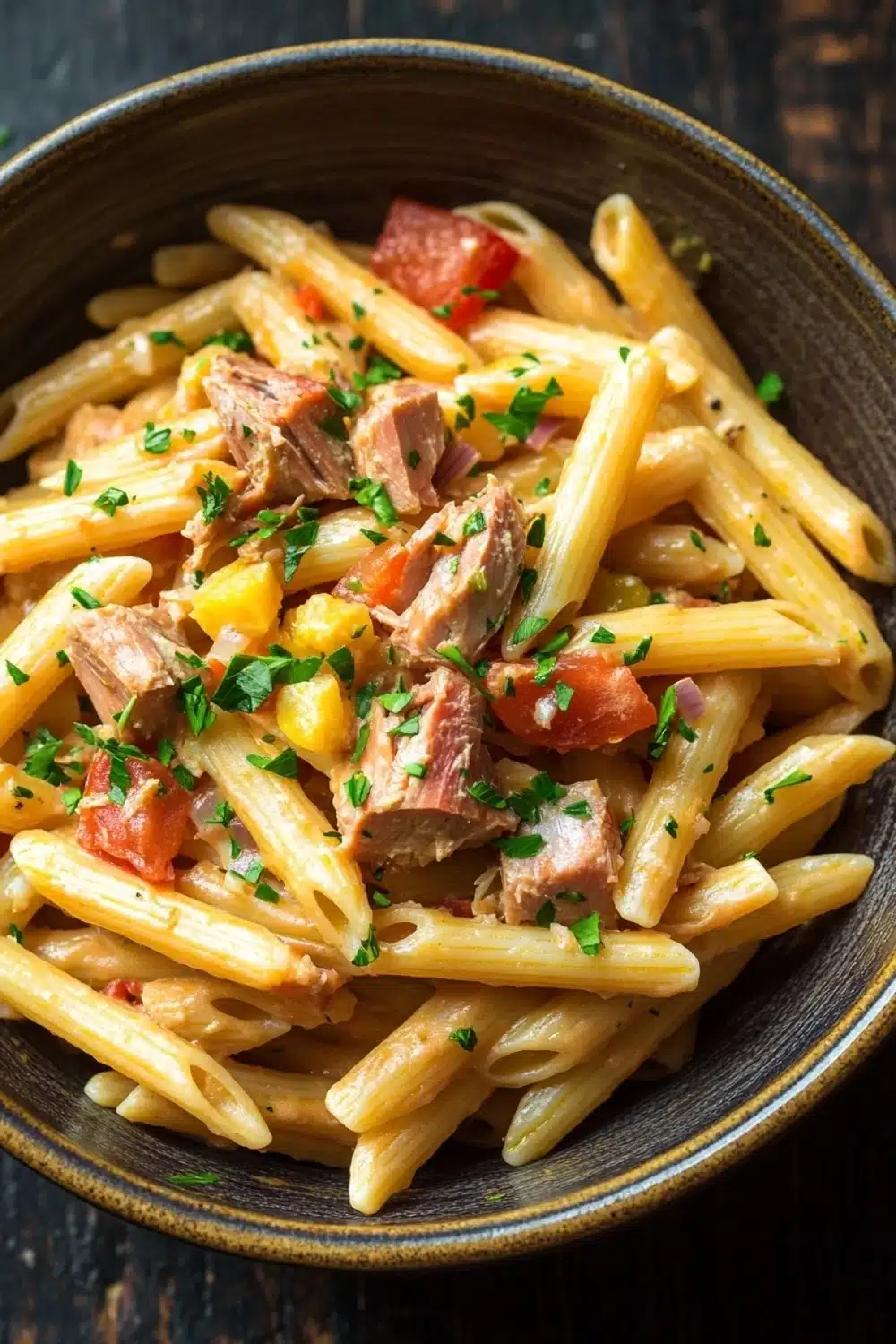
Five ingredients, one pot.
That’s all it takes to whip up a weeknight dinner that won’t leave you scrubbing pans until midnight. I never thought tuna and pasta could tango so well, but this recipe proves otherwise. The kitchen fills with the scent of garlic and oregano—the kind of aroma that makes you loosen your apron strings in anticipation.
What really gets me is how the pasta soaks up that tomatoey broth while mingling with tender flakes of tuna. No muss, no fuss; just a quick simmer and a perfect plate ready to serve. It’s the kind of straightforward comfort food that feels like a warm hug after a long day.
And trust me—throwing everything in one pot isn’t just a gimmick. It’s smart, efficient cookery for those of us who’d rather spend more time at the table than cleaning up after it.
For a delicious twist, try our one pot pasta thunfisch recipe that’s perfect for a quick and flavorful dinner.
Real-Life Perks of One Pot Pasta with Tuna
- One pot wonder—fewer dishes means you actually get to sit down faster after dinner.
- Ready in just 30 minutes, perfect for when you’re racing the clock on a hectic weeknight.
- Tuna packs in protein without the fuss of grilling or frying, keeping it lean and simple.
- The veggie broth and canned tomatoes create a light sauce that won’t weigh you down—no heavy cream here.
- Minimal ingredients, maximum flavor—ideal for times when your pantry’s looking a little bare but your stomach isn’t.
One Pot Pasta with Tuna

A quick and easy one pot pasta recipe featuring tender pasta, flavorful tuna, and a light tomato sauce. Perfect for a delicious weeknight meal with minimal cleanup.
- Prep Time: 10 minutes
- Cook Time: 20 minutes
- Total Time: 30 minutes
- Yield: 4
Ingredients
12 ounces (340 grams) dried penne pasta
1 (5 ounce / 140 grams) can tuna in olive oil, drained
1 (14.5 ounce / 410 grams) can diced tomatoes
4 cups (960 ml) vegetable broth
1 medium yellow onion, finely chopped
3 cloves garlic, minced
1 teaspoon dried oregano
1 teaspoon dried basil
1/2 teaspoon red pepper flakes
2 tablespoons olive oil
Salt, to taste
Freshly ground black pepper, to taste
1/4 cup (15 grams) grated Parmesan cheese, for serving
2 tablespoons chopped fresh parsley, for garnish
Instructions
In a large pot or deep skillet, heat the olive oil over medium heat.
Add the chopped onion and cook, stirring occasionally, until softened and translucent, about 4-5 minutes.
Add the minced garlic, dried oregano, dried basil, and red pepper flakes. Cook for 1 minute until fragrant.
Add the dried penne pasta, diced tomatoes with their juice, and vegetable broth to the pot. Stir to combine.
Bring the mixture to a boil over high heat, then reduce to medium-low and simmer uncovered, stirring occasionally to prevent sticking.
Cook until the pasta is al dente and most of the liquid has been absorbed, about 12-15 minutes.
Stir in the drained tuna gently to combine and heat through for 2-3 minutes.
Season with salt and freshly ground black pepper to taste.
Remove from heat and let the pasta sit for 2 minutes to thicken slightly.
Serve the pasta topped with grated Parmesan cheese and chopped fresh parsley.
Explore more:
Dinner Recipes
Mastering One Pot Pasta with Tuna: Tips, Tricks & Fixes
The Ingredient Dance: Swapping Without Sinking the Ship
One pot pasta is like a jazz trio—each player has a role, but you can improvise. Tuna in olive oil? Swap it for tuna packed in water if you want a leaner dish, but add a splash of olive oil to keep that slick mouthfeel. No penne? Rigatoni, ziti, or even fusilli—anything sturdy enough to hold sauce and not turn to mush—will do. Got no canned tomatoes? Fresh tomatoes blitzed with a little tomato paste can hold their own, but beware of thinning out your cooking liquid; adjust broth accordingly. And herbs? Dried oregano and basil hit the mark, but fresh versions bring brightness—toss them in just before serving to avoid turning your sauce into a grassy mess. Trust me, I’ve learned the hard way that oregano and basil can go from fragrant to funky if simmered too long.
Why This Technique Wins: Single Pot Magic Unpacked
Here’s the scoop—everything cooks together, and that’s the beauty. Pasta soaks up flavor while swimming in broth and tomato juice, no separate sauce needed. Simmering uncovered lets the liquid reduce naturally, thickening the sauce without a second thought. Stirring occasionally? Crucial. You don’t want a pasta-pudding incident where everything sticks to the bottom and burns. The slight simmer and steady stirring also coax out the aroma from garlic and herbs—kind of like coaxing that perfect aroma from freshly ground coffee beans.
Adding tuna last is like the final chord in a blues riff—it brings the whole dish home without breaking down. Tuna’s delicate flakes break apart if overcooked, turning from meaty to mushy garbage. So, a quick 2-3 minute heat-through is exactly right. Then, you let it rest a couple minutes off heat—the sauce thickens, pasta firms up, and flavors meld. This rest time? Don’t skip it. It’s the secret to that cozy, clingy sauce that grabs every bite.
Fixing the Fumbles: Rescue Mission When Things Go Sideways
Ever ended up with mushy pasta swimming in a soupy mess? Happens to the best of us. Panic not—here’s the rescue plan. First, if it’s too soupy, crank the heat to medium-high and let it reduce, stirring often. If pasta’s overcooked but still salvageable, toss in a handful of grated cheese—Parmesan or pecorino—and a splash of pasta water or broth to bind. Cheese acts like glue, pulling the sauce and pasta back together.
Sticky pot syndrome? That scorched bottom smell is your cue to ditch the pot and transfer pasta immediately to a clean pan or bowl. Scrape gently to save what you can; bits stuck to the bottom are flavor gold but burnt bits? Not so much.
Lastly, bland and missing punch? Don’t just salt and pepper—go wild with fresh herbs, a squeeze of lemon juice (brightens the whole shebang), or a drizzle of good olive oil. I once saved a near-flat batch with a splash of white wine vinegar—zap!—insta-tang.
One Pot Pasta with Tuna: Your Questions Answered
Q1: Can I use other types of pasta?
Absolutely. While penne works great here because it catches the sauce nicely, feel free to swap in fusilli or rigatoni. Just watch the cooking time since shapes differ in thickness.
Q2: Is this recipe spicy?
Yes and no. It has a subtle kick from the red pepper flakes, but nothing that’ll knock your socks off. You can dial it down or up depending on your heat tolerance—no sweat.
Q3: Can I substitute canned tuna with fresh tuna?
You could, but fresh tuna needs a different cooking approach. Tossing fresh tuna straight into the pot risks overcooking or breaking it apart. Stick with canned for simplicity and texture here.
Q4: Does it freeze well?
Nope. Pasta with tuna tends to get mushy once frozen and thawed. Best to enjoy fresh or refrigerate leftovers for a day or two max.
Q5: What’s the best way to store leftovers?
Keep leftovers airtight in the fridge for up to 3 days. When reheating, add a splash of broth or water to loosen the sauce. Reheat gently on the stove to avoid drying out the pasta.