
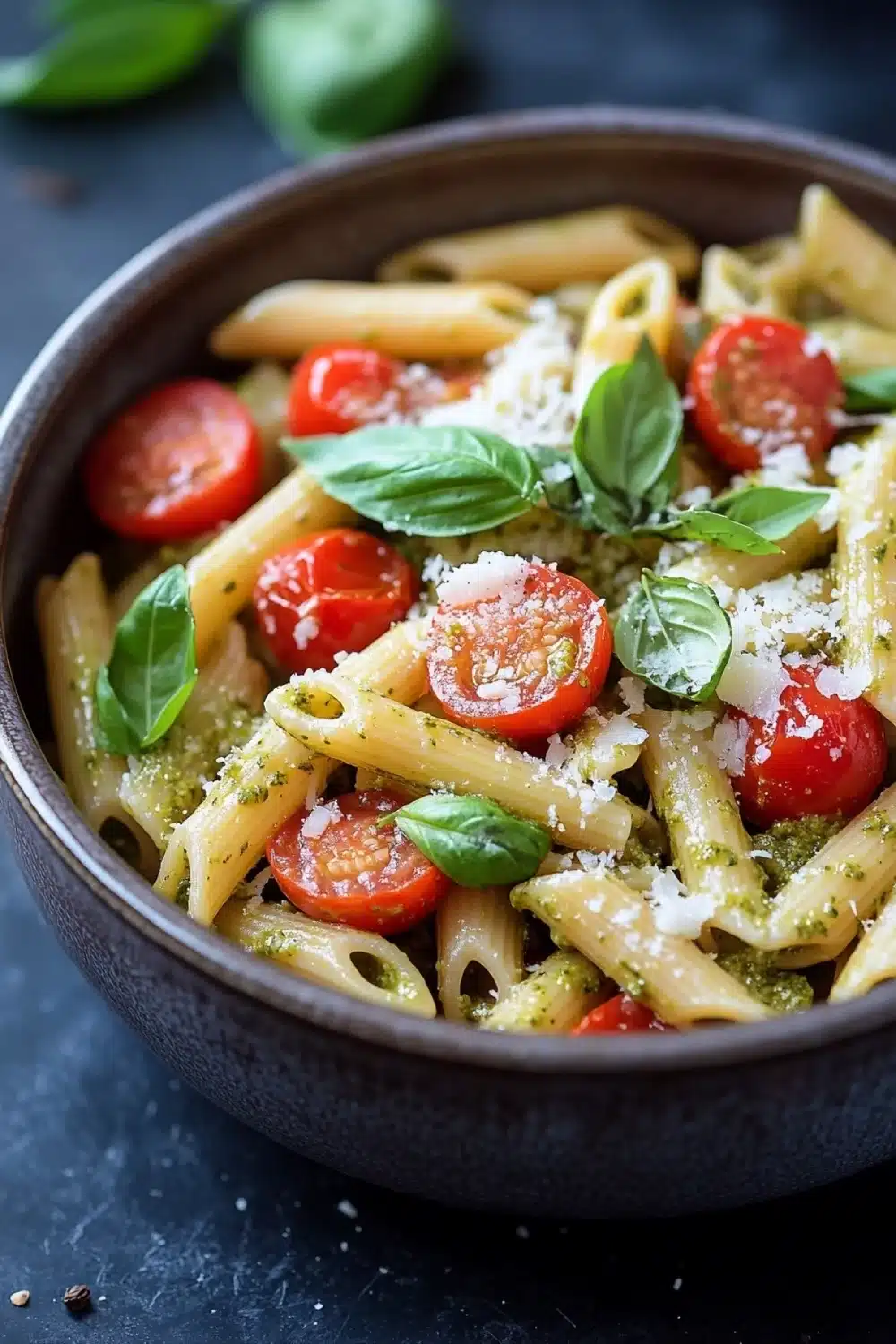
Fast and fuss-free.
One pot pasta? Yes, please. I’ve danced through countless weeknight dinners, hunting for that sweet spot between speed and flavor, and this recipe nails it. Toss dry penne, broth, garlic, and seasoning into a pot. Boil. Stir. Wait. The kitchen fills with the earthy, herby aroma of basil pesto mingling with the faint sweetness of cherry tomatoes. It’s like a green light for your taste buds.
Cleanup is a breeze—no extra pans to wash. As the pasta absorbs the liquid, it slurps up flavor, giving you that perfectly coated bite every time. When I first tried this, I was hooked by the simplicity and the punch of fresh ingredients that make it anything but boring.
In under half an hour, you’ve got a plate that’s quick to make, easy on the eyes, and satisfying to the soul. No kitchen drama, just straight-up good eats.
If you’re looking for another delicious and easy meal, check out our Classic Minestrone Soup: A Hearty Italian Comfort in Every Spoonful recipe for a comforting Italian dish.
Real Life Benefits of One Pot Pesto Pasta
- Saves heaps of time—no boiling, draining, and multiple pots to wash after dinner.
- Perfect for busy weeknights when you want a home-cooked meal without the fuss.
- Minimal ingredients that pack a punch, so the pantry and fridge don’t have to cry for help.
- Fresh basil and cherry tomatoes bring a garden-fresh vibe, even if you’re stuck indoors.
- Easy to tweak on the fly: toss in leftover veggies or swap Parmesan for a sharper cheese to keep things interesting.
One Pot Pesto Pasta

A quick and easy one pot pesto pasta recipe that combines pasta, fresh basil pesto, cherry tomatoes, and Parmesan cheese for a flavorful and satisfying meal with minimal cleanup.
- Prep Time: 10 minutes
- Cook Time: 15 minutes
- Total Time: 25 minutes
- Yield: 4
Ingredients
12 ounces dry penne pasta
4 cups low-sodium vegetable broth
1 cup water
1 cup cherry tomatoes, halved
1 cup fresh basil pesto
1/2 cup grated Parmesan cheese
2 cloves garlic, minced
1 tablespoon olive oil
1/2 teaspoon salt
1/4 teaspoon black pepper
1/4 cup fresh basil leaves, chopped
Instructions
In a large pot or deep skillet, combine the dry penne pasta, vegetable broth, water, minced garlic, salt, and black pepper.
Bring the mixture to a boil over medium-high heat, stirring occasionally to prevent the pasta from sticking.
Once boiling, reduce the heat to medium and continue to cook, stirring frequently, until the pasta is al dente and most of the liquid has been absorbed, about 12 to 15 minutes.
Remove the pot from heat and stir in the olive oil, fresh basil pesto, and grated Parmesan cheese until the pasta is evenly coated.
Gently fold in the halved cherry tomatoes and chopped fresh basil leaves.
Taste and adjust seasoning with additional salt and pepper if desired.
Serve immediately, garnished with extra Parmesan cheese and fresh basil if preferred.
Explore more:
Dinner Recipes
Mastering One Pot Pesto Pasta
The Quick Fix: Ingredient Swaps That Keep It Real
Listen, not everyone has fresh basil pesto hanging out in the fridge. I get it. Sometimes you gotta roll with what’s on deck. If you find yourself out of basil pesto, don’t freak—swap it out for sun-dried tomato pesto or even a garlic and herb store-bought blend. It won’t be the same vibe, but close enough to keep the pasta party going. Instead of cherry tomatoes, try halved grape tomatoes or even roasted red peppers for a smoky twist. Parmesan? Sure, Pecorino Romano or Asiago works like a charm too. The goal here is keeping the sauce creamy and cheesy without breaking the bank or your flow in the kitchen.
The Why Behind the One-Pot Magic — Less Fuss, More Flavor
Here’s the skinny: cooking pasta in broth instead of water? Genius move. That broth is the secret sauce before even adding pesto. It seeps into every nook of the penne, infusing base flavor while hydrating the pasta. Stirring frequently isn’t just a pain—it’s crucial. It prevents clumping and lets the starches release just enough to thicken that liquid into a saucy hug for your noodles. Then, tossing in olive oil and cheese off-heat locks in silkiness without turning the whole dish into a glue trap. Cherry tomatoes and fresh basil at the end? They’re the fresh pop that cuts through the richness, like a palate wake-up call. This technique saves you from wrestling with multiple pots, and let’s be real, nobody has time for that marathon cleanup.
Common Snags and How To Nail It Every Time
Sticky pasta mess? Been there. If you skip the stirring, you’re asking for a clumpy nightmare stuck to the bottom—pro tip: keep your wrist loose and stir often. Overcooked mush? That’s the enemy. The pasta needs to be al dente—firm with a bit of bite. I check it at about 12 minutes, sometimes sooner. If your broth evaporates too fast and the pasta’s still crunchy, add a splash of water or broth, but don’t drown the party. Finally, seasoning: salt and pepper early on is key, but taste at the end. Adjusting seasoning after mixing pesto and cheese is the final boss move to get everything balanced. Trust me, a little extra salt sometimes makes the whole pot sing.
One Pot Pesto Pasta FAQ
- Can I use a different pasta shape?
- Absolutely! Penne is great here, but fusilli, farfalle, or even rotini work beautifully since they hold the pesto sauce well. Just keep cooking time in mind, as it varies by shape.
- Is this recipe gluten-free?
- No, not as is. You’ll want to swap regular penne for a gluten-free variety to keep it safe for gluten-sensitive folks. The rest stays the same.
- How do I prevent the pasta from sticking while cooking?
- Good question. Stirring regularly during the simmering process is key. The starch released can glue the pasta together if you slack off stirring. Also, the broth and water combo keeps things slick.
- Can I make this vegan?
- Yes, just ditch the Parmesan and swap pesto with a vegan version or make your own without cheese. Nutritional yeast sprinkled on top can mimic that cheesy punch.
- What’s the best way to reheat leftovers?
- Microwave works fine—just add a splash of water or broth to loosen the sauce so it doesn’t dry out. Alternatively, toss it briefly in a skillet on low heat until warmed through.