
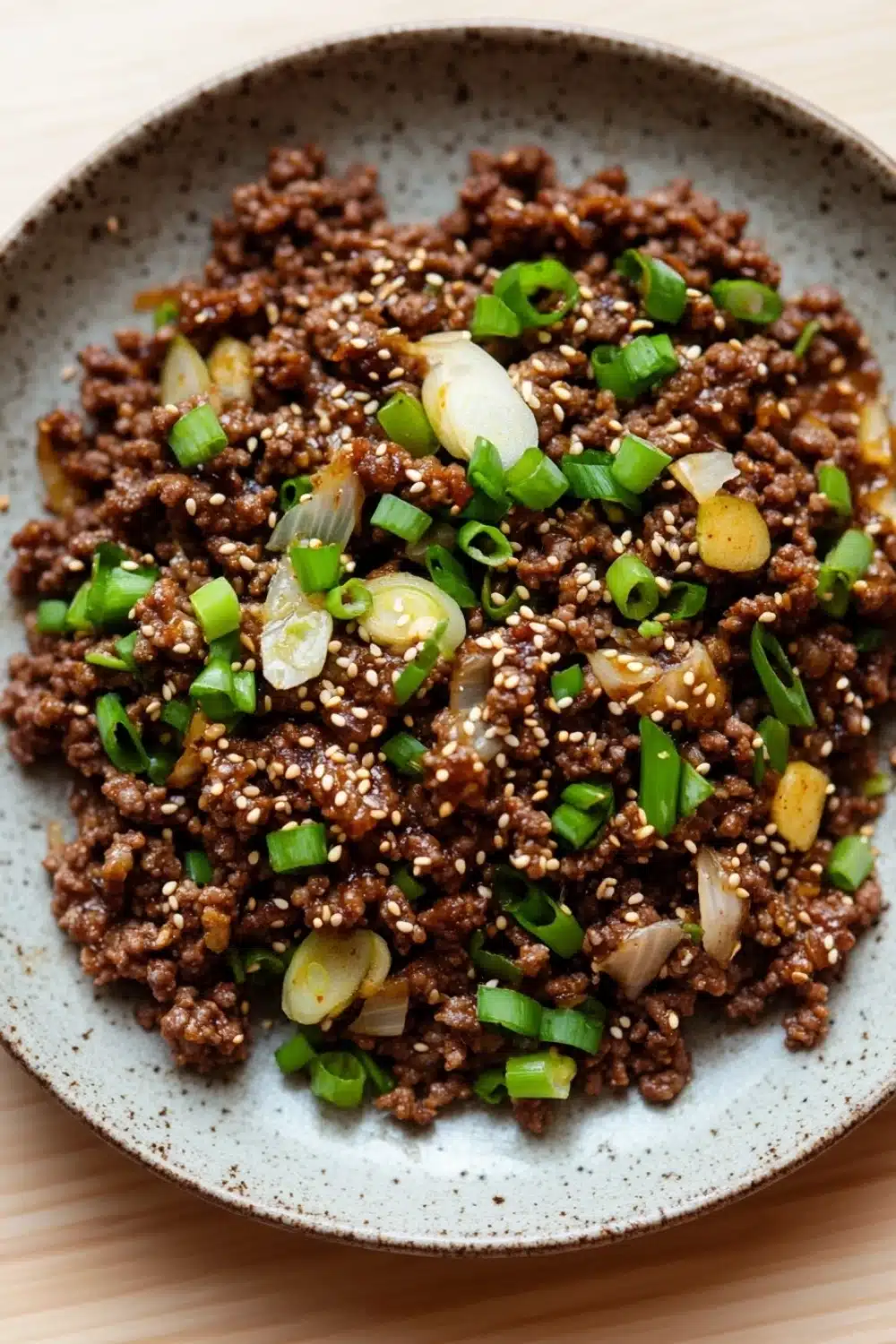
Ready in a flash.
That’s what I love about this Korean beef skillet. It’s one of those no-drama meals that lands on your plate fast, but with a kick that punches way above its weight. The sizzle of ground beef hitting a hot pan—mixed with the sharp zing of garlic and ginger—gets my kitchen humming every time.
The magic? It’s in the sauce. A blend of soy, brown sugar, and toasted sesame oil that clings to each morsel, like a velvet glove around a fist. Toss in crushed red pepper flakes for a subtle nudge of heat, and you’ve got a dish that’s equal parts comforting and brash. I’ve thrown this together after long days when my patience was thinner than rice paper, and it never disappoints.
Serve it over steaming white rice or pile it with crisp veggies—either way, it’s a solid weeknight winner that hits all the right notes without the fuss.
If you’re craving a quick and delicious meal, this Freezer Korean Beef Bowl for When Dinner Needs to Be Ready Yesterday is a perfect korean beef skillet option to try.
Real Life Wins with This Korean Beef Skillet
- Weeknight hero: You toss this together in under half an hour—no sweat, just pure flavor that slaps.
- Lunchbox MVP: Cooks up quick, packs away easy, and reheats like a charm. Bye-bye sad desk meals.
- Flex your veggies: Great over rice, but I often load it up with steamed greens or roasted broccoli to balance the bold beef punch.
- Family pleaser: The sweet-and-savory sauce hits that umami jackpot, making even picky eaters nod in approval—or at least pretend to.
- Kitchen confidence booster: Once you nail this simple skillet, you’ll feel like you’ve got a secret weapon for casual dinners that don’t taste casual at all.
Korean Beef Skillet
A quick and flavorful Korean beef skillet made with ground beef, garlic, ginger, and a savory-sweet sauce. Perfect for a weeknight dinner served over rice or with steamed vegetables.
- Prep Time: 10 minutes
- Cook Time: 15 minutes
- Total Time: 25 minutes
- Yield: 4
Ingredients
1 pound ground beef
1 tablespoon vegetable oil
4 cloves garlic, minced
1 tablespoon fresh ginger, grated
1/4 cup low sodium soy sauce
2 tablespoons brown sugar
1 tablespoon sesame oil
1/2 teaspoon crushed red pepper flakes
1/4 teaspoon black pepper
3 green onions, thinly sliced
1 tablespoon toasted sesame seeds
Instructions
Heat the vegetable oil in a large skillet over medium-high heat.
Add the ground beef to the skillet and cook, breaking it apart with a spatula, until browned and cooked through, about 5-7 minutes.
Drain any excess fat from the skillet.
Add the minced garlic and grated ginger to the beef and cook for 1-2 minutes until fragrant.
In a small bowl, whisk together the soy sauce, brown sugar, sesame oil, crushed red pepper flakes, and black pepper.
Pour the sauce mixture over the beef in the skillet and stir to combine.
Cook for another 3-5 minutes, stirring occasionally, until the sauce thickens slightly and coats the beef.
Remove from heat and sprinkle with sliced green onions and toasted sesame seeds.
Serve hot over steamed rice or with your favorite vegetables.
Explore more:
Dinner Recipes
Korean Beef Skillet: Tricks, Tweaks, and Troubleshooting
The Magic of Swapping Ingredients Without Losing Soul
Ground beef is the star here, but don’t get stuck in the mud thinking it’s your only option. Ground turkey or chicken can swoop in for a leaner spin—just remember, they need a bit more love (extra fat or a splash of soy sauce) because they lack beef’s natural richness. For a plant-based twist, crumbled firm tofu or finely chopped mushrooms can mimic that meaty texture, soaking up the sauce like a champ. Swap brown sugar for honey or maple syrup if you want a different kind of sweetness; it’s like changing the beat but keeping the groove intact. Remember, sesame oil is the pocket rocket in this dish—don’t ditch it unless you want to lose that nutty punch that ties everything together.
The Lowdown on Why This Technique Works Like a Charm
Here’s the skinny: browning the meat first sets the stage. Maillard reaction? That’s just fancy talk for the crusty, caramelized bits that deliver a deep, meaty flavor you can’t fake. Then comes the quick hit of garlic and ginger—adding them too early can burn these bad boys, turning your sauce bitter. The secret sauce—soy, brown sugar, sesame oil, and red pepper flakes—brings sweet, salty, and spicy vibes that hug every crumb of beef. Cooking the sauce down is crucial; it thickens into this glossy coating that clings to the meat instead of pooling like sad soup. I’ve seen folks pour sauce early and walk away—don’t be that person. Stay close, stir, and watch it transform.
When Your Korean Beef Skillet Goes Sideways (and How to Fix It)
Too salty? It’s a common pitfall, especially if your soy sauce is on the salty side or you added an extra splash “just because.” Quick fix: stir in a little water or splash some unsweetened coconut milk to mellow the punch without muting flavor. Sauce too thin? Don’t panic. Toss in a pinch of cornstarch dissolved in cold water and simmer for a minute—the sauce will thicken up like a charm. Dry beef? Probably overcooked or lean meat with no extra oil—next time, add a drizzle of vegetable oil before cooking and keep an eye on the heat; medium-high is your friend, but if it’s searing too fast, drop it down a notch. Burnt garlic or ginger kills the vibe—always add after the meat’s browned and keep stirring. Lastly, underseasoned? A sprinkle of extra green onions or a dash more sesame oil right before serving wakes everything up like a shot of espresso.
Korean Beef Skillet FAQs
A: Absolutely! Ground turkey works fine, but it cooks faster and can dry out easier. Keep an eye on it and maybe add a splash of water or broth to keep things juicy.
A: It has a mild kick from the crushed red pepper flakes. If you’re a heat junkie, feel free to toss in more. If you’re babying your mouth, dial it down or skip it altogether.
A: Yes and no. If your beef is super fatty, draining helps avoid a greasy skillet. But a little fat keeps the flavors rolling—don’t drain too much or you’ll lose that richness.
A: Sure thing! You can mix the sauce ahead and chop your garlic and ginger. Just hold off on cooking until you’re ready to go—fresh is best for those aromatics.
A: Yes, it freezes like a champ. Portion it out, freeze in airtight containers, and thaw overnight in the fridge before reheating. Just stir it up well to bring back that saucy goodness.