
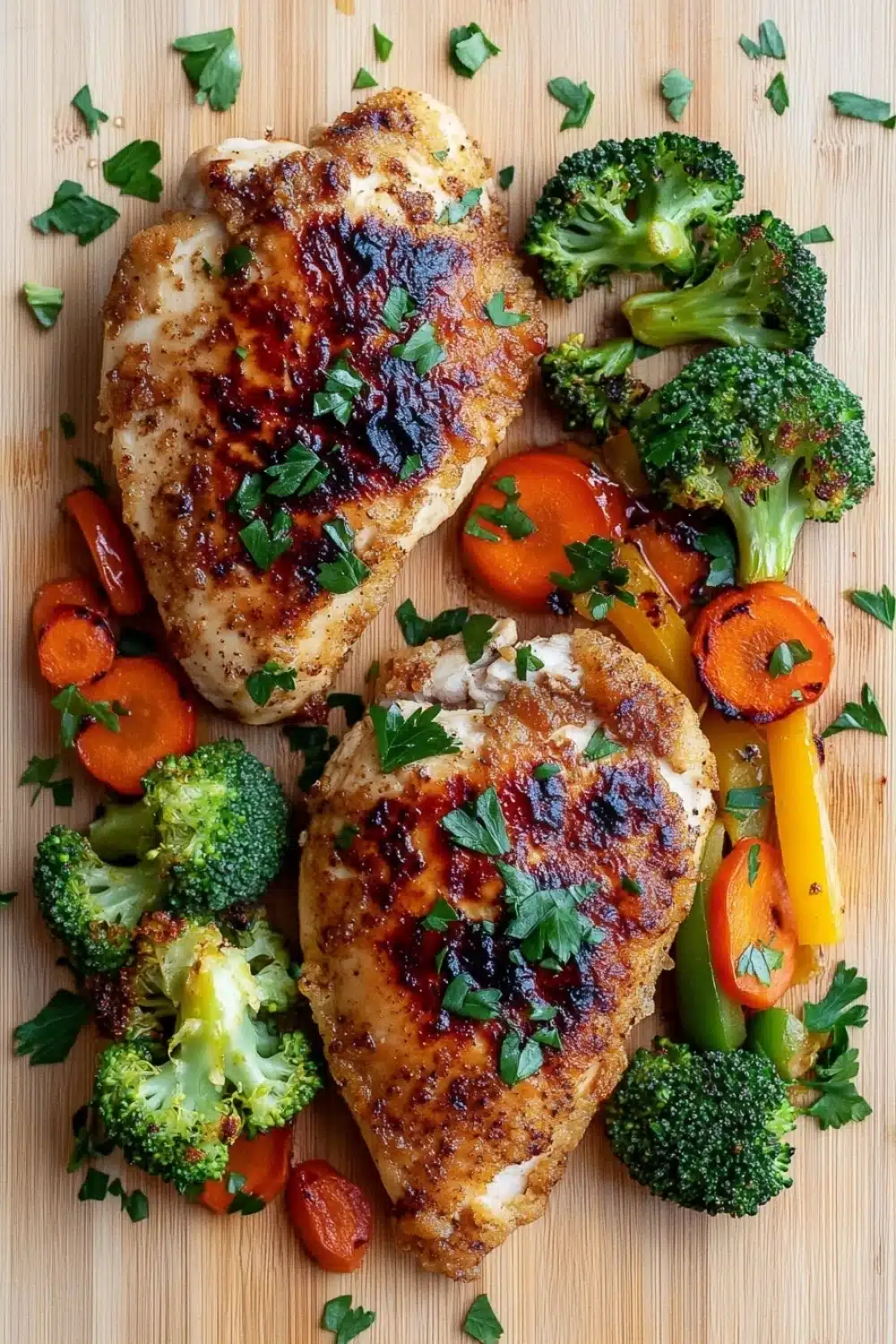
Weeknight hero, anyone?
There’s something about chicken breast that screams ‘simple dinner’, yet it can so easily tip into bland territory if not handled just right. I learned early on that the secret isn’t just the seasoning — it’s the technique. Pat it dry, don’t rush the sear, and finish with a buttery garlic kiss. Instant mood changer.
In my kitchen, the air fills with sizzling olive oil and the sharp aroma of garlic as I toss vibrant broccoli, carrots, and bell peppers into the skillet. Each veggie snap cracks with freshness — a little color, a lot of crunch, and pure comfort on the plate. This isn’t your average chicken dinner; it’s a quick fix that still packs a punch.
Ready in 30 minutes flat, it’s the kind of dish that sits well with your appetite and your sanity. No fancy gear, no fuss. Just a skillet, some good butter, and a little patience. Trust me, this one’s a keeper.
For an easy and flavorful chicken breast dinner, check out our recipe for When Weeknight Cravings Hit: Spicy Maple Tahini Sheet Pan Dinner to the Rescue.
Real-Life Perks of This Pan-Seared Chicken Breast Dinner
- Ready in just 30 minutes—perfect for those nights when you’re running on fumes but still want a home-cooked meal.
- The garlic butter sauce? It’s like magic in your mouth, making the chicken juicy without drowning it in heavy cream or weird additives.
- Vegetables come out crisp-tender, so you actually get that satisfying crunch rather than mush—because soggy veggies are a dealbreaker.
- Meal preppers, rejoice! Leftovers keep well for up to 3 days, and reheating doesn’t turn your dinner into a sad, dry mess.
- No fancy gadgets needed—just a skillet and some basic pantry staples. This recipe is the no-nonsense, get-it-done classic every home cook needs in their arsenal.
Pan-Seared Chicken Breast Dinner
A simple and delicious pan-seared chicken breast dinner served with garlic butter sauce and sautéed vegetables. Perfect for a quick and satisfying meal.
- Prep Time: 10 minutes
- Cook Time: 20 minutes
- Total Time: 30 minutes
- Yield: 2
Ingredients
2 boneless skinless chicken breasts, about 6 ounces each
1 teaspoon kosher salt
1/2 teaspoon black pepper
1 teaspoon paprika
2 tablespoons olive oil
3 tablespoons unsalted butter, divided
3 cloves garlic, minced
1 cup broccoli florets
1 cup sliced carrots
1/2 cup sliced bell peppers
1 tablespoon fresh parsley, chopped
Instructions
Pat the chicken breasts dry with paper towels. Season both sides with kosher salt, black pepper, and paprika.
Heat olive oil in a large skillet over medium-high heat until shimmering.
Add the chicken breasts to the skillet and cook for 6-7 minutes on one side without moving, until golden brown.
Flip the chicken breasts and add 1 tablespoon of butter and half of the minced garlic to the skillet.
Cook for another 6-7 minutes, spooning the melted butter and garlic over the chicken occasionally, until the internal temperature reaches 165°F (74°C). Remove chicken from the skillet and cover loosely with foil to rest.
In the same skillet, add remaining 2 tablespoons of butter. Once melted, add broccoli, carrots, and bell peppers.
Sauté the vegetables for 5-7 minutes until tender-crisp, stirring occasionally. Add the remaining garlic during the last 2 minutes of cooking.
Plate the chicken breasts and spoon the sautéed vegetables alongside. Garnish with chopped fresh parsley before serving.
Explore more:
Dinner Recipes
Mastering Pan-Seared Chicken Breast Dinner
The Secret to That Golden Crust
Dry chicken skin—well, no skin here, but the principle holds: pat the chicken breasts bone-dry before seasoning. Moisture is the villain when chasing a proper sear. If you slap wet chicken on the pan, it will steam, not caramelize, and you’ll end up with that dreaded pale, sad surface. The olive oil must be shimmering hot—think: a mirror on the pan—before you drop your chicken in. Resist the urge to poke or prod. Let it sit like it’s sunbathing; this undisturbed heat contact is where the Maillard reaction works its magic. The paprika isn’t just for color; it adds a subtle smoky undertone, bumping the flavor into a whole new gear. When flipping, add butter and garlic—this is where you start spooning that luscious garlicky fat over the meat, basting and infusing as it cooks through. Trust me, skipping this step is like going to a rock concert without the guitar solos.
Sautéed Veggies: The Quick and Crisp Playbook
Start by melting two tablespoons of butter in the same skillet—don’t wash your pan just yet! The leftover fond from chicken is pure gold. Toss in the broccoli, carrots, and bell peppers. These veggies are all about that sweet-spot: tender-crisp. Too limp and you’ve lost the crunch; too raw and it’s a bummer on the palate. Stir occasionally but don’t babysit them the whole time. Garlic comes in last minute—adding it too early will turn it bitter and blacker than a bad day. I like to think of this as the “last call” ingredient, a final shout before plating. The fresh parsley isn’t just a garnish—it’s a fresh green jab that cuts through the richness and amps up the dish’s brightness.
Fixing Common Fails: When Chicken Goes Rogue
Spoiler alert: chicken breasts are tricky. They can dry out faster than gossip in a small town. If you find your chicken turning rubbery or overly dry, it likely overcooked or wasn’t rested properly. Resting isn’t optional—it’s the chill-out phase where juices redistribute instead of running all over the cutting board like a busted pipe. Got uneven cooking? Thicker parts will lag behind; pound them gently to even thickness before seasoning. If your pan isn’t hot enough, you’ll get no crust, just sad, boiled chicken. Conversely, too hot and you might char the outside while leaving the inside raw—talk about mixed signals. When in doubt, rely on a meat thermometer—165°F is your golden ticket. And hey, if your garlic burns, toss it and add fresh later—burnt garlic is bitter regret you don’t want to chew on.
Pan-Seared Chicken Breast Dinner FAQs
A: Nope. Always thaw your chicken completely before cooking. Otherwise, you risk uneven cooking—a total buzzkill—and a dry, overcooked outside with a cold center.
A: Grab a meat thermometer and aim for 165°F (74°C) inside. If you wing it without one, you might end up with a funky rubbery bite or, worse, undercooked poultry. I never skip this step—it’s my foolproof move to nail juiciness every time.
A: Totally. This recipe’s a blank canvas. Toss in asparagus, zucchini, or even snap peas. Just give them a quick sauté so they keep their crunch and don’t turn to mush. It’s all about texture contrast—don’t sleep on that.
A: Yes! The leftovers stay fresh in the fridge up to 3 days. Reheat gently in a skillet to keep that buttery garlicky vibe intact. Microwaving works too but results vary—your call.
A: Yes, just swap butter for olive oil or a plant-based spread. You’ll miss that garlic butter kiss, but it still packs flavor. I’ve done it for friends with allergies, and it’s solid.