
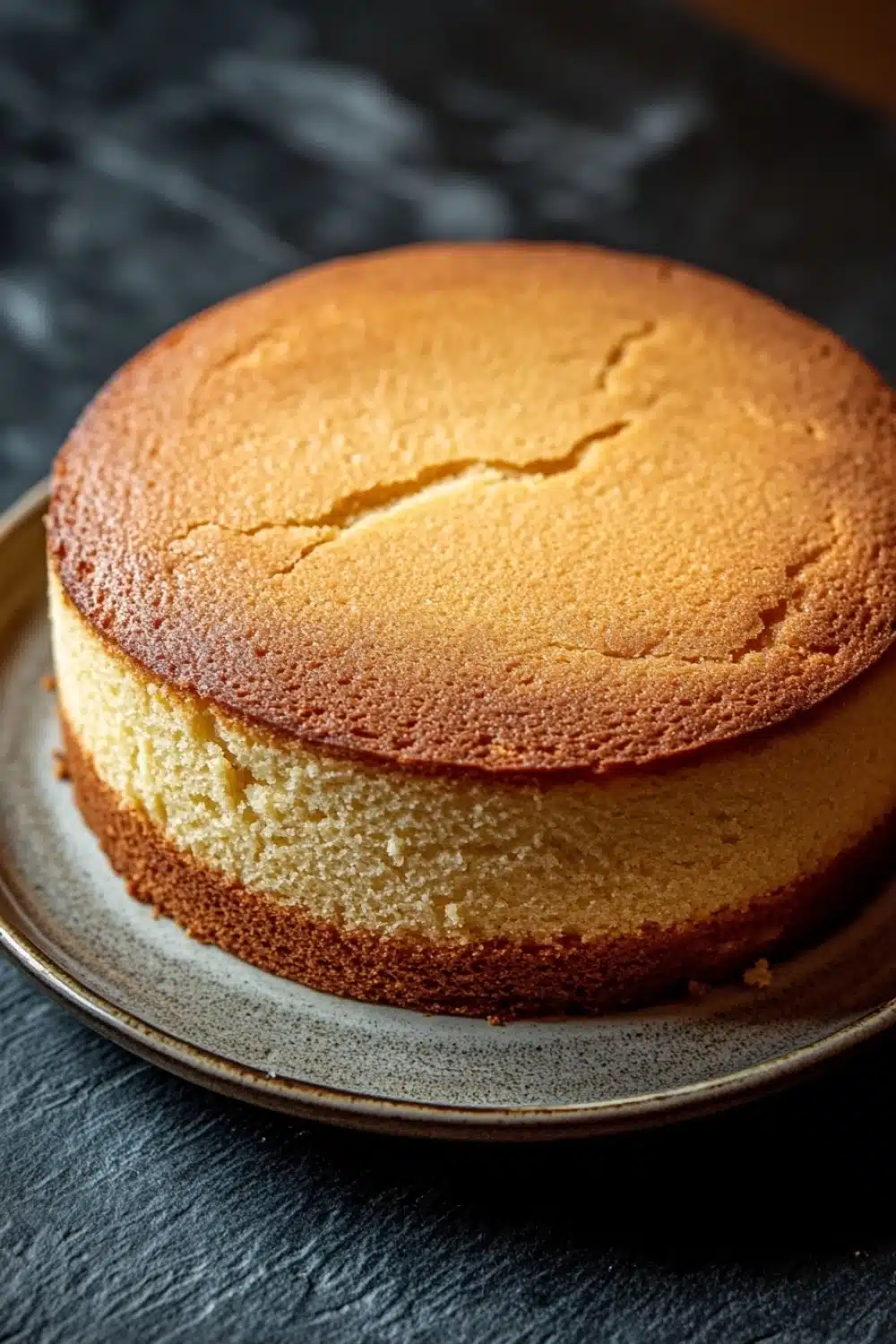
Nothing fancy. Just cake.
That’s the vibe when you skip the icing—bare-bones vanilla cake that’s still a knockout. I remember my first experiment with this recipe; I was skeptical. How could a cake without frosting hold its own at the dessert table? Turns out, it’s all about texture and balance. This one nails it—soft crumb, a hint of vanilla, and no cloying sweetness to mask the subtle flavors.
The kitchen smells like a bakery gone minimalist—warm vanilla wafting through the air, mixing with the quiet hum of the oven timer waiting to ring. If you’re tired of battin’ the icing blues or just want a cake that’s pure and simple, this recipe is your go-to. No frills, no fuss, just straight-up good cake that stands tall on its own.
Try it with fresh berries or a dusting of powdered sugar if you want a little razzle-dazzle. But trust me, this vanilla cake is a showstopper by itself—no icing required.
If you’re looking for a tasty treat that’s just as delightful as a vanilla cake no icing, these Blueberry Muffin Protein Balls are a perfect quick and healthy snack.
Real-Life Wins with Classic Vanilla Cake Without Icing
- Perfect for those ‘less is more’ dessert moments—no sugary overload, just pure, fluffy cake.
- Quick prep and bake time means you can whip this up between errands or after work without a sweat.
- Keeps well at room temp for a few days, so you’re not stuck eating dry cake or throwing half away.
- It’s a dream base for fresh fruit toppings—think berries or a quick compote—giving you dessert options without fuss.
- Great for picky eaters who shy away from frosting but still want something sweet and comforting.
Classic Vanilla Cake Without Icing
A simple and moist vanilla cake made without icing, perfect for those who prefer a light and fluffy dessert or a base for fresh fruit toppings.
- Prep Time: 15 minutes
- Cook Time: 30 minutes
- Total Time: 45 minutes
- Yield: 8
Ingredients
2 1/2 cups (312 grams) all-purpose flour
2 1/2 teaspoons baking powder
1/2 teaspoon salt
1 cup (226 grams) unsalted butter, softened
1 3/4 cups (350 grams) granulated sugar
4 large eggs
1 tablespoon pure vanilla extract
1 cup (240 ml) whole milk
Instructions
Preheat the oven to 350°F (175°C). Grease and flour a 9-inch (23 cm) round cake pan.
In a medium bowl, whisk together the all-purpose flour, baking powder, and salt. Set aside.
In a large bowl, using an electric mixer, cream the softened unsalted butter and granulated sugar together on medium speed until light and fluffy, about 3 to 4 minutes.
Add the eggs one at a time, beating well after each addition.
Mix in the pure vanilla extract.
With the mixer on low speed, alternately add the dry ingredients and the whole milk to the butter mixture, beginning and ending with the dry ingredients. Mix until just combined; do not overmix.
Pour the batter evenly into the prepared cake pan and smooth the top with a spatula.
Bake in the preheated oven for 28 to 32 minutes, or until a toothpick inserted into the center of the cake comes out clean.
Remove the cake from the oven and let it cool in the pan for 10 minutes.
Run a knife around the edges to loosen the cake, then invert it onto a wire rack to cool completely before serving.
Explore more:
Breakfast Recipes
Mastering the Classic Vanilla Cake Without Icing
The Power of Ingredient Swaps—Breaking Vanilla Traditions
Let me toss a curveball your way: What if you swap out whole milk for buttermilk? That tangy punch cuts through the sweetness, adding a subtle depth and a tender crumb that’s a game-changer. Or—hear me out—try brown butter instead of plain softened butter. That nutty richness creeps in, giving the cake a whisper of toasted complexity without screaming for attention. And if you’re out of all-purpose flour, cake flour is your wingman; it lightens the texture, making every bite float away like a cloud. But beware—too much swap can throw off the balance, so keep it tight. These ingredient tweaks don’t just mess with flavors; they breathe personality into a cake otherwise labeled ‘basic.’ I’ve seen home bakers morph this recipe into their signature jam by experimenting—because vanilla is the blank canvas, not the boring backdrop.
Why ‘Mixing Just Enough’ Is the Golden Ticket
This is where the rubber meets the road—the mixing hustle. Overdo it, and you’re staring down a dense, chewy brick masquerading as cake. Under-mix? You’ll get dry patches or flour pockets that taste like a dry handshake from grandma. The secret? Low and slow with the mixer when you’re folding in the dry and wet ingredients—the back-and-forth dance between flour and milk. You want everything just combined, not a minute longer. It’s like coaxing a shy cat out of hiding—you nudge gently, not shove. On my first go, I ignored this and ended up with a cake worthy of frisbee practice. Lesson learned: patience and restraint in mixing are your best friends, especially with no icing to mask imperfections.
Hit a Cake Crisis? Here’s How to Fix Common Failures
Okay, cake whisperers-in-training, let’s talk disaster control. Sunken middles? Usually a sign of underbaked batter or too much leavening powder. Next time, test with a toothpick earlier, and dial back the baking powder by a quarter teaspoon. Dry, crumbly texture? That’s a moisture fail—either too long in the oven or your flour measurement is off (a kitchen scale is clutch here). Overly dense cake? Check your butter—if it’s not softened enough, you can’t cream it right, and the whole structure tanks. And if it’s sticking to the pan, knock it up a notch with parchment paper lining, or grease like you mean it—don’t be stingy. I’ve been there, scraping cake off pans like a clumsy archaeologist. With these fixes, even your worst cake moments can turn into sweet victories.
Classic Vanilla Cake FAQs
A: Yes, but skip or reduce the added salt in the recipe to balance flavors. Salted butter can throw off the flavor profile if you don’t adjust.
A: Absolutely. This back-and-forth mixing trick helps keep the batter smooth and prevents gluten from overdeveloping, which keeps your cake tender and fluffy. Think of it like a dance—dry, wet, dry, wet—to avoid a tough crumb. Overmixing is the mortal enemy here.
A: Toothpick test is king. Poke the center; if it comes out clean or with a few moist crumbs, you’re golden. If batter sticks, toss it back in for a few minutes.
A: Not without tweaking. You’d need to swap butter for a plant-based fat and use a dairy-free milk substitute. It can work, but results might shift—texture and moisture could take a hit.
A: Nope. This cake shines without icing—perfect for those who dig a lighter, fuss-free slice or want a base for fresh fruit toppings. That’s the whole point, really.