
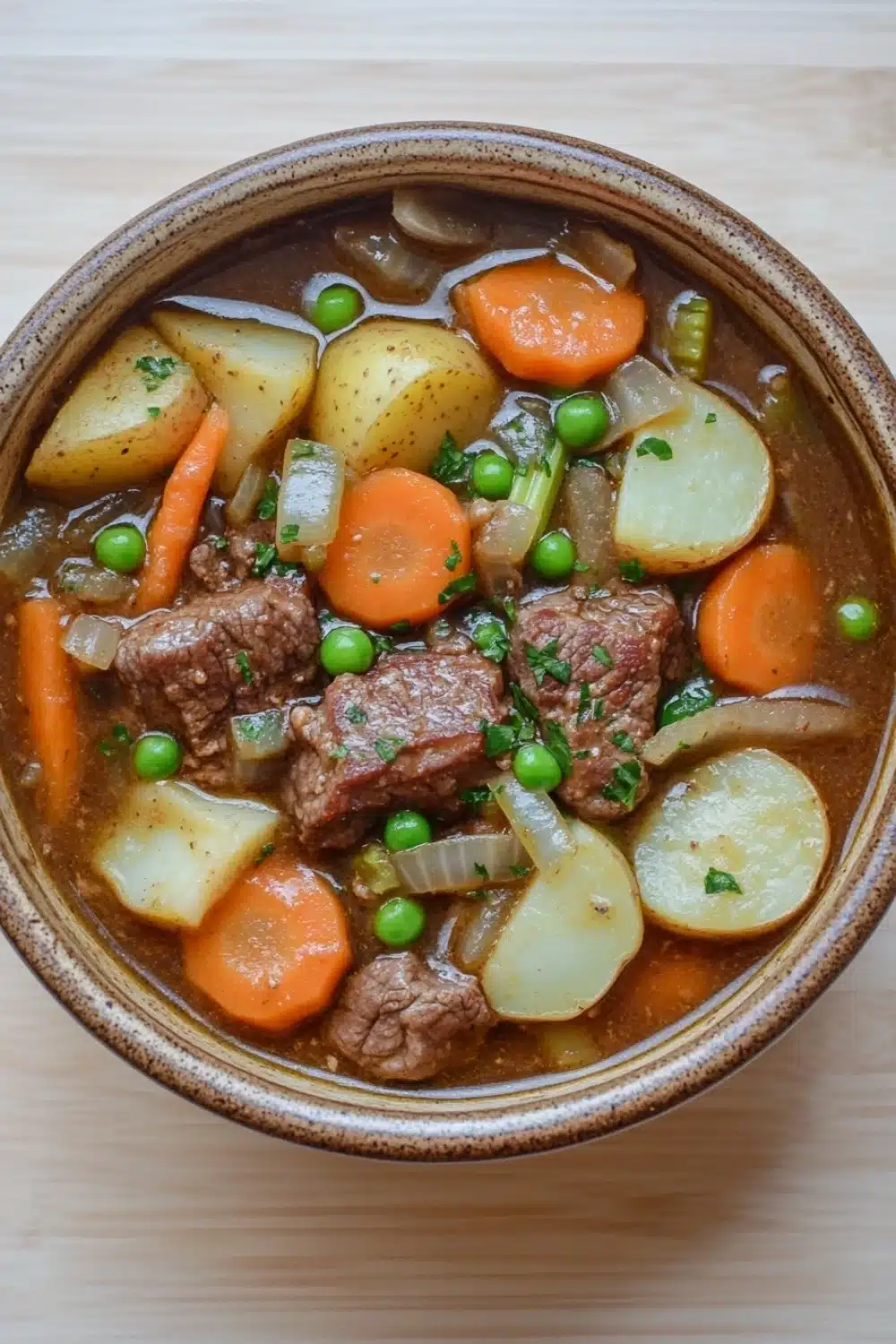
There’s something about a slow cooker bubbling away in the background that sets the whole kitchen vibe right. I’ve always thought this old-fashioned beef stew isn’t just dinner—it’s therapy in a bowl. Picture this: tender chunks of chuck, browned to a nice crust, swimming in a broth that’s been coaxed to deep richness with red wine and tomato paste. It’s the kind of stew that sticks to your ribs without being a total gut bomb. While the stew smolders away for hours, the house fills with that cozy, stick-to-your-nose aroma of garlic, thyme, and rosemary—like a warm welcome you didn’t know you desperately needed. And those veggies? Carrots, potatoes, and celery, cut just right to soak up all that meaty goodness without turning to mush. I’m not here to sugarcoat—this dish takes patience, but the payoff is pure gravy boat-worthy. Just when you think you’ve nailed the perfect stew, add peas at the last minute—they pop and bring a fresh snap that keeps things from getting too stodgy. It’s old-school comfort, done slow and steady, and it reminds me why some classics never go out of style. No frills, just honest-to-goodness flavor that punches above its weight. Grab a ladle—let’s dive in.
If you’re craving a hearty, comforting meal that’s easy to prepare, you’ll love this Slow Cooker Old Fashion Beef Stew: Classic Comfort in Every Bite. It’s the perfect dish to warm you up on a chilly day!
Real Life Wins from Slow Cooker Old Fashioned Beef Stew
- Hands-off cooking: Toss everything in before work or errands, then come home to a house smelling like grandma’s kitchen without lifting a finger all day.
- Meal prep magic: Makes a hearty batch that feeds the crew for days — perfect for those no-brainer leftovers that actually taste better the next day.
- Budget-friendly beast: Uses affordable beef chuck that turns melt-in-your-mouth tender after slow cooking, proving good grub doesn’t have to break the bank.
- Weather-proof comfort: Whether it’s raining cats and dogs or a chilly night, this stew hits the spot with cozy vibes that never quit.
- Zero fuss cleanup: Because it all simmers in one pot, you avoid the mountain of dishes and can kick back sooner.
Slow Cooker Old Fashioned Beef Stew
A classic, hearty beef stew slow-cooked to tender perfection with rich flavors of beef, vegetables, and herbs. Perfect for a comforting meal any day of the week.
- Prep Time: 20 minutes
- Cook Time: 8 hours
- Total Time: 8 hours 20 minutes
- Yield: 6
Ingredients
Scale
2 pounds beef chuck, cut into 1-inch cubes
2 tablespoons all-purpose flour
1 teaspoon salt
1/2 teaspoon black pepper
2 tablespoons vegetable oil
4 cups beef broth
1 cup dry red wine
3 cloves garlic, minced
1 large onion, chopped
4 large carrots, peeled and sliced into 1/2-inch pieces
3 medium potatoes, peeled and cut into 1-inch cubes
2 stalks celery, sliced
1 teaspoon dried thyme
1 teaspoon dried rosemary
2 bay leaves
1 cup frozen peas, thawed
2 tablespoons tomato paste
1 tablespoon Worcestershire sauce
Instructions
In a large bowl, combine the flour, salt, and black pepper.
Toss the beef cubes in the flour mixture until evenly coated.
Heat the vegetable oil in a large skillet over medium-high heat.
Add the coated beef cubes in batches and brown on all sides, about 4-5 minutes per batch. Transfer browned beef to the slow cooker.
In the same skillet, add the chopped onion and minced garlic. Sauté for 2-3 minutes until fragrant and translucent.
Add the tomato paste to the skillet and cook for 1 minute, stirring to combine.
Pour in the beef broth and red wine, scraping the bottom of the skillet to loosen any browned bits.
Stir in Worcestershire sauce, dried thyme, and dried rosemary. Bring the mixture to a simmer.
Pour the broth mixture over the beef in the slow cooker.
Add the carrots, potatoes, celery, and bay leaves to the slow cooker. Stir gently to combine.
Cover and cook on low for 8 hours, or until the beef is tender and vegetables are cooked through.
About 15 minutes before serving, stir in the thawed peas and remove the bay leaves.
Adjust seasoning with additional salt and pepper if needed.
Serve hot, garnished with fresh parsley if desired.
Explore more:
Dinner Recipes
Slow Cooker Old Fashioned Beef Stew: Substitution Secrets, The Science, and Real-world Fixes
Substitution Secrets
When I first tried making this Slow Cooker Old Fashioned Beef Stew, I realized not everyone has all these exact ingredients lying around. No sweat—there’s wiggle room here. Instead of beef chuck, you can go for stew meat from the round or even brisket, but remember—fat content matters. Too lean, and you’ll wind up with a tougher stew. Flour is primarily there to help brown the beef and thicken the stew later. If you’re gluten-free, cornstarch or arrowroot powder can do the trick, but toss it in at the end of cooking to avoid a gummy mess.
Red wine is a classic in this recipe, but if you’re not a drinker or just don’t have it, grape juice mixed with a splash of vinegar or a bit of extra Worcestershire sauce can mimic that tart depth. Don’t skip the Worcestershire though—it’s the unsung hero that adds that umami kick. Frozen peas? Fresh or canned peas work fine; just add them late to avoid mush.
The Science
Here’s where the magic happens—browning the beef. That crust? It’s called the Maillard reaction, where proteins and sugars react at high heat, creating flavor compounds that make your stew anything but bland. Trust me, skipping this step is like skipping the main act at a rock concert—you lose the whole vibe. The slow cooker’s low, steady heat breaks down collagen in the beef chuck, turning it into gelatin, which thickens the stew and gives it that luscious mouthfeel.
Throwing in the flour before browning helps develop a slight crust and later thickens the stew when combined with the cooking liquids. The acid in red wine or its substitutes helps break down muscle fibers, tenderizing the beef. Herbs like thyme, rosemary, and bay leaves release essential oils over the long simmer, infusing the whole pot with their woody, herbaceous character.
Real-world Fix
So you’ve started the stew and realize the broth is a bit thin or lacking oomph? No need to panic. A quick fix is to mix some cornstarch with cold water (a slurry) and stir it into the stew about 20 minutes before the end of cooking. Let it bubble up, and you’ll get a thicker, richer sauce without messing with the flavors. If the stew tastes flat, a splash of soy sauce or a squeeze of fresh lemon juice can brighten things dramatically—think of it as the secret handshake of savory dishes.
Overcooked veggies? Happens to the best of us, especially with slow cookers. Next time, add potatoes and carrots halfway through the cooking time, or reserve them and stir in about an hour before serving. Trust me, this keeps them from turning to mush and keeps the texture on point.
Lastly, leftovers—don’t just shove them in the fridge willy-nilly. Cool your stew quickly by spreading it in a shallow container before refrigerating. This keeps bacteria at bay and your stew tasting like you just made it. Reheat gently on the stovetop, stirring to keep things even. You’ll thank yourself on Day 2 when the flavors have had time to marry.
Slow Cooker Old Fashioned Beef Stew FAQs
Can I skip browning the beef cubes before slow cooking?
Technically, yes—you can toss everything in and call it a day. But skipping the browning step means missing out on those deep, caramelized flavors that make the stew sing. It’s a small extra step that really pays off.
Is dry red wine necessary, or can I replace it with something else?
Red wine adds a subtle tang and richness that’s hard to match. If you’re not into wine, beef broth alone works, or splash in a bit of grape juice or cranberry juice for a touch of acidity. Just steer clear of anything too sweet.
My veggies get mushy after 8 hours—how can I fix that?
Slow cookers vary, and some run hotter than others. To avoid mushy carrots and potatoes, add them halfway through the cooking time or chop them a bit larger. Another trick is to use firmer vegetables or reserve peas and add them at the end.
What’s the deal with Worcestershire sauce here? Can I leave it out?
Worcestershire sauce is the underdog that brings umami and a slight tang to the stew. Leaving it out won’t ruin the dish, but you’ll miss that subtle punch. If you don’t have it, a splash of soy sauce or a dash of vinegar can step in.
Can I make this stew gluten-free?
Absolutely. Swap the all-purpose flour for a gluten-free alternative like cornstarch or rice flour to coat the beef. Just make sure your Worcestershire sauce and broth are gluten-free too—some brands sneak gluten in their ingredients.