
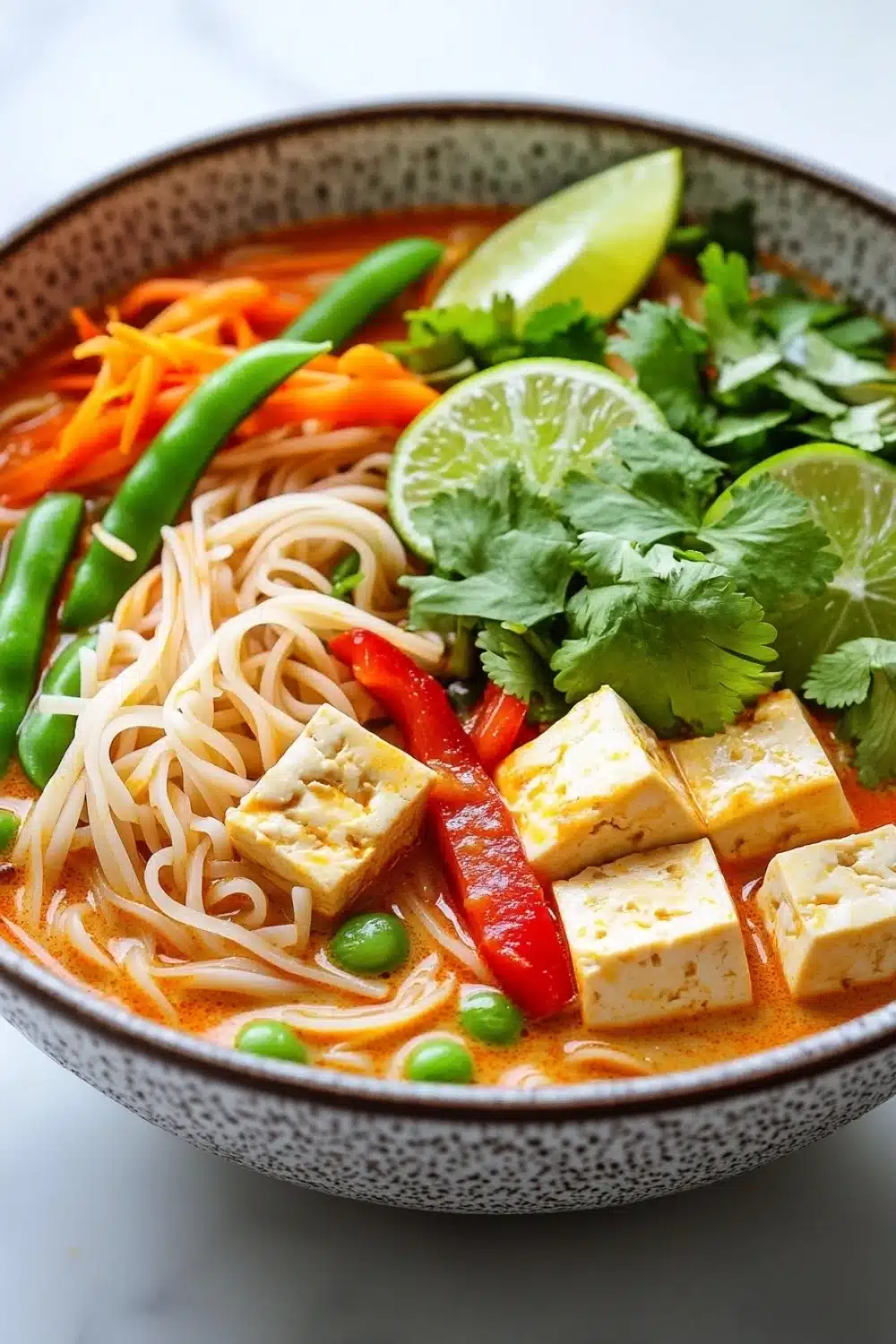
Heat up your soul.
There’s something hypnotic about the way red curry paste crackles in hot oil—aroma swirling, filling the kitchen with promise. I remember the first time I tossed tofu into a bubbling pot of Thai red curry broth. No fancy tricks, just fresh ginger, garlic, and a splash of coconut milk turning simple ingredients into a bowl of comfort that punches above its weight.
The rice noodles soak up that spicy, creamy broth like a hungry sponge, while crisp veggies add that perfect snap. The tofu? Silky but firm, soaking in the curry’s boldness with every simmer. This isn’t just soup; it’s an experience—nourishing, fiery, and packed with layers that keep you coming back for more.
Ready to dive into a bowl that’s as much about flavor as it is about soul? Let’s get cooking.
For a delicious twist, try our thai red curry noodle soup with tofu that’s packed with bold flavors and silky tofu magic.
Real-Life Perks of Cooking Thai Red Curry Noodle Soup with Tofu
- Quick weeknight fix — ready from start to finish in just 35 minutes when time’s tight.
- Plant-powered protein punch thanks to tofu holding down the fort without any meat.
- Flexible flavor play: tweak the chili flakes and soy sauce to suit your heat level or salt preference.
- One-pot wonder keeps cleanup minimal — noodle prep aside, the curry simmers all in a single pot.
- Perfect for meal prep — soup and noodles stored separately means lunch stays fresh, no soggy noodle nightmares.
Thai Red Curry Noodle Soup with Tofu
A flavorful and comforting Thai red curry noodle soup featuring silky tofu, rice noodles, and vibrant vegetables simmered in a rich coconut curry broth.
- Prep Time: 15 minutes
- Cook Time: 20 minutes
- Total Time: 35 minutes
- Yield: 4
Ingredients
8 ounces rice noodles
1 tablespoon vegetable oil
3 tablespoons Thai red curry paste
1 tablespoon grated fresh ginger
3 cloves garlic, minced
4 cups vegetable broth
1 can (14 ounces) coconut milk
1 tablespoon soy sauce
1 tablespoon brown sugar
1 red bell pepper, thinly sliced
1 cup snap peas, trimmed
1 cup shredded carrots
14 ounces firm tofu, drained and cut into 1-inch cubes
2 green onions, thinly sliced
1/4 cup fresh cilantro leaves
1 lime, cut into wedges
1 teaspoon chili flakes (optional)
Instructions
Cook the rice noodles according to package instructions until al dente. Drain and set aside.
Heat the vegetable oil in a large pot over medium heat.
Add the red curry paste, grated ginger, and minced garlic to the pot. Cook, stirring constantly, for 1-2 minutes until fragrant.
Pour in the vegetable broth and coconut milk, stirring to combine with the curry paste.
Add the soy sauce and brown sugar to the pot. Stir well.
Bring the soup to a gentle boil, then reduce heat to a simmer.
Add the sliced red bell pepper, snap peas, and shredded carrots to the pot. Simmer for 5 minutes until the vegetables are tender but still crisp.
Gently add the tofu cubes to the soup and simmer for an additional 3-4 minutes to heat through.
Divide the cooked rice noodles among four bowls.
Ladle the hot curry soup with tofu and vegetables over the noodles.
Garnish each bowl with sliced green onions, fresh cilantro leaves, and a lime wedge.
Sprinkle chili flakes on top if desired for extra heat.
Serve immediately and enjoy your Thai red curry noodle soup with tofu.
Explore more:
Dinner Recipes
Mastering Thai Red Curry Noodle Soup with Tofu
The Noodle Game: Why Rice Noodles Matter
Rice noodles aren’t just a base—they bring a texture that’s on-point with that silky, slippery vibe. Using anything heavier, like egg noodles, can throw off the whole balance, turning this light soup into a stodgy stew. I learned this the hard way once, trying to rush dinner with whatever was in the pantry. Big mistake. Rice noodles soak up the curry broth just enough without turning into a soggy mess. Pro tip: cook them al dente, rinse under cold water to stop cooking, then add to bowls just before the hot soup. This prevents the dreaded noodle mush that ruins the whole experience.
The Why Behind Simmering, Not Boiling—Curry Chemistry 101
Here’s the scoop: boiling a coconut curry broth aggressively is a one-way ticket to breaking the coconut milk’s fats. The broth separates—oil floating on top and a grainy texture underneath. Gross, right? To keep that creamy consistency, go low and slow with your heat. After adding broth and coconut milk, bring it up to a gentle boil, then reduce to a simmer. This slow simmer lets the flavors marry without turning your curry into a greasy puddle. Plus, vegetables stay crisp-tender, tofu warms through without falling apart, and the whole bowl sings in harmony. Trust me—rushing this step is like trying to put lipstick on a pig.
Fixing the Common Curry Soup Snafus—Quick Hacks
Ever ended up with bland curry? It happens. A little soy sauce and brown sugar are your baseline umami & sweet players, but sometimes you need to amp it up. Add a splash of fish sauce if you’re not vegan, or a pinch more chili flakes to wake up your taste buds. Too thin? Simmer a bit longer or toss in a spoonful of peanut butter for thickness and a subtle nutty kick. And if tofu feels like a boring sponge, give it a quick pan-fry before tossing it in—crispy edges add serious character. Lastly, lime wedges aren’t just eye candy—they brighten everything up with the zing that punches through the richness like a champ.
FAQ: Thai Red Curry Noodle Soup with Tofu
Q1: Can I use a different protein instead of tofu?
Absolutely! Chicken, shrimp, or even tempeh can swap in nicely. Just adjust cooking times accordingly—shrimp cooks faster, chicken takes a bit longer.
Q2: Is this soup spicy?
It depends on your curry paste and whether you add chili flakes. Thai red curry paste usually brings a medium heat level, but you can dial it down or up easily by adjusting the paste amount and skipping or adding chili flakes.
Q3: Can I make this gluten-free?
Yes! Just make sure your soy sauce is gluten-free or use tamari instead. Everything else in the recipe is naturally gluten-free.
Q4: How long can I store the leftover soup?
Store leftover soup in an airtight container in the fridge for up to 3 days. Pro tip: Keep the noodles separate to avoid that mushy noodle nightmare. Reheat gently on the stove, stirring often.
Q5: Do I have to soak the noodles before cooking?
Nope! Rice noodles usually just need a quick boil or soak in hot water per package directions. Soaking ahead helps if you want to prep in advance and avoid clumps.