
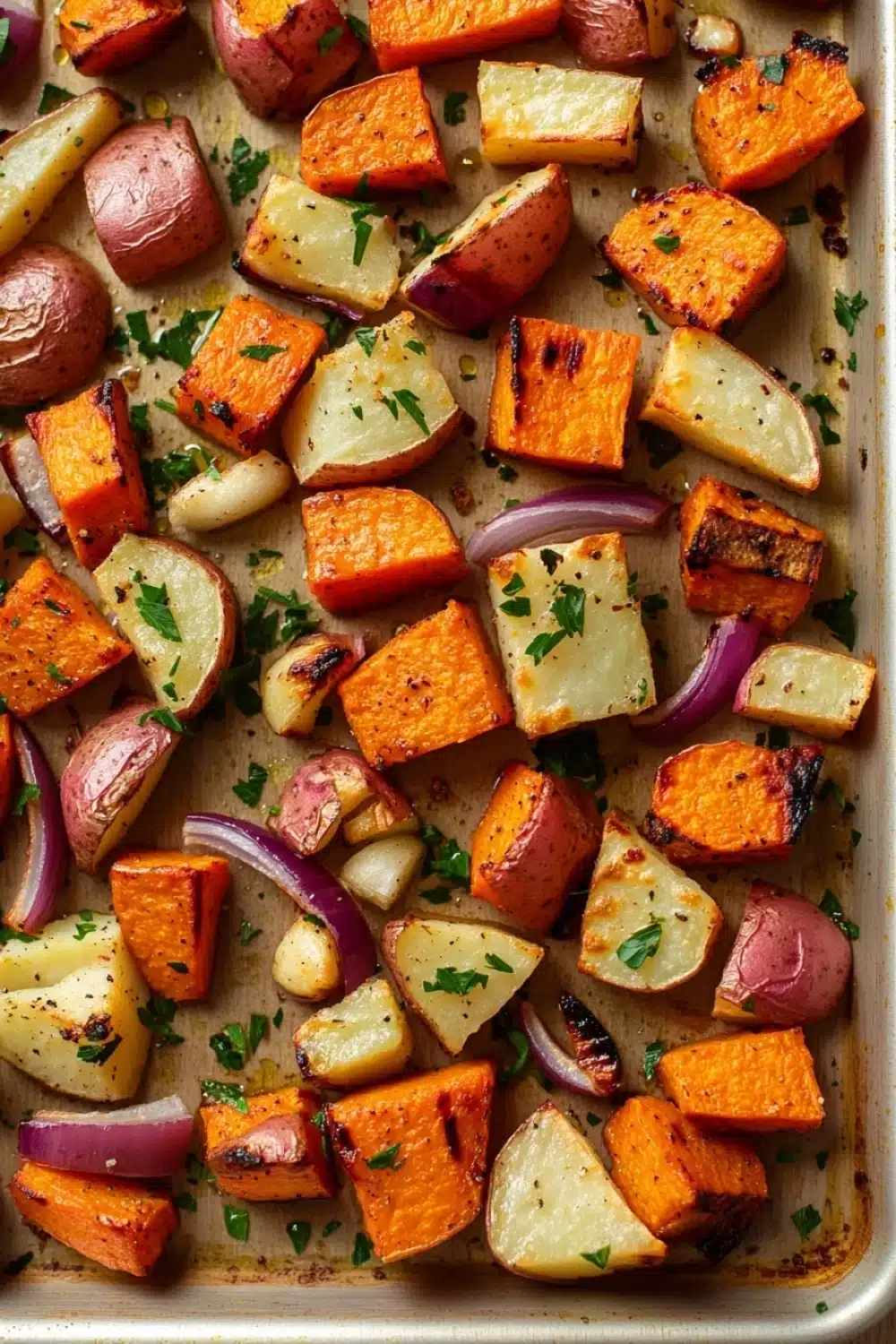
Root veggies done right.
There’s something about the way a tray of root vegetables crackles in the oven—the scent of caramelizing edges mingling with the sharp tang of lemon and the earthiness of oregano. It’s the kind of aroma that pulls you into the kitchen, makes you forget the clock and just savor the moment. Greek roasted root vegetables aren’t just a side—they’re a little celebration of hearty, grounded flavors that wrap around you like a warm blanket.
My first time roasting them, I tossed carrots, parsnips, and potatoes with a splash of olive oil and a sprinkle of spices, thinking it’d be a simple side. But the way thyme and cumin teamed up with garlic and lemon juice? Instant kitchen magic. They crisp. They char. They soak up every bit of flavor, hitting that perfect sweet-and-savory groove. It’s like your veggies got a Mediterranean makeover—no frou-frou, just honest-to-goodness taste.
This dish is an easy win whether you’re feeding a crowd or just treating yourself to something real, rustic, and unapologetically tasty.
For a cozy one-pan dinner, try the Apple Chicken Sausage and Harvest Vegetable Skillet: A Cozy One-Pan Dinner that pairs wonderfully with Greek roasted root vegetables.
Real Life Benefits of Greek Roasted Root Vegetables
- Hands-off cooking—prep in 15, then let the oven do the heavy lifting. Perfect for busy weeknights or lazy weekends.
- Root veggies pack a punch of natural sweetness and earthy flavor that makes every bite a satisfying nosh without extra calories.
- Loaded with fiber and antioxidants, this dish keeps your gut happy and your energy steady—no mid-afternoon crash here.
- The vibrant combo of herbs and lemon juice wakes up your taste buds, making it a slam-dunk side for grilled meats or a solid veggie main.
- Leftovers reheat like a charm and work well tossed into salads or even scooped onto pita for a quick, wholesome lunch on the go.
Greek Roasted Root Vegetables
A flavorful medley of roasted root vegetables seasoned with classic Greek herbs and spices, perfect as a hearty side dish or a vegetarian main.
- Prep Time: 15 minutes
- Cook Time: 45 minutes
- Total Time: 1 hour
- Yield: 6
Ingredients
3 medium carrots, peeled and cut into 1-inch chunks
2 medium parsnips, peeled and cut into 1-inch chunks
2 medium red potatoes, cut into 1-inch chunks
1 medium sweet potato, peeled and cut into 1-inch chunks
1 medium red onion, peeled and cut into wedges
4 cloves garlic, minced
3 tablespoons extra virgin olive oil
1 tablespoon fresh lemon juice
1 tablespoon dried oregano
1 teaspoon dried thyme
1 teaspoon ground cumin
1 teaspoon sea salt
1/2 teaspoon freshly ground black pepper
2 tablespoons chopped fresh parsley
Instructions
Preheat the oven to 425°F (220°C).
In a large mixing bowl, combine the carrots, parsnips, red potatoes, sweet potato, and red onion.
Add the minced garlic, extra virgin olive oil, and fresh lemon juice to the bowl.
Sprinkle the dried oregano, dried thyme, ground cumin, sea salt, and black pepper over the vegetables.
Toss all ingredients together until the vegetables are evenly coated with the oil and seasonings.
Spread the vegetables in a single layer on a large baking sheet lined with parchment paper.
Roast in the preheated oven for 40 to 45 minutes, stirring once halfway through, until the vegetables are tender and golden brown on the edges.
Remove from the oven and transfer to a serving dish.
Sprinkle the chopped fresh parsley over the roasted vegetables before serving.
Explore more:
Dinner Recipes
Greek Roasted Root Vegetables: Mastering the Art of Simple, Bold Flavors
The Swap Game: Rethinking Your Root Lineup
Think you’re locked into carrots and parsnips? Nah. The beauty of this dish is its flexibility—blend in turnips, rutabagas, or even beets if you’re feeling feisty. But here’s the kicker: stick to roughly the same size chunks to keep the roast evenly timed. That’s the secret sauce to avoid some veggies turning into mush while others are still playing hard-to-get undercooked. I once threw in some celeriac when my pantry looked bare—game changer, added a subtle earthy bottom note that didn’t scream for attention but made the whole plate hum.
Pro tip: sweet potatoes bring a caramelized pop that cuts through the dry herbs, while red potatoes keep things starchy and satisfying. If you’re eyeing a leaner version, swap olive oil for avocado oil; it’s got a higher smoke point and stays chill under that 425°F heat.
Why That High Heat Means Business
Okay, roasting at 425°F isn’t just a random number snatched from the ether. This temp is where magic meets science:
- Caramelization kicks in early—think of it as the Maillard reaction’s party, where sugars get all toasty and browned, lending a wicked depth.
- The high heat rapidly evaporates surface moisture, ensuring the edges crisp up instead of stewing in their own juices.
- It also speeds up cooking without turning those delicate herbs into sad, limp shadows of themselves.
Personally, I learned this the hard way. Low and slow roasting? Sure, sounds safe but ends up soggy and bland; you lose that crackle, that slight char—things that make you say, “Damn, this isn’t just any side dish.” Plus, stirring halfway through is non-negotiable. That’s when you flip the script—flipping veggies around to get even browning, no one likes a one-sided roast.
When Roasted Roots Go Rogue: Fixing the Usual Suspects
Burnt edges? Throwing a tantrum because your veggies won’t soften? Here’s the quick and dirty:
— Burnt edges usually mean your oven rack is too close to the heating element. Move it down a notch. Also, toss veggies too close together and they steam instead of roast—spread out like you’re sunbathing on a Mediterranean beach.
— Tough veggies? Either chunks are too big or you skipped the toss mid-cook. Cutting everything uniform is the baseline. Don’t be lazy about stirring once to redistribute heat.
— Flavor flatlining? Garlic and lemon juice are your friends, but add them too early and they’ll burn or lose zing. Toss garlic in before roasting, but reserve lemon juice for the finish to keep its punch alive.
Last time I botched a batch, I saved it by whipping up a quick tahini drizzle—sometimes a little extra love on top turns a fumble into a winner.
Greek Roasted Root Vegetables – FAQ
Q: Can I use frozen root vegetables for this recipe?
Yes, but fresh is best. Frozen veggies might release extra water, making roasting less crisp and more steamy. If using frozen, pat them dry and reduce cooking time slightly.
Q: What’s the key to getting those crispy edges?
High oven heat (425°F) and spreading veggies out in a single layer are crucial. Overcrowding the pan traps steam and kills the crunch factor. Toss halfway through to brown evenly.
Q: Can I make this vegan?
Absolutely! This recipe is naturally vegan since it’s just veggies, olive oil, herbs, and spices. No animal products involved, so you’re good to go.
Q: How long will leftovers last?
Store in an airtight container in the fridge, and they’ll keep for up to 4 days. Reheat in the oven at 350°F for 10-15 minutes to bring back their crispiness without turning mushy.
Q: Could I add other veggies?
Go wild, but stick to root veggies for best texture. Beets, sweet onions, or rutabagas would play nice. Avoid watery greens or non-roots—they’ll turn to mush in roasting time.