
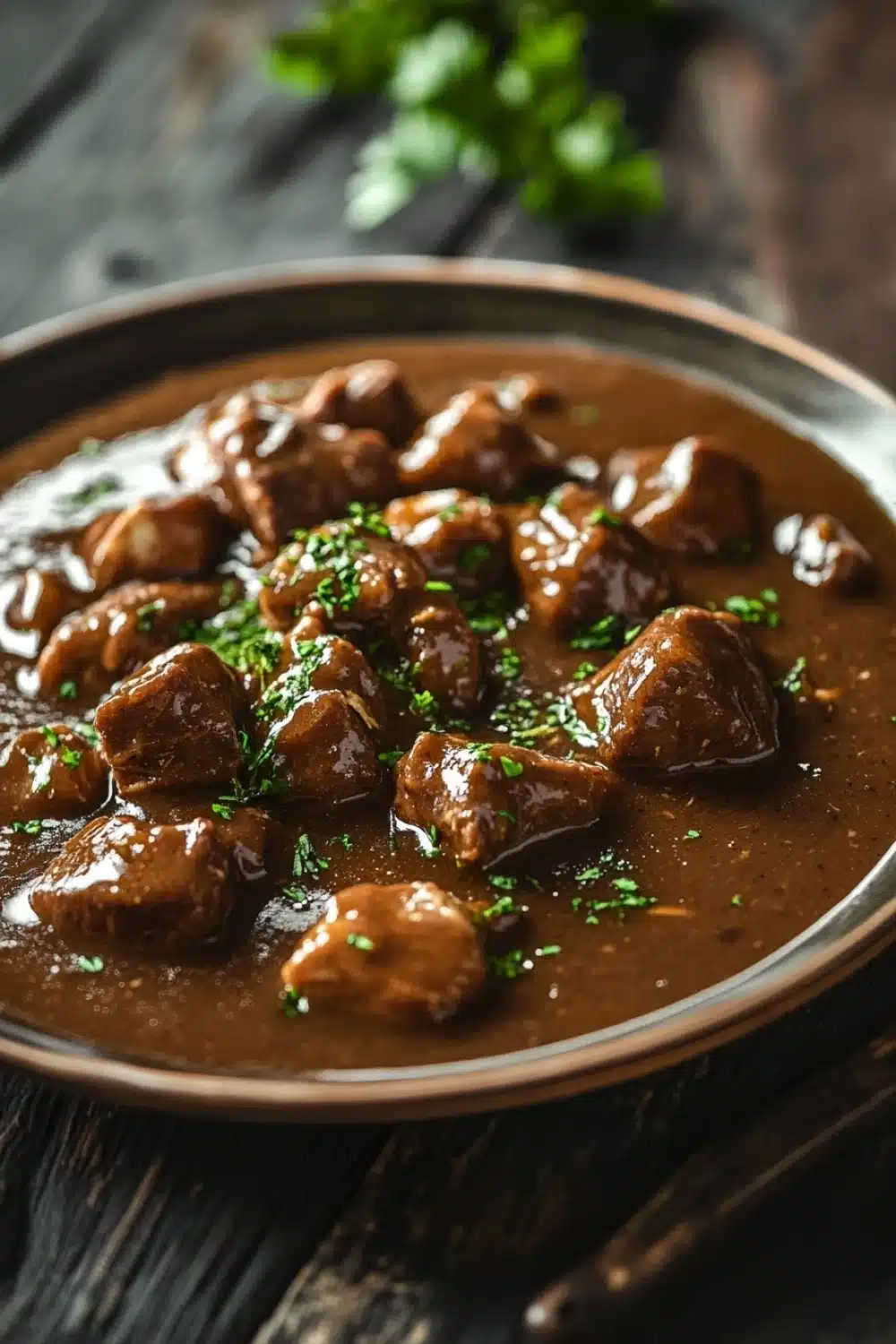
Gravy that grabs you by the collar.
There’s something about the sizzle and swirl of butter melting into a golden roux that sets the stage for magic—or at least a meal that won’t quit. When I first whisked together this beef chicken gravy, it wasn’t just about flavor; it was about nailing that perfect balance between hearty boldness and subtle brightness. The beef broth brings the punch, the chicken broth smooths it out, and the little extras—onion powder, thyme, and a splash of Worcestershire—tie it all together like a well-rehearsed band.
Cooking this gravy feels like a quick detour from the usual dinner grind. It thickens with patience, simmering gently, coaxing out layers of flavor that cling to mashed potatoes or roasted meat like a loyal sidekick. Every stir is a step closer to that luscious, velvety texture that begs for seconds.
This is no run-of-the-mill sauce—it’s the kind of gravy that makes you want to slap the table and say, “Now that’s what I call comfort food!” Trust me, your taste buds will be singing the blues in a good way.
If you’re looking for a delicious twist on classic comfort food, check out our Hearty Beef Rice Veggie Casserole for Comforting Dinners that perfectly combines beef, chicken, and savory gravy.
Real-Life Wins with Beef and Chicken Gravy
- Transforms simple mashed potatoes into a serious comfort-food moment—just one pour and you’re in gravy heaven.
- Mixing beef and chicken broths? It’s like a flavor tag team: rich meets light, no one gets knocked out.
- Quick to whip up—30 minutes tops. Perfect for those ‘I forgot the sauce’ dinner saves.
- Leftovers? No sweat. This gravy reheats like a charm, so your next meal feels just as boss-level.
- Sprinkled with thyme and Worcestershire sauce, it isn’t basic gravy—it’s got character, the kind that makes your roasted veggies stand up and salute.
Beef and Chicken Gravy

A rich and flavorful beef and chicken gravy perfect for pouring over mashed potatoes, roasted meats, or vegetables. This gravy combines the savory depth of beef broth with the lighter notes of chicken broth, thickened to a smooth, luscious consistency.
- Prep Time: 10 minutes
- Cook Time: 20 minutes
- Total Time: 30 minutes
- Yield: 6
Ingredients
2 tablespoons unsalted butter
2 tablespoons all-purpose flour
1 cup beef broth
1 cup chicken broth
1/2 teaspoon onion powder
1/2 teaspoon garlic powder
1/4 teaspoon black pepper
1/4 teaspoon salt
1 teaspoon Worcestershire sauce
1/2 teaspoon dried thyme
Instructions
In a medium saucepan, melt the unsalted butter over medium heat until fully melted and bubbling.
Whisk in the all-purpose flour to form a smooth roux. Continue whisking constantly for about 2 to 3 minutes until the mixture turns a light golden brown, indicating the flour is cooked.
Gradually pour in the beef broth while whisking continuously to prevent lumps from forming.
Add the chicken broth slowly while continuing to whisk until the mixture is smooth and combined.
Stir in the onion powder, garlic powder, black pepper, salt, Worcestershire sauce, and dried thyme.
Bring the gravy to a gentle simmer and cook for 10 to 15 minutes, stirring occasionally, until it thickens to your desired consistency.
Taste and adjust seasoning with additional salt or pepper if needed.
Remove from heat and serve warm over your favorite dishes.
Explore more:
Dinner Recipes
Mastering Beef and Chicken Gravy: Tricks, Twists, and Troubleshooting
The Roux Riddle: Why Butter and Flour Matter
Ever wondered why gravies start with a roux? This buttery flour paste is the backbone of your sauce—the glue that binds broth and flavor into a velvety pour. I remember my early kitchen flubs where the roux either burned to a bitter mess or turned into a lumpy nightmare. The trick? Patience and a steady whisk. Melt the butter fully, but don’t let it brown too much—aim for a gentle bubble. Then stir in your flour and keep at it for a couple of minutes until it blushes a light golden hue. This little dance cooks out the raw flour taste and sets you up for a gravy without any starchy grit. Skipping or rushing this step is how rookie cooks end up with that paste-like sludge or grainy disappointment on their plate.
Swapping Broths: The Flavor Tug-of-War
Using both beef and chicken broth? That’s your gravy’s secret handshake—balancing depth with brightness. Beef broth brings the umami punch, the kind that makes mashed potatoes sing with every bite. Chicken broth, lighter and less assertive, softens that boldness, keeping the sauce from tipping too far into heavy territory. If you’ve only got one on hand, don’t sweat it. Just double down on seasoning—maybe a splash more Worcestershire or a pinch of smoked paprika—and adjust as you go. Need a vegetarian take? Mushroom broth or a rich vegetable stock can fill in, but be prepared to tweak your herbs and spices, because those broths bring a whole new vibe. It’s all about knowing your base and letting your taste buds lead the way.
Fixing the Gravy Glitches: Lumps, Thickness, and Bland Bones
Lumps? They’re the bane of gravy makers everywhere. First off—don’t dump broth all at once. Gradual whisking is your armor. But if lumps sneak in despite your best efforts, strain the gravy through a fine mesh or grab a stick blender and blitz until silky smooth. Too thick? No panic—thin it with a splash of warm broth or even water, stirring gently until you hit the sweet spot. Bland gravy? That’s usually a seasoning steal. Worcestershire sauce is your secret weapon, adding that elusive tang. Don’t shy away from salt and fresh black pepper at the finish line—sometimes a pinch more wakes the whole thing up. And hey, a little dried thyme isn’t just decoration; it’s the herb that ties the meaty and herby notes together like a pro conductor.
Beef and Chicken Gravy FAQ
- Can I make this gravy ahead of time?
- Absolutely. You can prepare this gravy a day ahead. Just keep it chilled and reheat gently before serving. It actually tastes better when the flavors have had time to mingle.
- Is it gluten-free?
- No, because of the all-purpose flour used to thicken it. To make it gluten-free, swap the flour with cornstarch or a gluten-free flour blend.
- What’s the best way to avoid lumps?
- Whisk continuously while adding the broths slowly. This step is the linchpin — no one wants a clumpy gravy. Also, make sure your roux is cooked just right before adding the liquid.
- Can I use this gravy for other meats?
- For sure! It pairs wonderfully with roast beef, turkey, pork chops, or even spooned over mashed potatoes or roasted veggies.
- How thick will this gravy get?
- It thickens to a smooth, pourable consistency after simmering about 10 to 15 minutes. If it’s too thick, loosen it with a splash of broth. Too thin? Let it simmer a bit longer—patience pays off.