
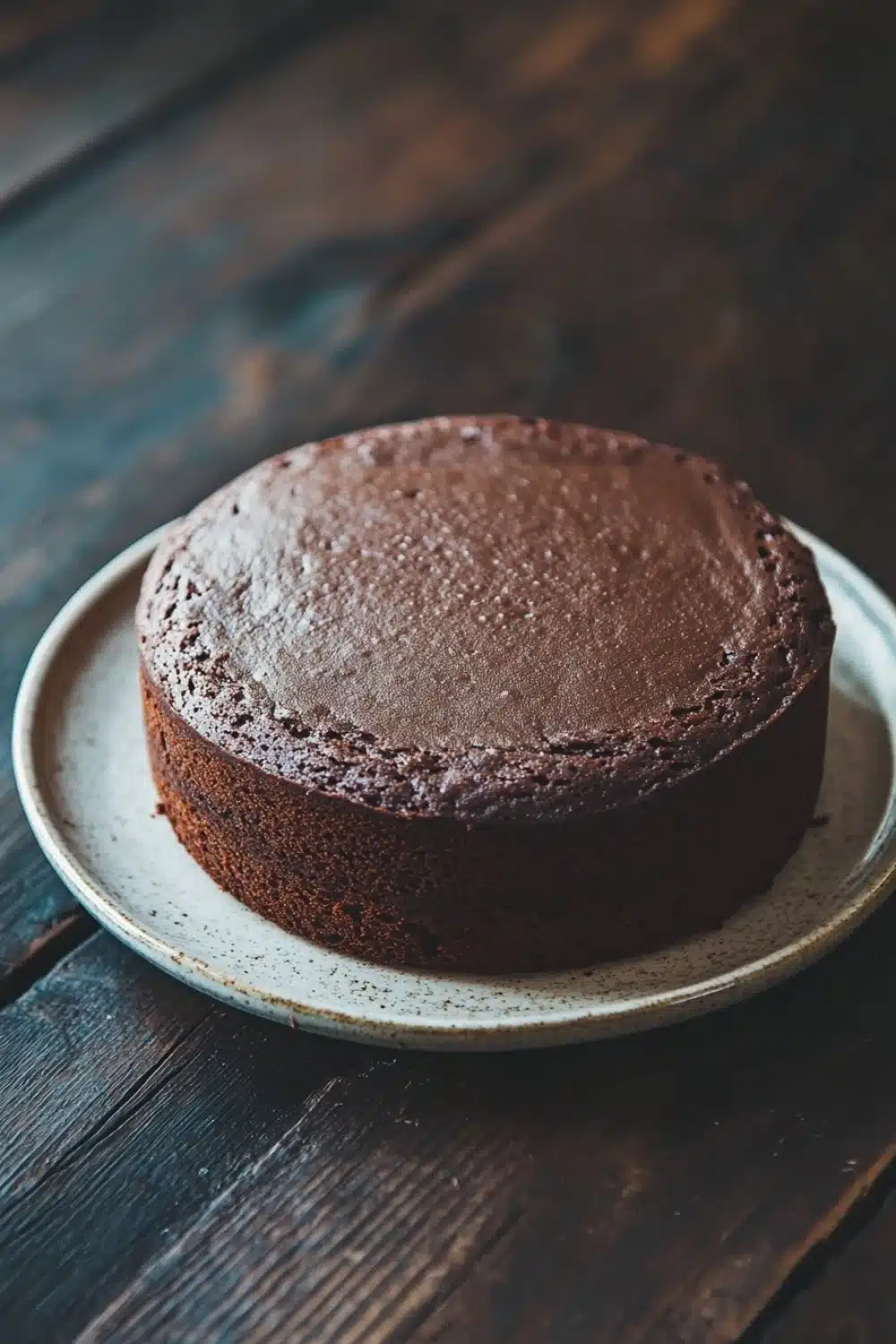
Chocolate cake—no frills.
There’s a certain magic in a chocolate cake stripped down to its bare essentials. I remember the first time I baked this cake without a lick of icing—it felt like breaking the rules, but in the best way. The kitchen filled with that deep, cocoa scent, promising something earthy and soulful. No sugary glaze to mask the real deal here.
This cake doesn’t just sit there looking pretty; it commands attention with its tender crumb and rich, bittersweet punch. The batter is surprisingly thin—don’t sweat it, that’s part of the game. Once baked, the crumb is moist but firm enough to hold its own. It’s the kind of cake that pairs beautifully with a steaming cup of coffee or a dollop of whipped cream, but stands tall on its own, too.
In a world obsessed with over-the-top desserts, this chocolate cake no icing is a quiet rebel. It’s straightforward, honest, and downright addictive. Trust me—you’ll want to keep this recipe in your back pocket for those days when you crave chocolate without the fuss.
If you’re looking to switch things up from a classic chocolate cake no icing, check out our guide on Crafting the Perfect Lemon Cake Pop Design: A Sweet Art to Savor for a fresh and delightful treat.
Real Life Benefits of Classic Chocolate Cake Without Icing
- Quick prep and baking—ready to enjoy in under an hour when time’s tight.
- No frosting fuss means it’s less messy and perfect for kids who hate sticky fingers.
- Moist and tender crumb that stands strong alone or as a versatile base for fruit, nuts, or a quick dusting of powdered sugar.
- Simple pantry staples only—no need for fancy ingredients or extra runs to the store.
- Freezable and keeps well, making it a go-to option for last-minute cravings or unexpected guests.
Classic Chocolate Cake Without Icing
A rich and moist chocolate cake that is perfect on its own without any icing. This simple recipe delivers deep chocolate flavor and a tender crumb, ideal for those who prefer their cake plain or want a versatile base for other toppings.
- Prep Time: 15 minutes
- Cook Time: 35 minutes
- Total Time: 50 minutes
- Yield: 8
Ingredients
1 and 3/4 cups (220 grams) all-purpose flour
3/4 cup (65 grams) unsweetened cocoa powder
2 cups (400 grams) granulated sugar
1 and 1/2 teaspoons baking powder
1 and 1/2 teaspoons baking soda
1 teaspoon salt
2 large eggs
1 cup (240 ml) whole milk
1/2 cup (120 ml) vegetable oil
2 teaspoons pure vanilla extract
1 cup (240 ml) boiling water
Instructions
Preheat your oven to 350°F (175°C). Grease and flour a 9×13 inch baking pan or two 9-inch round cake pans.
In a large mixing bowl, sift together the all-purpose flour, unsweetened cocoa powder, granulated sugar, baking powder, baking soda, and salt.
Add the eggs, whole milk, vegetable oil, and vanilla extract to the dry ingredients. Beat on medium speed with an electric mixer until well combined and smooth, about 2 minutes.
Carefully stir in the boiling water by hand. The batter will be thin; this is normal.
Pour the batter evenly into the prepared pan(s).
Bake in the preheated oven for 30 to 35 minutes, or until a toothpick inserted into the center comes out clean.
Remove the cake from the oven and allow it to cool in the pan for 10 minutes.
Transfer the cake to a wire rack to cool completely before serving.
Explore more:
Breakfast Recipes
Mastering Classic Chocolate Cake Without Icing
The Secret to That Tender Crumb
Ever wonder why some chocolate cakes end up dry and crumbly? It’s all about balance—and here, the combo of vegetable oil and boiling water is the backstage pass. Oil keeps things moist far better than butter because it stays liquid at room temp, soaking into the crumb and keeping it supple rather than stiff. Meanwhile, that boiling water isn’t just a random splash; it activates the cocoa powder, unlocking its deep, earthy flavors that otherwise stay shy. This technique creates a batter so thin it almost feels like you’re cheating—but trust me, that’s the magic. I’ve seen plenty of bakers freak out at the runny vibe, but don’t sweat it. Pour it in, bake it up, and your cake will come out tender and devilishly chocolate-heavy, no dry patches in sight.
Ingredient Swaps That Don’t Steal the Show
Flour: Stick to all-purpose—cake flour will make it too delicate, and bread flour just tough. Cocoa powder? Go natural and unsweetened. Dutch-processed is fine but changes acidity levels, so you’ll need to tweak the leaveners—more hassle than it’s worth here. Sugar is straightforward—granulated all the way, because brown sugar can throw off the texture with extra moisture and a molasses hint, which this recipe doesn’t call for.
Milk can be subbed with buttermilk if you like a slight tang, but remember—it’ll react differently with baking soda and powder. I once tried almond milk here; the cake was lighter but lost some of that rich chocolate depth. Vegetable oil is king; olive or coconut oil will add weird flavor notes, so avoid unless you’re aiming for an all-new spin.
Eggs? No shortcuts. They’re the glue, and messing with size or number risks a dry cake or one that doesn’t rise right.
Fixing Cake Fails Like a Pro
Underbaked? You’ll know by the gooey center and that stubborn toothpick. No shame—pop it back in the oven for 5–10 minutes but keep a hawk’s eye on it. Overbaked? Tough luck—adding syrup or brushing with simple syrup is your best bet to rescue moisture.
Dense or flat? Check your leaveners’ freshness. Toss baking powder and soda if they’re old; they lose oomph. Also, don’t overmix once you add boiling water—the batter’s fragile, and beating too hard knocks out air.
Cracks on top? Usually oven temperature too high or pan placement off-center. Rotate pans midway through baking, and consider lowering your oven by 10°F.
And hey, if your cake sinks in the middle, it means it wasn’t baked long enough or was jarred by opening the oven door too soon. Learn from my rookie days—no peek till 25 minutes in!
Classic Chocolate Cake Without Icing: FAQ
- Can I use this recipe for cupcakes?
- Absolutely! Just adjust the baking time to about 18-22 minutes and keep an eye on them. Cupcakes bake faster, so a toothpick test is your best buddy here.
- Is the cake really moist without icing?
- Yes. The oil and boiling water combo keeps it tender and moist. No frosting needed to avoid the dreaded dry crumb—this cake stands tall all on its own.
- Can I substitute the vegetable oil with butter?
- You can, but it’ll change the texture slightly. Butter will make it a bit denser and add a richer flavor. Melt it before mixing to keep the batter smooth.
- Why is boiling water added to the batter?
- Good question. The boiling water intensifies the cocoa flavor and helps dissolve the sugar and cocoa powder evenly. That thin batter stage? Totally normal. It’s the secret to a moist, tender crumb.
- How should I store leftovers?
- Wrap it tightly with plastic wrap or an airtight container and keep it at room temp for up to 3 days. Want to keep it longer? Freeze it wrapped in plastic and foil for up to 3 months. Just thaw before serving—you won’t lose that fresh-baked vibe.