
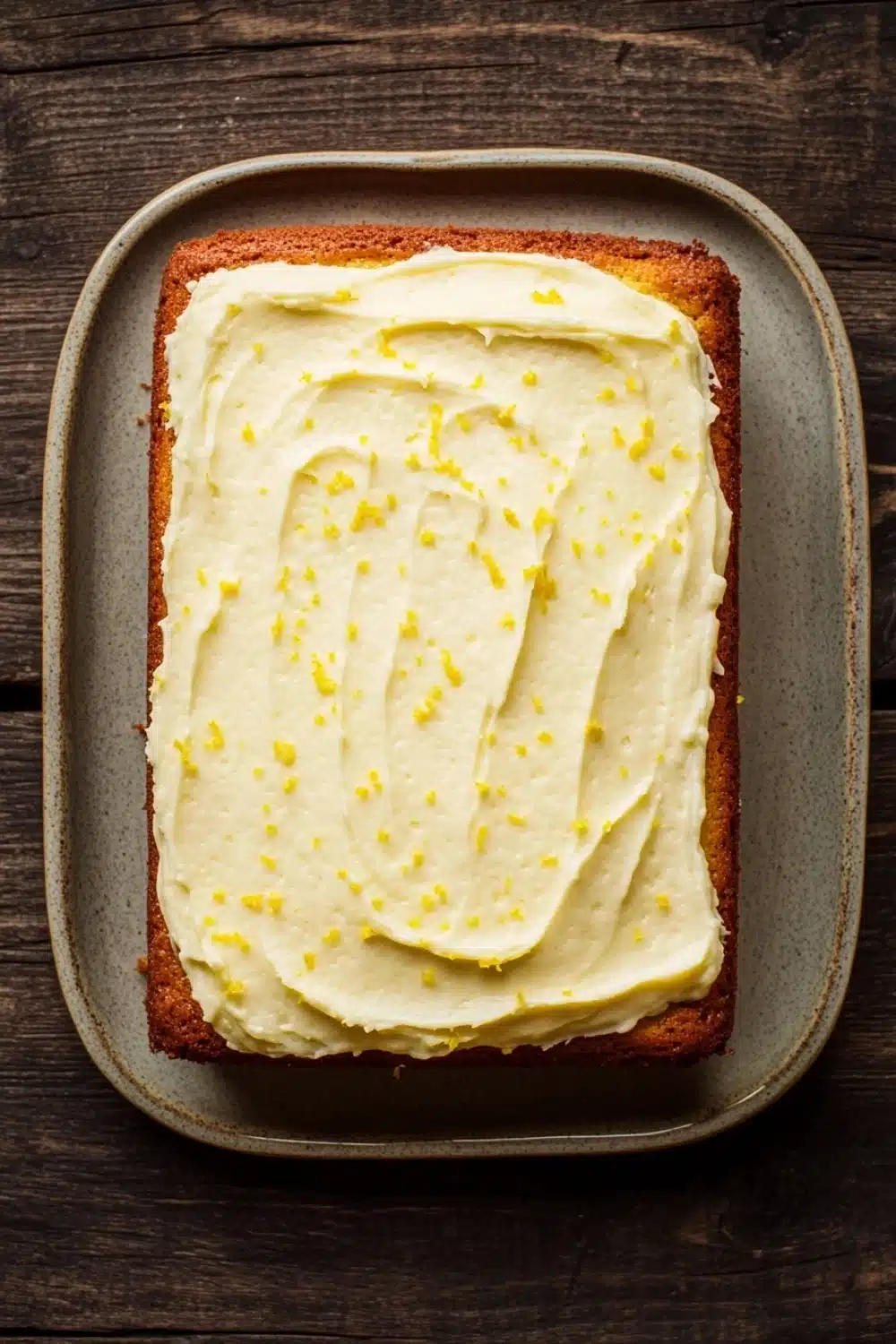
Sunshine in a pan.
There’s something almost hypnotic about the way a 9 x 13 lemon cake bakes in the oven. The kitchen fills with that sharp, citrusy aroma that instantly cuts through the humdrum of daily routine—like a bright jolt of energy on a sluggish afternoon. The batter, silky and pale, sings with fresh lemon zest and juice, promising the kind of tang that makes your taste buds sit up and take notice.
Baking this cake isn’t just about following a recipe; it’s about locking in that perfect balance between moist crumb and zesty punch. I remember the first time I whipped one up—thinking it would be just another dessert. Nope. It became the star of the show, vanishing slice by slice at the family table. The glaze, light and barely-there, trickles down the sides, making every forkful a little sticky, a little sweet, and entirely addictive.
Ready to get your hands lemony? Let’s dive in and bring some sunshine to your kitchen with a 9 x 13 lemon cake that’s anything but ordinary.
If you’re looking for a delicious dessert, try our 9 x 13 lemon cake that’s perfect for any gathering.
Why You’ll Keep Coming Back to This 9 x 13 Lemon Cake
- Whips up in under an hour—perfect for last-minute cravings or sudden get-togethers.
- Bright, punchy lemon flavor that cuts through the usual dessert heaviness—no one will guess it’s this easy.
- Feeds a crowd without the fuss; a single pan serves a dozen hungry folks without breaking a sweat.
- Flexible storage options mean you can batch bake on Sunday and enjoy tangy goodness all week long.
- Glaze drizzled on while warm sinks right in, giving you that naked-cake vibe, but with a lemony lick that’s anything but basic.
9 x 13 Lemon Cake

A moist and tangy lemon cake baked in a 9 x 13-inch pan, topped with a light lemon glaze. Perfect for gatherings or a refreshing dessert.
- Prep Time: 15 minutes
- Cook Time: 35 minutes
- Total Time: 50 minutes
- Yield: 12
Ingredients
2 1/2 cups all-purpose flour
2 1/2 teaspoons baking powder
1/2 teaspoon salt
1 cup unsalted butter, softened
1 3/4 cups granulated sugar
4 large eggs
1 tablespoon lemon zest (from about 2 lemons)
1/4 cup fresh lemon juice
1 teaspoon pure vanilla extract
1 cup whole milk
1 1/2 cups powdered sugar
3 tablespoons fresh lemon juice
Instructions
Preheat the oven to 350°F (175°C). Grease and flour a 9 x 13-inch baking pan.
In a medium bowl, whisk together the all-purpose flour, baking powder, and salt. Set aside.
In a large bowl, using an electric mixer, beat the softened butter and granulated sugar together on medium speed until light and fluffy, about 3-4 minutes.
Add the eggs one at a time, beating well after each addition.
Mix in the lemon zest, fresh lemon juice, and vanilla extract until combined.
With the mixer on low speed, alternately add the flour mixture and the milk to the butter mixture, beginning and ending with the flour mixture. Mix just until combined; do not overmix.
Pour the batter evenly into the prepared 9 x 13-inch pan and smooth the top with a spatula.
Bake for 33 to 37 minutes, or until a toothpick inserted into the center comes out clean.
Remove the cake from the oven and allow it to cool in the pan for 15 minutes.
While the cake is cooling, prepare the lemon glaze by whisking together the powdered sugar and fresh lemon juice in a small bowl until smooth.
After the cake has cooled for 15 minutes, drizzle the lemon glaze evenly over the top.
Allow the cake to cool completely before slicing and serving.
Explore more:
Breakfast Recipes
Mastering the 9 x 13 Lemon Cake: Tricks, Tweaks, and Troubleshooting
The Secret to That Moist, Tangy Bite
Here’s the lowdown: the magic of this lemon cake lies in balancing moisture and acidity. The combo of whole milk and fresh lemon juice isn’t just a random pairing—it’s a tag team that keeps your crumb tender yet zip-zapped with zing. Skipping the milk or swapping it for water? Big no-no. Water lacks the fat content to keep things lush, and your cake will dry out faster than you can say “gone in a flash.” Also, I never skip the lemon zest. It’s the unsung hero—packed with oils that punch your cake’s flavor up a notch or two without adding extra liquid that might throw off the batter’s consistency.
Swap It Like a Pro: Ingredients Without Compromise
Butter’s king here, but what if you’re dairy-free or just out of butter? Grab equal parts coconut oil—solid, not melted—and toss it in. It’ll bring a subtle tropical undertone that can actually pair nicely with lemon’s brightness. Need to skip whole milk? Full-fat coconut milk or almond milk with a splash of lemon juice can work their way into the batter. But heads up—these swaps can shift the crumb texture and flavor, so don’t expect a spot-on clone. And about that sugar—granulated is best for this recipe to get that perfect crumb. Powdered sugar in the batter? Forget it. It messes with the structure and moisture balance.
Fixing the Flops: When the Cake Isn’t Quite Right
Ever pulled your cake out only to realize it’s dense as a brick or drying out? Here’s my go-to checklist:
- Too dense? You probably overmixed the batter. When flour hits the wet, gluten wakes up and tightens — which is great for bread, not cake. Mix just until you see the flour disappear.
- Dry edges? Your oven might be running hot or the pan’s too small. Try rotating the cake halfway through baking and check your oven thermometer. Also, greasing and flouring the pan properly keeps it from sticking yet lets the cake rise evenly.
- Glaze sliding off? The cake might be too warm when you drizzle the glaze. Patience! Let it cool at least 15 minutes—warm cake melts that sugary top faster than you can drizzle.
When it comes down to it, baking this lemon cake is a bit like surfing — you’ve gotta ride the wave just right, feel the batter’s texture, and know when to back off mixing or dial down the oven heat. Nail those, and you’re golden every time.
Lemon Cake FAQ — Your Zesty Questions Answered
Can I use lemon extract instead of fresh lemon juice?
Yes, you can swap fresh lemon juice for lemon extract, but use sparingly—about 1 teaspoon—to avoid overpowering the cake. The fresh juice adds brightness and tang that’s hard to beat.
What’s the secret to keeping this cake moist?
Don’t overmix the batter once you start adding the flour and milk. Overmixing can tighten the gluten, making the cake dense and dry. Also, using whole milk instead of skim helps keep it tender. The butter and sugar creamed until fluffy create a tender crumb.
Can I bake this in a different sized pan?
Technically yes, but results vary. A smaller pan means a thicker cake that needs more baking time; a larger one bakes faster and thinner. If you switch pans, watch it like a hawk and test with a toothpick often.
Do I have to use powdered sugar for the glaze?
Yep. Powdered sugar dissolves smoothly for that perfect drizzle. Granulated sugar won’t melt into a glaze—it’ll stay grainy and rough.
How long can I keep leftover cake?
Room temperature storage lasts 2 days tops before it starts losing its charm. Refrigerate up to 5 days if needed, but I always say eat it fresh. Freeze for up to 3 months if you want to stash some away for emergencies or unexpected guests.