
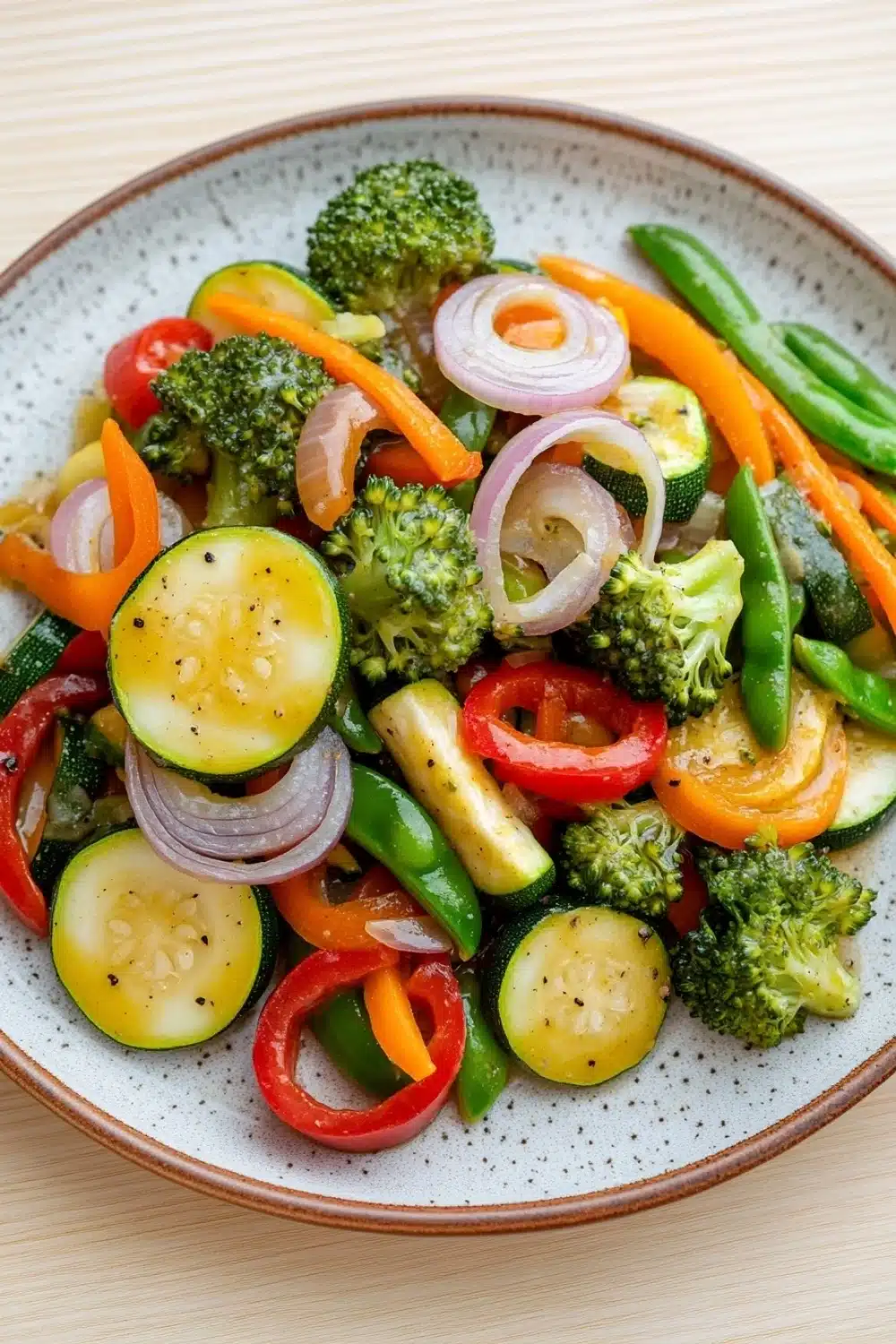
Kitchen’s alive. The sizzle starts before you even touch the skillet—an auditory wink that something good’s about to go down.
Picture this: vibrant veggies—crisp snap peas, bright bell peppers, and tender broccoli—dancing in a hot pan slicked with olive oil. I toss in minced garlic and onions that soften into a fragrant base, their aroma weaving through the air like a familiar tune you didn’t know you missed.
Sautéed vegetables in sauce aren’t just a side hustle. They’re the kind of dish that holds its own, a quick fix that hits the spot with layers of herbal notes from thyme and oregano, a slight kick from red pepper flakes, and a tangy splash of lemon juice that snaps your taste buds awake. There’s a rhythm here: quick sear, a steam under the lid, then a final glaze—each step a small magic trick that pulls it all together.
Trust me—once you’ve nailed this, your weeknight dinners will never be the same. This is real-deal, no-fluff cooking that’s fast, bright, and just a little bit addictive.
If you’re looking to try a delicious recipe with sauteed vegetables in sauce, check out our Quick & Crisp Air Fryer Shrimp and Vegetables in 22 Minutes for an easy and tasty meal.
Real-Life Perks of Sautéed Vegetables in Savory Sauce
- Whips up in 30 minutes flat — perfect for those frantic weeknights when the clock’s your enemy.
- All-in-one veggie hit: bell pepper, zucchini, broccoli, plus snap peas keep it colorful and crunchy, hitting your daily greens quota without fuss.
- Uses pantry staples like dried herbs and soy sauce, so you’re not running to the store mid-cook.
- Leftovers keep well for 3 days, making lunchbox assembly a total breeze.
- Flexible enough to be a light main or a rockstar side; toss in some protein and you’ve got a crowd-pleaser with zero drama.
Sautéed Vegetables in Savory Sauce
A quick and flavorful sautéed vegetable dish cooked in a savory sauce, perfect as a side or light main course.
- Prep Time: 15 minutes
- Cook Time: 15 minutes
- Total Time: 30 minutes
- Yield: 4
Ingredients
2 tablespoons olive oil
1 medium yellow onion, thinly sliced
2 cloves garlic, minced
1 medium red bell pepper, sliced into strips
1 medium zucchini, sliced into half-moons
1 medium carrot, thinly sliced
1 cup broccoli florets
1 cup snap peas, trimmed
1/2 teaspoon salt
1/4 teaspoon black pepper
1/2 teaspoon dried thyme
1/2 teaspoon dried oregano
1/4 teaspoon crushed red pepper flakes
1/4 cup vegetable broth
2 tablespoons soy sauce
1 tablespoon freshly squeezed lemon juice
Instructions
Heat the olive oil in a large skillet over medium heat.
Add the sliced onion and sauté for 3 minutes until translucent.
Add the minced garlic and cook for 30 seconds until fragrant.
Add the red bell pepper, zucchini, carrot, broccoli florets, and snap peas to the skillet.
Season the vegetables with salt, black pepper, dried thyme, dried oregano, and crushed red pepper flakes.
Stir to combine and cook for 5 minutes, stirring occasionally.
Pour in the vegetable broth and soy sauce, stirring to coat the vegetables evenly.
Cover the skillet and cook for an additional 5 minutes until the vegetables are tender but still crisp.
Remove the lid and cook for 2 more minutes to reduce the sauce slightly.
Remove from heat and stir in the lemon juice.
Serve immediately.
Explore more:
Dinner Recipes
Mastering Perfectly Sautéed Veggies in Savory Sauce
The Ingredient Shuffle: When to Swap and Why
Here’s the deal—veggies aren’t one-size-fits-all. If life throws you a curveball and you’re fresh out of snap peas, don’t sweat it. Green beans or asparagus make slick substitutes, bringing their own crunch and a hint of grassy brightness. Carrots can be swapped with parsnips, which add a subtle sweetness and earthiness that plays nicely with the thyme and oregano. Sometimes, zucchini might be mushy in the fridge; opt instead for yellow squash or even eggplant chunks—they soak up sauce like champs.
Olive oil? You can’t beat it for that gentle fruitiness, but if you want a nuttier vibe, try grapeseed or avocado oil. Soy sauce lends a salty umami punch, but tamari or coconut aminos are great for those avoiding gluten. The lemon juice at the end? It’s the kicker—never skip it. Lemon wakes the whole dish up, like a brisk slap to the senses, cutting through the richness and keeping the palate lively.
Why That Technique Matters: The Magic of Timing and Heat
Sautéing vegetables isn’t just tossing stuff in a pan and hoping for the best—that’s rookie hour. It’s about layering flavors and textures in a way that each bite tells a story. Start with onions first; their translucency signals the release of sweetness that forms the dish’s backbone. Garlic goes next, but just a hot second—overcooked garlic is bitter city, and no one wants a one-way ticket there.
Then the veggies plunge in. The trick? Stir occasionally but don’t babysit every second—let them sit long enough to get a bit of caramelized edge, that Maillard reaction magic, which amps up depth. Adding broth and soy sauce introduces moisture and salt, steaming the veggies gently inside a flavor bath instead of drowning them. Covering the skillet traps steam, speeding tender-crisp perfection—like a mini steam room for veggies. Removing the lid lets excess liquid evaporate, thickening the sauce slightly without turning it into a sad, soggy mess.
Flop Fixes: Common Sautéed Veggie Pitfalls and How to Dodge Them
Ever ended up with mushy, flavorless vegetables? Happens to the best of us. Here’s the lowdown:
- Soggy veggies: Too much liquid, too low heat. Fix by sautéing uncovered at the end to boil off excess water.
- Burnt garlic: Garlic should hit the pan last or with low heat; if charred, toss and start fresh.
- Bland sauce: Don’t skimp on seasoning—salt, soy sauce, and acid (lemon) are your holy trinity here. Taste as you go.
Pro tip—if your pan isn’t hot enough from the start, veggies stew rather than sauté. Crank up the heat, but keep stirring so nothing sticks. I once ruined a batch by overcrowding the pan—lesson learned: veggies need breathing room, or you get a watery mess.
Sautéed Vegetables in Savory Sauce FAQs
A1: Yes, you can swap in frozen vegetables if fresh ones aren’t handy. Just toss them in a bit earlier to let any excess moisture cook off, so your sauce doesn’t turn watery.
A2: Olive oil is my go-to for this dish because it adds a subtle fruitiness and handles medium heat well. If you want a neutral flavor, grapeseed or avocado oil also work great.
A3: Absolutely! This recipe is already plant-based—no hidden dairy or animal products here. Just double-check your soy sauce to ensure it’s vegan-friendly if that’s a concern.
A4: Pretty mild, with just a hint of heat from the crushed red pepper flakes. You can dial it up or down based on your spice tolerance by adjusting that amount or skipping it altogether.
A5: Yes. Covering the skillet traps steam, helping the veggies become tender while keeping that slight crunch. It’s the secret sauce move to avoid soggy or too tough bites.