
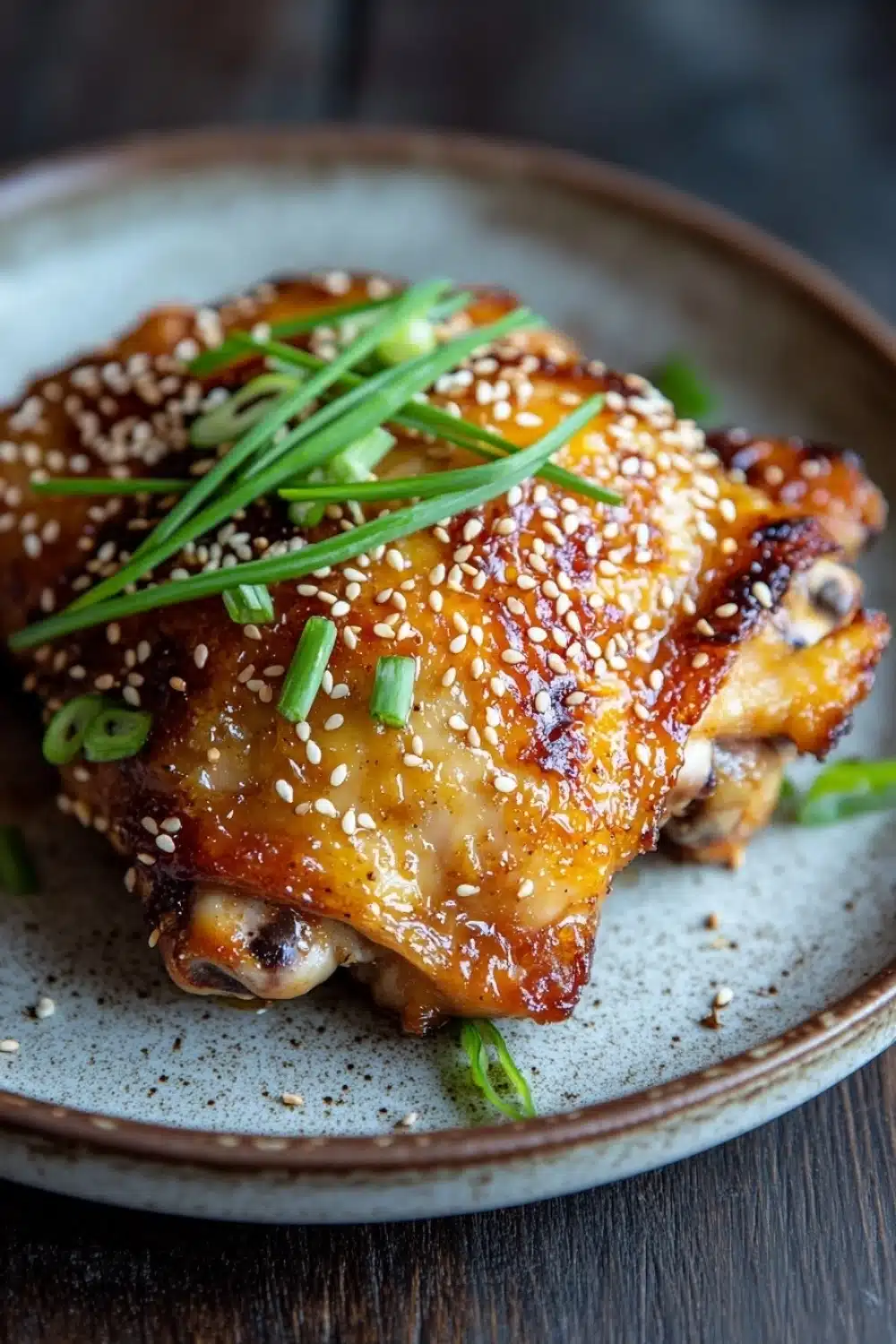
Ready for a game-changer?
There’s something about the sizzle and aroma that fills the kitchen when you bake chicken thighs coated in a spicy-sweet gochujang glaze. The air hums with anticipation — that mingling of garlic, ginger, and just a hint of honey caramelizing on crispy skin. It’s the kind of dish that pulls you right into the heart of Korean street food culture, without stepping outside your front door.
I remember the first time I tried this marinade; it was love at first bite. The luscious balance of heat and umami — no bland chicken thighs here. Tossing the meat in a zip-top bag, letting the flavors get cozy, is like whispering a secret to the chicken before roasting it to perfection. And trust me, that crispy skin? Chef’s kiss. No soggy-bottom blues on my watch.
Oven baked Korean chicken thighs are quick, fuss-free, and pack a punch that turns a humdrum weeknight into a festive affair. So, roll up your sleeves — it’s time for some finger-licking magic.
If you love easy dinners, you’ll enjoy our Creamy Chicken and Vegetable Skillet: One-Pan Dinner Magic just as much as these oven baked Korean chicken thighs.
Real Life Benefits of Oven Baked Korean Chicken Thighs
- Hands-off cooking—marinate and let the oven do the heavy lifting while you tackle other dinner prep or kick back with a cold one.
- Perfect for weeknights—ready in under an hour, making it a solid go-to when time is tight but you want big flavor.
- Juicy, with crispy skin every time—using a wire rack means no soggy bottoms, just that golden crust that snaps when you bite in.
- Marinade magic—gochujang and soy sauce create that sweet-heat combo that’s addictive enough to have your friends asking for the recipe.
- Leftovers that don’t disappoint—pop them back in the oven, and they come out nearly as good as fresh, no soggy reheats here.
Oven Baked Korean Chicken Thighs
Deliciously tender and flavorful oven baked Korean chicken thighs marinated in a sweet and savory sauce made with gochujang, soy sauce, garlic, and ginger. Perfectly caramelized and juicy, this dish is easy to prepare and great for weeknight dinners.
- Prep Time: 15 minutes
- Cook Time: 35 minutes
- Total Time: 50 minutes
- Yield: 4
Ingredients
8 bone-in, skin-on chicken thighs
3 tablespoons gochujang (Korean chili paste)
3 tablespoons soy sauce
2 tablespoons honey
1 tablespoon sesame oil
1 tablespoon rice vinegar
4 cloves garlic, minced
1 tablespoon fresh ginger, grated
1 teaspoon brown sugar
1/2 teaspoon black pepper
1 tablespoon toasted sesame seeds
2 green onions, thinly sliced
Instructions
Preheat the oven to 400°F (200°C).
In a medium bowl, whisk together gochujang, soy sauce, honey, sesame oil, rice vinegar, minced garlic, grated ginger, brown sugar, and black pepper until smooth.
Place the chicken thighs in a large bowl or zip-top bag and pour the marinade over them. Toss to coat evenly. Marinate for at least 15 minutes, or up to 2 hours in the refrigerator for more flavor.
Line a baking sheet with aluminum foil or parchment paper and place a wire rack on top. Arrange the chicken thighs skin-side up on the rack, allowing excess marinade to drip off.
Bake in the preheated oven for 30 to 35 minutes, or until the chicken reaches an internal temperature of 165°F (74°C) and the skin is caramelized and crispy.
Remove the chicken from the oven and let it rest for 5 minutes.
Sprinkle toasted sesame seeds and sliced green onions over the chicken before serving.
Explore more:
Dinner Recipes
Oven Baked Korean Chicken Thighs
The Sauce Shuffle: Ingredient Swaps That Work
Look, not everyone has gochujang chilling in their fridge—it’s a niche staple that can be elusive if you haven’t jumped on the Korean flavor train yet. But don’t sweat it; you can still nail that sweet-spicy vibe with a quick remix. Consider swapping gochujang for a blend of sriracha and a touch of miso paste to mimic that fermented umami kick. If miso isn’t your jam, a combo of chili garlic sauce plus a pinch of smoked paprika can bring depth and heat without nuking your taste buds. Honey? Maple syrup or agave work just fine if you want to keep it vegan. Soy sauce? Tamari or coconut aminos slide in neatly for those avoiding gluten. Each swap shifts the flavor profile slightly, but it keeps the essence alive. I once made these with tahini instead of sesame oil—wild card move—but hey, it lent a nutty twist that my crew didn’t hate. So be bold: play with the sauce like it’s a mixtape, layering flavors until it sings to you.
Why That Oven Rack Trick Is Your Best Friend
Here’s the scoop—placing chicken thighs skin-side up on a wire rack above a lined baking sheet isn’t just fancy plating prep. This little hack is the unsung hero of crispy skin and evenly cooked meat. Think of it as giving your chicken thighs a little throne where hot air circulates all around, not just cooking the bottom but crisping every nook of that skin. It’s the opposite of soggy-bottom syndrome, which is a real bummer in the chicken game. Plus, the marinade drips off, avoiding the dreaded steamed skin effect that happens when the meat sits in its juices. I learned this the hard way—my first batch was like biting into chicken leather because it steamed all afternoon on the pan. Since upgrading to this rack method? Flawless skin every time, and the juices drip away, concentrating flavor instead of watering it down. This is no chef’s vanity move; it’s science with a sprinkle of flair.
Rescue Mission: How to Fix Dry or Bland Chicken
Ever pulled your chicken out of the oven only to realize it’s dry as the Sahara or tasting like it took a wrong turn at bland city? Been there, done that. Here’s the lowdown: dry chicken thighs usually mean you left ’em in too long or the marinade didn’t penetrate enough—skin is a barrier, after all. Quick fix? Let the chicken rest for those sacred 5 minutes post-bake to redistribute juices—don’t skip this. If it’s still dry, shred the meat and toss it back in a warmed leftover marinade or a quick sauce made of soy, honey, and a splash of water. That trick brings back moisture and flavor, turning a sad plate into a saucy win. Blandness? Probably your marinade wasn’t aggressive enough or you skimped on the salt. Next time, be bold with the garlic and ginger; they’re the dynamic duo that punches up flavor without overshadowing the gochujang. If you’re really in a jam, a squeeze of lime or a sprinkle of chili flakes right before serving can wake up tired taste buds like a jolt of espresso. Trust me, this dish is forgiving if you know where to tweak.
Oven Baked Korean Chicken Thighs FAQ
- Can I skip marinating?
- Yes and no. You can toss them straight into the oven, but marinating—at least 15 minutes—is where that deep, punchy flavor sinks into the meat. Don’t sleep on this step if you want that pop of Korean fire.
- What’s gochujang exactly?
- It’s a Korean red chili paste that’s sweet, spicy, and a bit funky—think fermented heat meets umami magic. This stuff is the backbone of the sauce, giving these thighs their signature kick and color.
- Can I use boneless thighs?
- Absolutely! Boneless chicken thighs work fine here but keep an eye on the cooking time—they’ll cook faster. Plus, without bones, the meat might not stay as juicy, so don’t overbake.
- How do I get the skin crispy?
- Pat the chicken dry before marinating and use a wire rack so air circulates around the thighs while baking. That’s the trick to skin that snaps instead of flopping.
- Is this recipe freezer-friendly?
- Yes, you can freeze cooked chicken thighs for up to 2 months. Just cool completely, pack airtight, and thaw in the fridge before reheating. Pro tip: reheat in the oven to keep that skin crispy.