
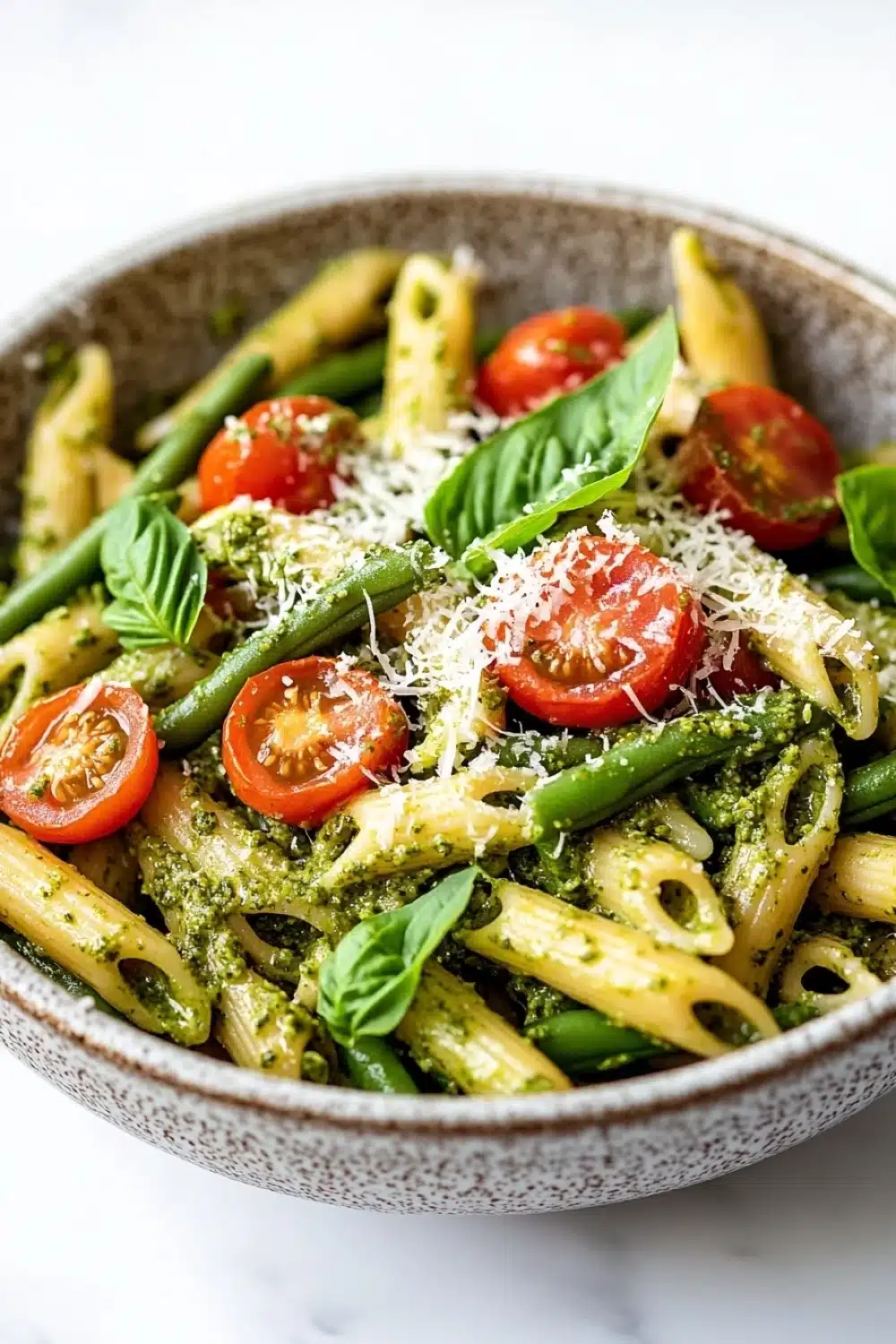
One pot wonder.
Few things beat the thrill of tossing all your ingredients into a single pot and walking away, only to return to a steaming, savory meal that tastes like you spent hours fussing over it. This one pot pesto pasta recipe is exactly that kind of magic—simple, quick, and packed with vibrant flavors.
Last week, I threw this together after a long day, the kitchen smelling of garlic and fresh basil, while the green beans and cherry tomatoes kept the dish lively and fresh. The pasta—cooked right in the broth and water mix—soaked up all those herbal notes, turning every bite into a comforting yet punchy experience. No drowning in sauce here; it’s all about that perfect balance where everything sings without stealing the spotlight.
And hey, cleanup? A breeze. One pot, one spoon, and no grim scrubbing later—you’re done. If you’re chasing a fuss-free dinner that doesn’t skimp on flavor, this pesto pasta’s your go-to. It’s a true kitchen hack for those who crave good food fast, without the faff.
For a delicious and easy meal, try our one pot pesto pasta recipe that’s ready in just 25 minutes.
Real Life Benefits of One Pot Pesto Pasta
- Quick cleanup—just one pot means no mountain of dishes staring back at you after dinner.
- Hands-off cooking: toss everything in, stir occasionally, and let the pot do the heavy lifting while you catch up on your favorite podcast.
- Veggie-packed without the hassle—green beans and cherry tomatoes cook right alongside the pasta for a no-fuss nutrient boost.
- Perfect for weeknight hustle: ready in about 25 minutes, it’s a solid win when time’s tight but hunger’s real.
- Flexible flavor punch—add a pinch of red pepper flakes for that sneaky heat or pile on extra Parmesan to get that cheesy, salty love.
One Pot Pesto Pasta

A quick and easy one pot pesto pasta recipe that combines pasta, fresh basil pesto, and vegetables all cooked together for a flavorful and fuss-free meal.
- Prep Time: 10 minutes
- Cook Time: 15 minutes
- Total Time: 25 minutes
- Yield: 4
Ingredients
12 ounces dry penne pasta
3 cups vegetable broth
1 cup water
1 cup cherry tomatoes, halved
1 cup fresh green beans, trimmed and cut into 1-inch pieces
1/2 cup basil pesto
1/4 cup grated Parmesan cheese
2 tablespoons olive oil
2 cloves garlic, minced
1/2 teaspoon salt
1/4 teaspoon black pepper
1/4 teaspoon red pepper flakes (optional)
1/4 cup fresh basil leaves, chopped
Instructions
In a large pot or deep skillet, combine the penne pasta, vegetable broth, water, cherry tomatoes, green beans, minced garlic, salt, black pepper, and red pepper flakes if using.
Bring the mixture to a boil over medium-high heat, stirring occasionally to prevent the pasta from sticking to the bottom.
Once boiling, reduce the heat to medium and simmer uncovered for 12-15 minutes, stirring frequently, until the pasta is al dente and most of the liquid has been absorbed.
Remove the pot from heat and stir in the basil pesto, grated Parmesan cheese, olive oil, and chopped fresh basil leaves until well combined and creamy.
Taste and adjust seasoning with additional salt and pepper if needed.
Serve immediately, garnished with extra Parmesan cheese and basil leaves if desired.
Explore more:
Dinner Recipes
One Pot Pesto Pasta: No-Fuss Flavor in a Flash
The Art of Ingredient Swaps—Keep the Soul, Shift the Gear
Sometimes, you’re elbow-deep in a pantry that’s more ‘eh’ than ‘eh-mazing.’ No fresh basil? No sweat. Swap in frozen basil or even a handful of arugula for that peppery zip. Cherry tomatoes can be substituted with sun-dried tomatoes—just chop ’em fine and toss ’em in near the end for a punchier, chewier bite. Green beans? If you’re fresh out, frozen peas or asparagus tips work wonders, adding their own green-goodness vibe. The key: keep the texture balance. Overly mushy veggies turn this dish into sad mush, so quick-cooking swaps are your best friends here.
The Why Behind the One Pot Magic—Simmer, Stir, Repeat
Here’s where the real mojo happens: the pasta cooks right in the broth and water combo, soaking up that veggie stock goodness as it goes. But beware the sucker punch of mushy pasta! That’s where stirring becomes your jam. Frequent stirs—like every couple minutes—stop the pasta from sticking like your ex’s bad memories. Also, the simmer isn’t just about heat; it’s about patience. It’s a gentle coaxing where pasta and veg meld into a saucy, slightly al dente masterpiece. Turn the heat too high, and you risk drying out the pot or burning the bottom—nobody wants that crusty mess. Trust me, learning this dance changed my weeknight dinners forever.
Fixing the Usual Suspects—When Pasta’s Too Wet or Too Dry
Okay, picture this: you lift the lid, and your one pot pesto pasta is either swimming in liquid or looking like a dried-out desert. Chill, it happens to the best of us. Too wet? Crank the heat up to medium-high and stir, stirring, stirring until the liquid reduces. No shame in fishing out a slotted spoon and tossing a bit back on the plate without the broth. Too dry? Throw in a splash of water or broth, stir it up, and cover for a minute or two—letting the steam work its magic. Remember, that final pesto stir-in adds creaminess, so the texture can be a bit forgiving if you nail this step right. Pro tip: save a ladle of broth before you add pesto; it’s liquid gold for emergencies.
One Pot Pesto Pasta FAQ
A: Absolutely! While penne holds up nicely in this one-pot method, feel free to swap in fusilli, rigatoni, or even farfalle. Just watch the cooking time as thinner pastas might get mushy faster.
A: No. Yes or no? No. You can use chicken broth or even just water if you want a cleaner canvas. Broth adds depth, but the pesto and veggies pack plenty of punch.
A: Just a gentle kick. The red pepper flakes are optional and meant to nudge your taste buds awake without turning this into a fire drill. Feel free to skip or ramp it up depending on your heat tolerance.
A: For sure. Swap the Parmesan cheese with a vegan alternative or nutritional yeast. Double-check your pesto ingredients too—some store-bought versions sneak in cheese. Olive oil and fresh basil still bring all the flavor.
A: Gently on the stovetop with a splash of water or broth. Microwaving works but can dry things out if you’re not careful. I always add a little extra basil when reheating—freshness is key.